A strong classroom experience does not always separate subjects into isolated lessons. Children often learn more effectively when ideas are connected through music, movement, storytelling, discussion, and performance. Combining these elements allows students to explore academic subjects while also developing confidence, creativity, communication, and emotional awareness.
Music gives structure to learning. Rhythm and melody can help children remember information, recognise patterns, and remain engaged. When facts or concepts are placed within a song, students are not simply memorising words. They are connecting language with sound, timing, emotion, and physical expression. This creates several pathways through which the lesson can be understood and recalled.
Theatre adds another important layer. By taking on a role, children must consider how another person thinks, speaks, and responds. They learn to listen for cues, communicate clearly, and cooperate with others. A theatrical performance also gives purpose to the learning process. Students are not studying only to complete an assignment. They are preparing to share what they have learned with an audience.
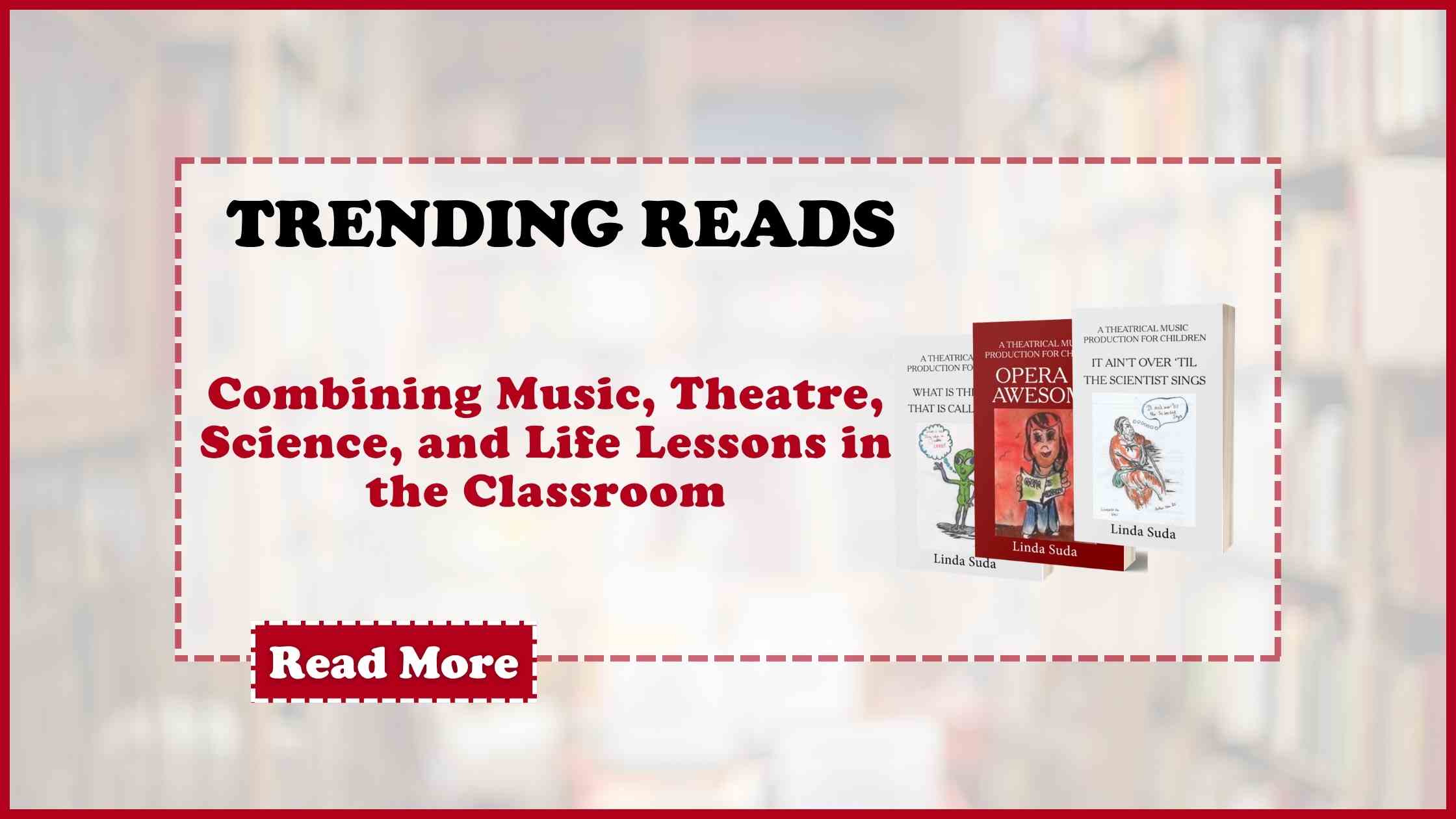
Science benefits from this creative approach because discovery depends on curiosity, imagination, observation, and persistence. Linda Suda’s It Ain’t Over ’Til the Scientist Sings brings science and the arts together through figures such as George Washington Carver, Marie Curie, Leonardo da Vinci, the Wright brothers, Albert Schweitzer, and Johann Sebastian Bach. Their stories encourage children to understand that scientific achievement is often supported by creativity, balance, and a willingness to see familiar problems in new ways.
The same approach can make technical subjects easier to understand. In Opera Is Awesome, parts of the vocal apparatus become memorable characters. The diaphragm, vocal cords, resonators, and articulators are introduced through humour, dialogue, music, and movement. Children learn about breathing, posture, diction, projection, and sound production while taking part in an entertaining theatrical experience.
Life lessons also become more meaningful when children can see them represented on stage. What Is This Thing That Is Called Love? explores friendship, compassion, confidence, care for animals, respect for nature, love of work, peace, and inner beauty. Through the questions of visitors from another planet, children are encouraged to think about human relationships and the many ways people express care.
These productions also create opportunities for different kinds of learners. Some students may enjoy singing, while others may prefer acting, dancing, speaking, creating costumes, preparing scenery, or helping behind the scenes. Each contribution supports the complete performance and teaches students that successful work depends on cooperation.
Linda Suda’s children’s opera books offer teachers, schools, families, and youth theatre groups a practical way to connect academic learning with the performing arts. By combining music, theatre, science, and meaningful life lessons, these productions turn the classroom into a place where children can think, feel, create, and learn together.
Get Your Copy On Amazon: https://www.amazon.com/dp/B0GLTHGZV4/