Aging is often treated as a secured path, something that moves forward at the same pace for everyone. Yet modern research continues to challenge that assumption. Scientists now understand that aging is not controlled by a single factor, but by a complex interaction of genetics, cellular repair, and environmental influence. This raises a compelling question. Could the rate at which humans age be altered?
At the core of aging lies the body’s ability to repair and replace its cells. Every day, cells divide, replicate, and gradually accumulate small imperfections. Over time, these imperfections build up, leading to visible aging and internal decline. One key element in this process is the shortening of telomeres, the protective ends of chromosomes. As these shorten, cells lose their ability to divide effectively, contributing to aging.
Another factor is the efficiency of stem cells. These cells are responsible for generating new, healthy tissue throughout the body. As people age, stem cell activity decreases, reducing the body’s ability to repair itself. Scientists are actively studying ways to maintain or enhance this function, which could slow the physical effects of aging.
Metabolism also plays a significant role. The rate at which the body converts energy and manages cellular stress influences how quickly damage accumulates. Research into caloric restriction, genetic variation, and even certain compounds suggests that metabolic processes can affect lifespan. Some organisms already demonstrate this principle. Certain species age more slowly or maintain regenerative abilities far beyond what humans can achieve.
Despite these discoveries, no confirmed condition exists where a human naturally ages at a dramatically reduced rate. However, the absence of proof does not mean the concept is impossible. Science continues to uncover how small changes at the cellular level can produce significant differences in health and longevity. The idea of slowed aging sits at the edge of what is currently understood, waiting for deeper exploration.
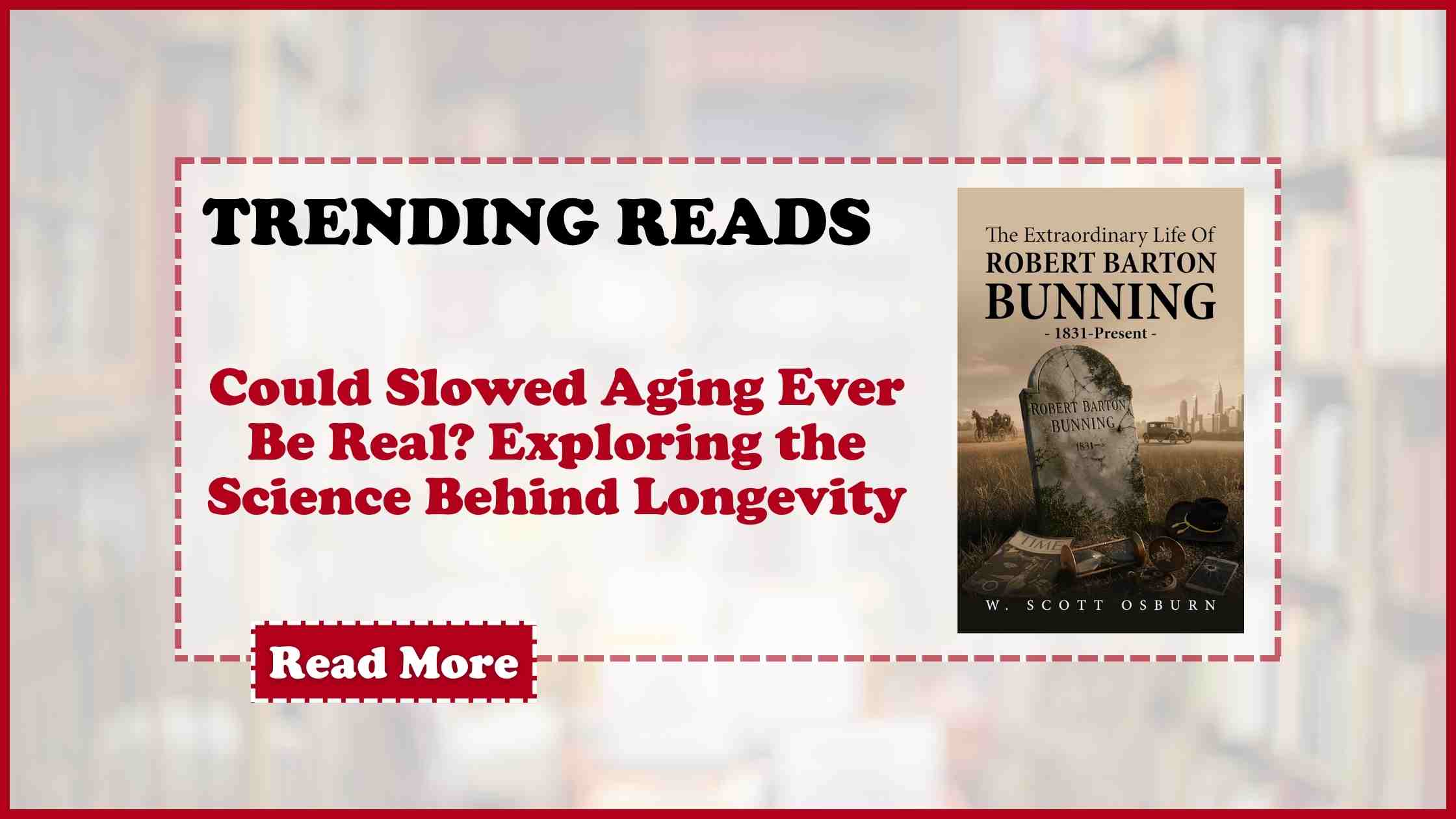
This is where storytelling offers a powerful lens. The Extraordinary Life of Robert Barton Bunning by W. Scott Osburn takes this scientific curiosity and transforms it into a lived reality. The central character experiences a profound shift in how his body ages, allowing him to remain youthful while decades pass around him. The narrative presents this condition not as magic, but as a biological anomaly, rooted in altered cellular processes and metabolic function.
What makes this concept so unique is not just the science, but the consequences. If aging slows, time itself begins to feel different. Relationships change in ways that are difficult to predict. Generations come and go while one person remains physically unchanged. Identity becomes more complex, shaped by experiences that span far beyond a normal lifespan.
Scientific research continues to move closer to influencing how humans age. Advances in genetic editing, regenerative medicine, and cellular repair are opening new possibilities. While extending life dramatically remains uncertain, improving the quality and duration of healthy living is already a major focus. The line between possibility and imagination is becoming less firm.
The idea of slowed aging forces a deeper reflection. It is not only about living longer, but about what that extended time would mean. Would it lead to greater wisdom, or greater isolation? Would the benefits outweigh the emotional cost? These are questions that science alone cannot answer.
The Extraordinary Life of Robert Barton Bunning by W. Scott Osburn invites readers to explore those questions through a rich and immersive narrative. It blends scientific thought with historical depth and human experience, creating a story that feels both grounded and expansive.
In the end, the science of longevity may still be unfolding, but the imagination has already begun to map its possibilities.
Book now available on https://www.amazon.com/dp/B0GP1QR19Y