Anyone can lead when agreement is easy. The true measure of leadership appears when tension enters the room. A challenging question. A dissenting voice. A decision that not everyone supports. In these moments, dignity becomes visible. And contrary to popular belief, it is not something people are simply born with.
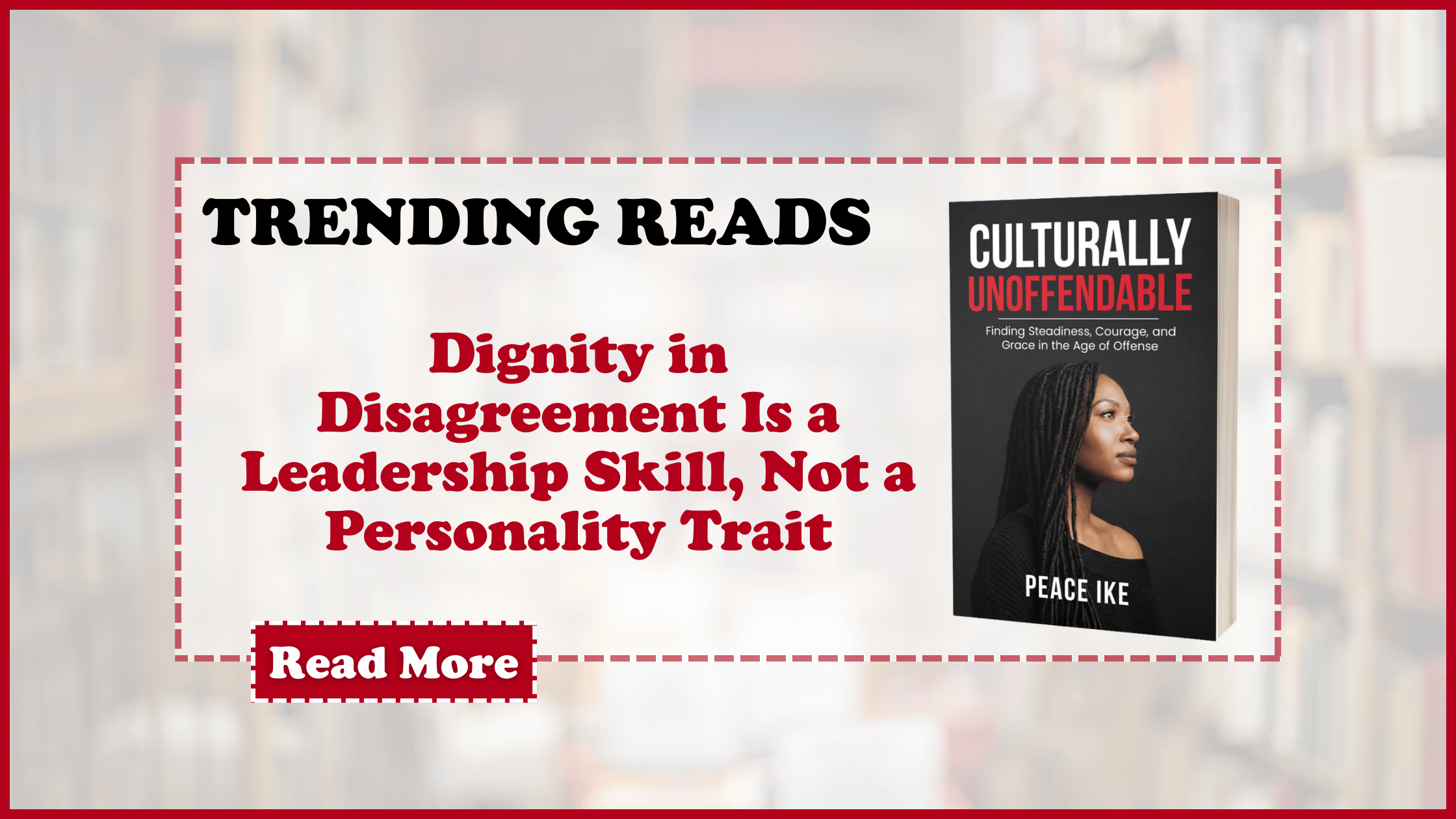
In Culturally Unoffendable by Peace Ike, dignity in disagreement is presented not as temperament, but as formation. It is a skill developed through discipline, self-awareness, and a clear sense of identity. Leaders who engage conflict well are not naturally calm or emotionally distant. They are trained from the inside out.
Why Personality Is a Poor Explanation
It is tempting to label some people as naturally composed and others as reactive. This explanation feels convenient, but it is incomplete. Personality may influence how emotions manifest, but it does not determine how emotions are handled.
Consider two managers receiving critical feedback. One becomes defensive, interrupts, and leaves the conversation in a tense state. The other listens, asks clarifying questions, and responds with thoughtful restraint. The difference is not personality. It is emotional regulation. One is ruled by instinct. The other is guided by intention.
Peace Ike challenges the assumption that respectful engagement is reserved for the calm or agreeable. Dignity is learned, practiced, and strengthened over time.
Emotional Regulation as a Learned Discipline
Emotional regulation does not mean suppressing feelings. It means managing them effectively, understanding what is happening internally, and choosing a response that aligns with values rather than impulse.
In leadership settings, this discipline is essential. Teachers navigating divided classrooms, coaches managing strong personalities, and executives leading through organizational change all encounter moments that test composure. Without regulation, authority erodes. Trust breaks. Conversations become power struggles.
A regulated leader can acknowledge disagreement without taking it personally. They can hold the tension of differing perspectives without needing to resolve everything immediately. This steadiness creates psychological safety and invites honest dialogue.
Respectful Engagement Builds Credibility
Dignity in disagreement signals confidence. It tells others that you are not threatened by challenge and not dependent on control. This posture increases credibility far more than dominance ever could.
For example, a facilitator guiding a polarized discussion may encounter opposing views expressed with intensity. Responding with curiosity and calm rather than correction allows the conversation to stay productive. Participants feel seen, even when they do not agree with it. That experience builds trust and influence.
Culturally Unoffendable emphasizes that dignity preserves both self-respect and respect for others. It is not about winning the moment. It is about staying true to who you are in the moment.
Formation Shapes Presence
Leadership presence is shaped long before disagreement arises. It is formed through reflection, inner healing, and repeated practice of restraint. Those who avoid this inner work often rely on authority, position, or charisma to navigate conflict. Those who do the work lead with calm authority.
Peace Ike frames this as a choice. Anyone willing to develop emotional maturity can learn to lead with dignity and respect. It is not reserved for the naturally even tempered. It is available to the intentional.
In a world saturated with reactivity, dignity in disagreement stands out as a rare and powerful leadership skill. It creates environments where growth is possible, and trust can take root.
For leaders, educators, coaches, and professionals seeking a deeper approach to engaging conflict, Culturally Unoffendable by Peace Ike offers practical insights and a lasting perspective. It is a compelling invitation to lead from steadiness rather than impulse and to cultivate dignity as a discipline worth mastering.