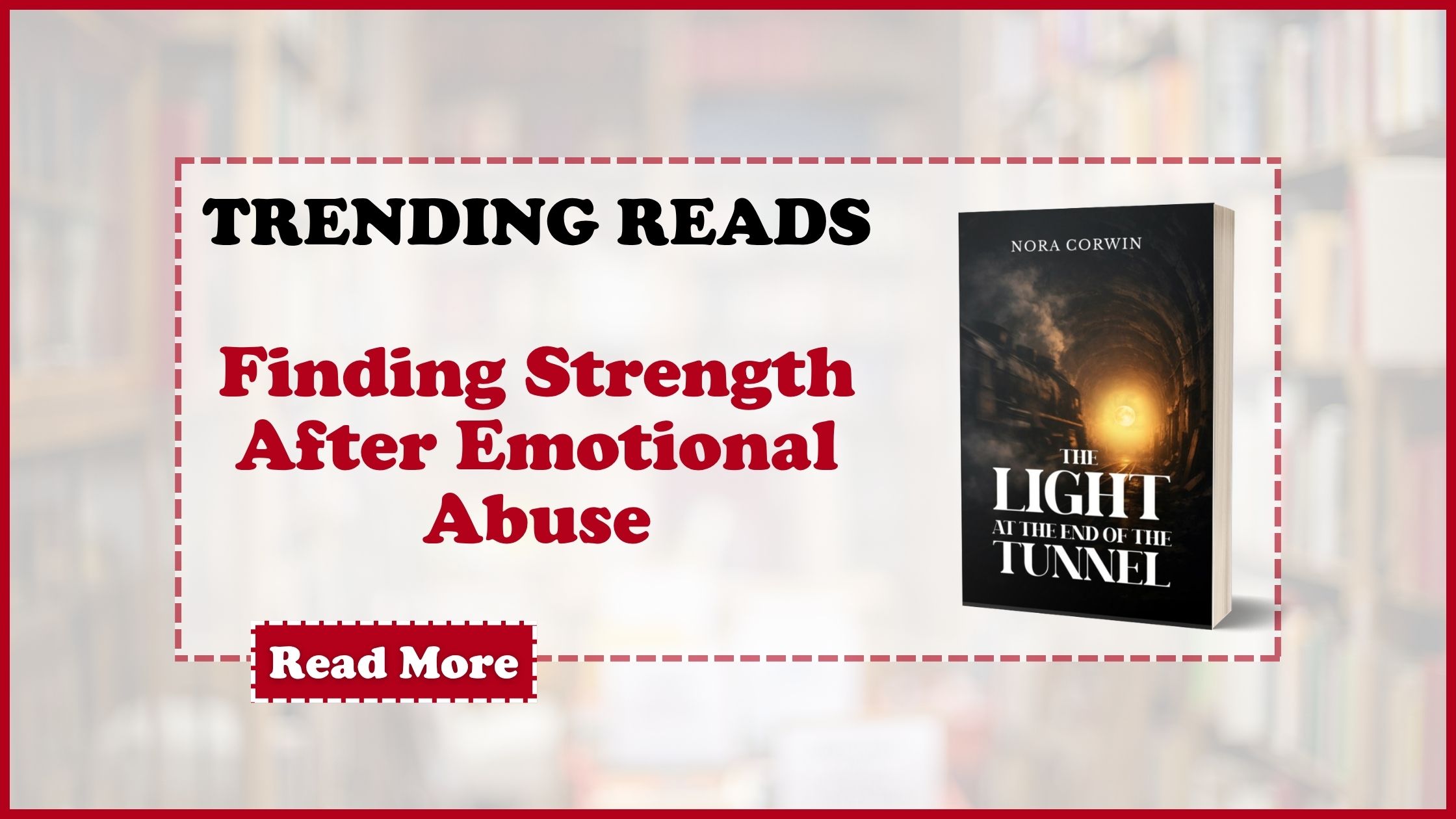
In The Light at the End of the Tunnel by Nora Corwin strength is not presented as loud defiance or dramatic escape. It is shown as something quieter and far more enduring. Emotional abuse does not leave visible scars, but it leaves deep imprints on confidence, perception, and identity. Rebuilding after that kind of damage requires patience, clarity, and courage.
Emotional abuse erodes slowly. It often begins with subtle criticism disguised as concern. Over time, it escalates into control, manipulation, humiliation, or gaslighting. The victim may begin to doubt their memory, their judgment, and even their worth. The abuser’s voice becomes internalized. Confidence weakens. Isolation increases.
The most dangerous consequence of emotional abuse is not fear. It is confusion.
When someone repeatedly undermines your reality, you begin to question your instincts. You may minimize incidents, rationalize behavior, or accept blame that does not belong to you. The relationship becomes a cycle of tension, apology, and temporary calm. Hope resurfaces, only to be crushed again. Over time, survival replaces joy.
Finding strength begins with recognition. Naming the abuse is the first act of reclaiming power. When a person acknowledges that manipulation, intimidation, or psychological control is not normal conflict but abuse, clarity returns. Clarity disrupts confusion.
The next step is rebuilding self-trust. Emotional abuse fractures the ability to rely on one’s own perceptions. Healing requires small, consistent affirmations of personal judgment. This may involve therapy, journaling, or supportive conversations with trusted friends. Each honest reflection strengthens internal stability.
Boundaries become essential. Emotional abusers often resist limits because control is central to their behavior. Establishing boundaries may provoke anger or guilt. However, strength grows when individuals refuse to negotiate their dignity. Saying no, disengaging from manipulation, and reducing exposure to toxic dynamics protect emotional health.
Support systems play a critical role. Isolation sustains abuse. Community interrupts it. Whether through faith, counseling, friends, or support groups, connection restores perspective. Hearing others validate similar experiences reduces shame. Shame thrives in secrecy. Strength grows in shared truth.
Reclaiming identity is another vital stage. Emotional abuse often narrows a person’s world. Hobbies are abandoned. Friendships fade. Personal goals are dismissed. Healing requires rediscovering passions and interests that were suppressed. When individuals invest in growth, education, creativity, or service, confidence rebuilds naturally.
Forgiveness, if chosen, must be approached carefully. Forgiveness does not mean reconciliation. It does not require forgetting or minimizing harm. It is an internal decision to release bitterness for the sake of personal peace. Strength after emotional abuse does not demand immediate forgiveness. It demands safety and self-respect first.
Faith and reflection can also anchor recovery. Many survivors find meaning through spiritual grounding. Believing that suffering does not define the future offers hope. Hope fuels resilience.
It is important to recognize that strength after emotional abuse does not look identical for everyone. For some, it means leaving. For others, it means confronting truth within a complicated family dynamic. For many, it means rebuilding a life that feels authentic and stable.
The journey is rarely linear. Doubt may resurface. Memories may sting. Yet each moment of self-awareness marks progress. Each boundary enforced reinforces dignity. Each decision made independently restores agency.
The Light at the End of the Tunnel illustrates that even after years of manipulation and instability, renewal is possible. Emotional abuse may distort identity temporarily, but it does not permanently erase it.
Strength is not the absence of pain. It is the refusal to let pain dictate your future. When clarity replaces confusion and self-respect replaces fear, healing moves from possibility to reality.
Visit my Profile : https://allauthor.com/author/noracorwin/CategoriesUncategorized