WHEN MODERN TECHNOLOGY CAN NO LONGER SUSTAIN EVERYDAY LIFE
Modern agriculture depends heavily on machinery, fuel, electricity, and transportation. Tractors prepare fields, mechanical equipment processes crops, and established supply chains deliver essential resources. These conveniences have transformed farming, but what happens when the systems supporting them suddenly stop working?
A community that relies entirely on modern technology may find itself facing challenges that earlier generations understood well.
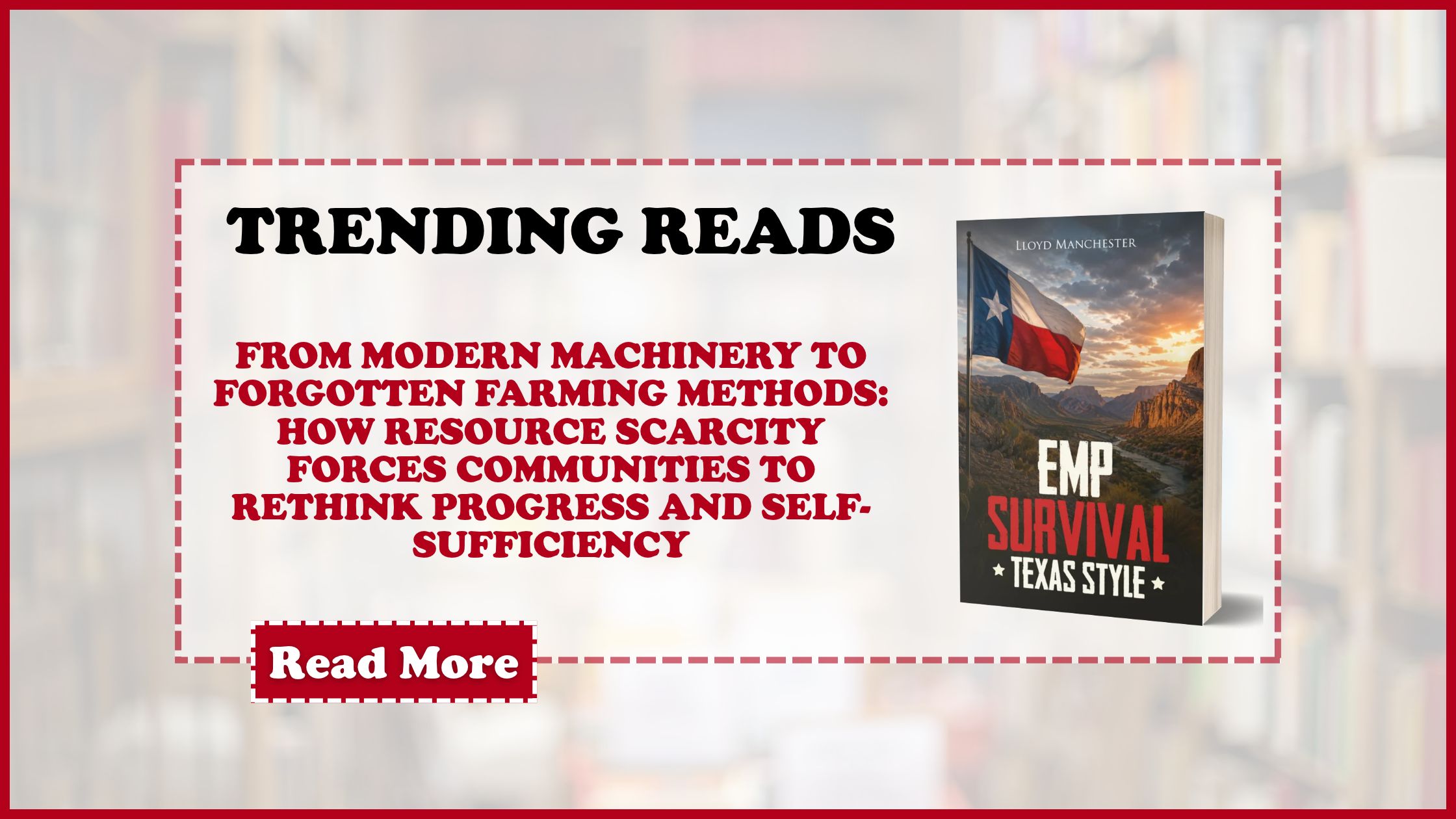
In EMP Survival Texas Style, Lloyd Manchester explores this possibility through a fictional electromagnetic pulse that disrupts modern infrastructure. As fuel supplies become limited and electronic equipment fails, rural families must rediscover traditional farming methods to maintain their livelihoods.
THE HIDDEN VALUE OF TRADITIONAL AGRICULTURAL KNOWLEDGE
Before modern machinery became commonplace, farming required extensive physical labor, practical experience, and an understanding of natural resources.
Horse-drawn equipment, manual harvesting, livestock management, and traditional food preservation methods were essential parts of agricultural life.
Lloyd Manchester illustrates how these older practices become valuable when modern alternatives are no longer dependable.
The characters gradually recognize that maintaining food production requires more than possessing farmland. They need functioning equipment, reliable labor, practical skills, and the ability to adapt when resources become unavailable.
Their experiences raise an important question: Have technological advances made certain traditional skills seem unnecessary, even though those skills could still serve a valuable purpose?
ADAPTING FARMING METHODS WHEN RESOURCES BECOME SCARCE
Resource scarcity forces people to reconsider how they use machinery and manage agricultural responsibilities.
In EMP Survival Texas Style, an older Cockshutt tractor initially provides a significant advantage because it remains operational after the disruption. However, the community understands that gasoline cannot be relied upon indefinitely.
This realization encourages a gradual transition toward horse-drawn farming equipment, traditional harvesting methods, and alternative sources of mechanical power.
The characters repair abandoned agricultural machinery, prepare equipment for future planting seasons, and learn to work with draft animals.
These changes require patience and considerable physical effort. Replacing mechanized farming with traditional methods is neither immediate nor effortless.
The experience demonstrates that adaptability involves recognizing the limitations of available resources and preparing alternatives before those resources disappear.
WHY COOPERATION AND SHARED SKILLS MATTER
Agricultural self-sufficiency is rarely achieved through individual effort alone.
Successful farming requires knowledge of cultivation, machinery maintenance, animal care, harvesting, and food preservation. When modern services become unavailable, these responsibilities demand even greater cooperation.
Manchester portrays a community where individuals contribute different abilities toward maintaining agricultural production.
Mechanical expertise helps restore equipment, experienced farmers share traditional methods, and younger members gradually learn responsibilities that will support future harvests.
The community also benefits from exchanging knowledge with Amish farmers whose established agricultural practices remain useful despite the technological disruption.
These interactions emphasize that preserving traditional skills requires both practical experience and a willingness to teach others.
RETHINKING PROGRESS AND THE MEANING OF SELF-SUFFICIENCY
Technological progress has made agriculture more productive and less physically demanding in many respects. However, depending exclusively on sophisticated systems can create vulnerabilities when essential resources become scarce.
Traditional farming methods are not necessarily replacements for modern technology. Instead, they offer additional knowledge and alternatives that can strengthen agricultural resilience.
The broader lesson extends beyond farming. Whether maintaining equipment, preserving food, or developing practical abilities, independence grows through preparation and adaptability.
True progress should not require abandoning the knowledge of previous generations. A more resilient future may depend on combining modern innovation with traditional skills that remain valuable when circumstances change.
EXPLORE THE BOOK
Hardcover: Buy the Hardcover on Amazon
Paperback: Buy the Paperback on Amazon