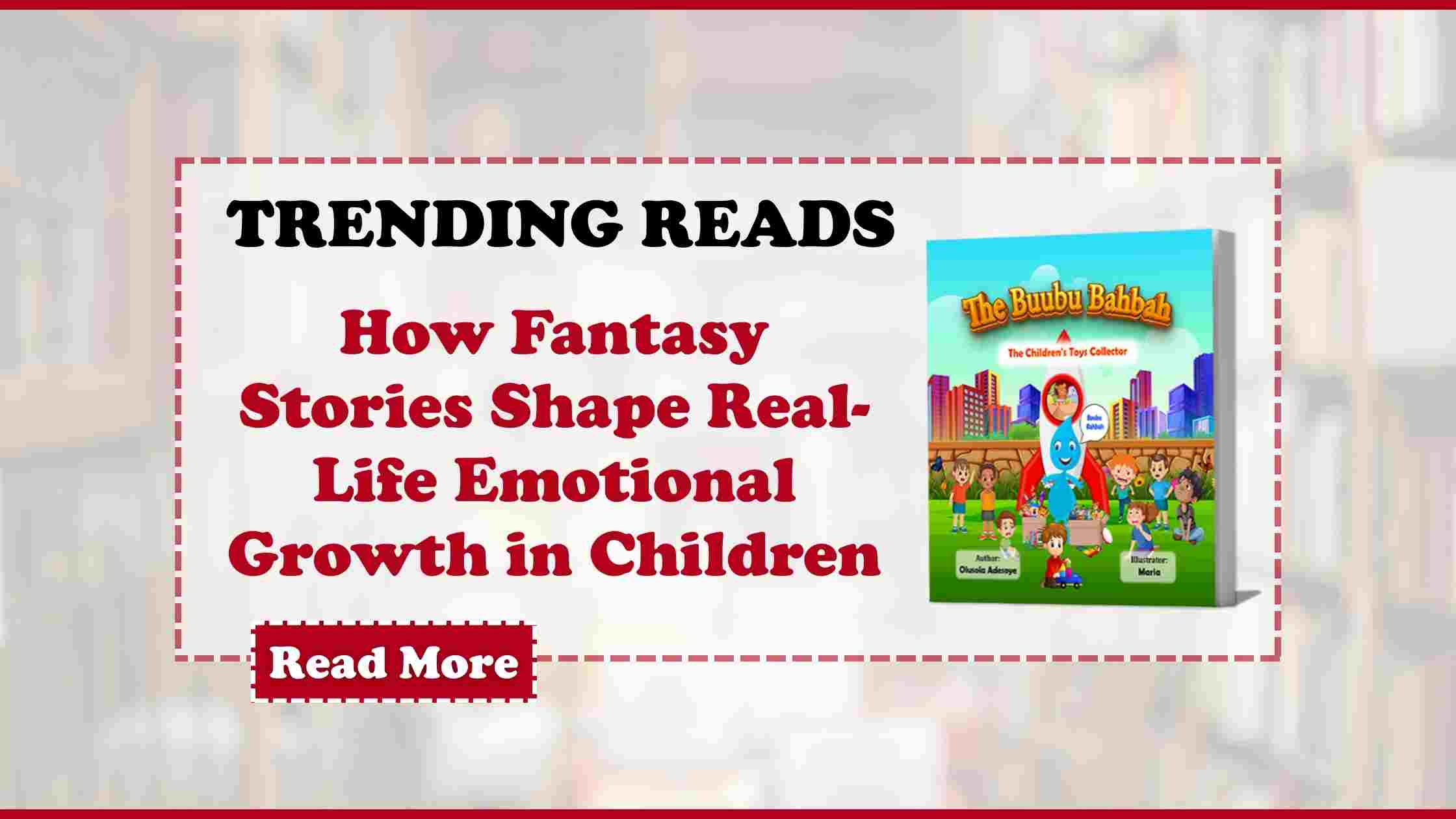
What if the secret to raising more empathetic, responsible, and emotionally aware children wasn’t found in a classroom, but in a storybook? Fantasy tales have long been the heart of childhood imagination, but beyond their dragons and distant planets lies something even more powerful: the ability to shape real-world emotions and behaviour. One shining example of this is The Buubu Bahbah: The Children’s Toys Collector by Olusola Adesoye. This beautifully illustrated moral adventure proves fantasy stories can do far more than entertain. They can transform.
In this whimsical story, children live in a world where their unnecessary crying echoes across the skies so loudly that a mysterious visitor from another planet, Buubu Bahbah, hears them. A creature made entirely of teardrops, Buubu Bahbah travels from the faraway Planet Coo to collect the toys of children who cry for no reason. What begins as a light-hearted fantasy soon turns into a meaningful journey of emotional growth, responsibility, and creative problem-solving.
Fantasy, at its best, allows children to explore emotions and consequences in a world that feels magical yet safe. According to educators and child psychologists, imagination-based storytelling helps children internalise life lessons more deeply than direct instruction can. “When a child reads a fantasy story, they are not just observing; they are living the experience alongside the characters,” says Dr Amelia Rhodes, an early childhood psychologist. “That emotional participation is what makes the lessons stick.”
The Buubu Bahbah captures this perfectly. Instead of preaching about good behaviour, it shows it in action. The clever twins, Mimi and Demi, become the moral anchors of the story. When Buubu Bahbah takes away the children’s favourite toys, these sisters rally all the kids together to create a plan to retrieve them. They build a spaceship, travel to Planet Coo, and use ingenuity and teamwork to outsmart the teardrop visitor. Through their bravery, children reading the story learn that every problem, no matter how big, can be solved with cooperation, creativity, and calm thinking.
What’s remarkable about this fantasy is how it mirrors real-life situations children face daily. The crying, frustration, and emotional outbursts represent the everyday challenges of managing feelings, while Buubu Bahbah symbolises the consequences that follow uncontrolled emotions. However, through imagination and humour, these lessons are made gentle, engaging, and memorable.
This approach to moral storytelling aligns with what many educators now refer to as emotional literacy through narrative. When children witness fictional characters making choices, both right and wrong, they begin to reflect on their own actions and feelings. The Buubu Bahbah invites them to think critically: Why do I cry when things don’t go my way? What could I do instead?
Fantasy offers emotional distance while keeping the lessons close to heart. It allows children to explore empathy without shame, responsibility without fear, and creativity without limits. As Mimi and Demi’s story unfolds, young readers realise that their emotions aren’t enemies. They’re clues guiding them toward understanding and growth.
Ultimately, The Buubu Bahbah: The Children’s Toys Collector bridges the gap between imagination and moral development, teaching that the same creativity used to build spaceships and conquer fictional worlds can help children navigate their own emotional universe.
For parents and teachers seeking a story that blends fun, fantasy, and valuable life lessons, The Buubu Bahbah: The Children’s Toys Collector is a must-read.
Discover this book and watch how one magical story can help shape a child’s emotional world for the better.
Available now on Amazon: https://www.amazon.com/dp/1969368934/.