Innovation rarely grows in a workplace where employees feel watched, restricted or afraid to make mistakes. People are more likely to contribute original ideas when leaders trust their judgment, provide clear direction and allow them enough freedom to solve problems in their own way.
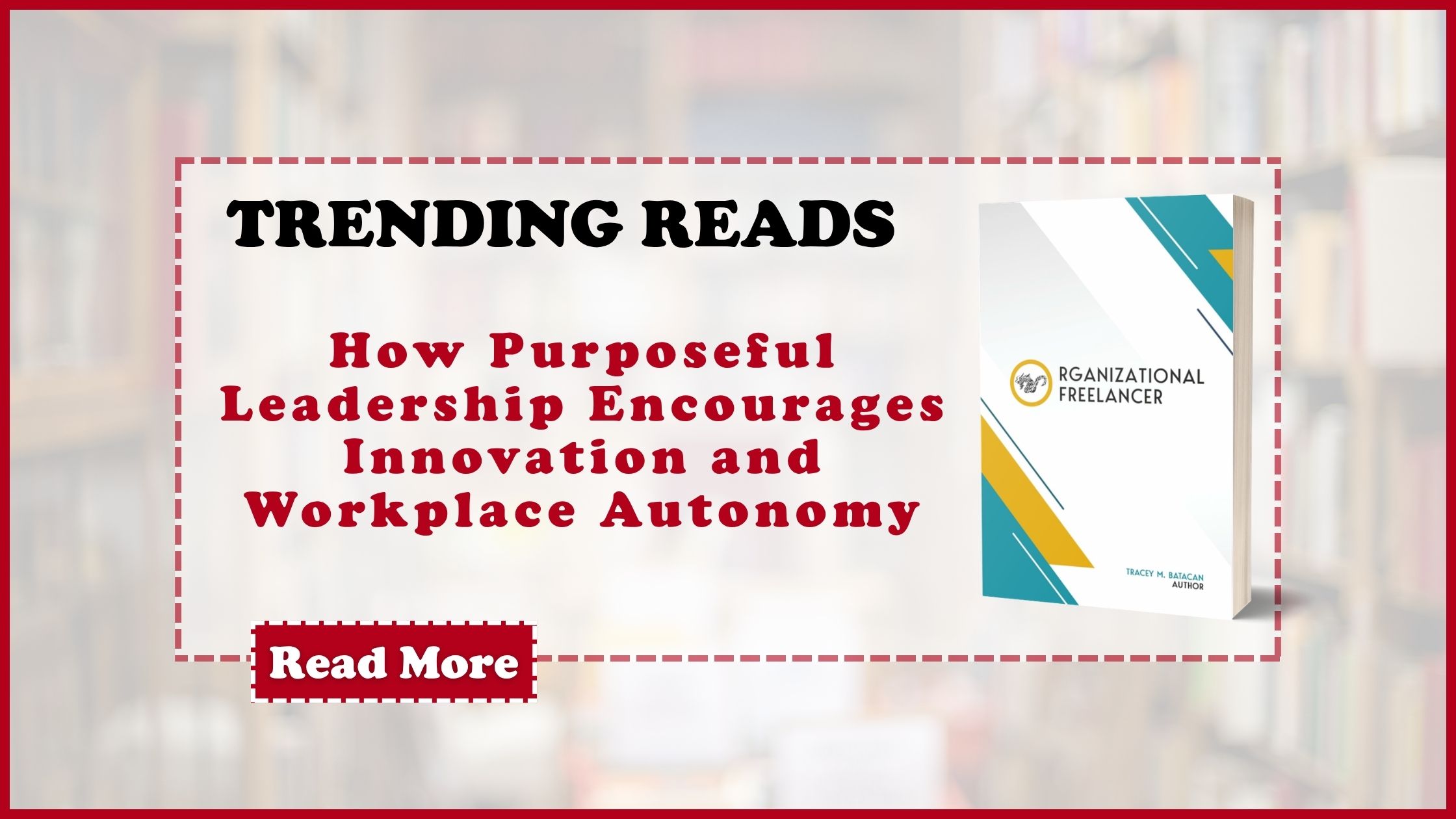
In Organizational Freelancer, author Tracey M. Batacan explores this balance through the idea of purposeful leadership. A purposeful leader does more than manage tasks or protect a title. This kind of leader understands the broader mission, supports professional growth and helps employees contribute with confidence and independence.
Purpose Gives Innovation a Clear Direction
Creativity is valuable, but ideas are more effective when they connect to a meaningful goal. Purposeful leaders help employees understand why a project matters, who it serves and what success should look like.
Batacan describes purposeful leaders as action-oriented professionals who can move work forward even when a detailed plan does not yet exist. They use vision to imagine the desired result and then help others work toward it.
This sense of direction gives employees room to experiment without losing focus. Instead of offering ideas randomly, teams can develop solutions that support the organization’s objectives.
Autonomy Builds Confidence and Ownership
Micromanagement may create short-term control but it often weakens initiative. When employees must seek approval for every small decision, they may stop thinking independently and wait to be told what to do. This delays innovation and prevents speed to market deployment of crucial enhancements across the business.
Purposeful leaders take a different approach. They establish expectations, provide resources and then allow capable professionals to manage their responsibilities. Batacan emphasizes that effective leaders encourage autonomy, listen carefully, offer constructive feedback, recognize exceptional work and avoid micromanaging.
That trust creates ownership. Employees become more invested because they are not simply carrying out instructions; they are helping shape the outcome.
Professional Development Strengthens Innovation
Innovation depends on learning. Teams cannot continue producing fresh solutions if employees use the same knowledge, tools and methods year after year. Consequently, it’s important for staff to find ways to invest in themselves through continual training and education programs.
Purposeful leaders make professional development a priority. They encourage employees to gain new skills, read widely, attend training and learn from people with different experiences. Batacan notes that strong leaders combine practical experience with education and continued study. They also understand that expertise exists at every level of an organization.
When employees feel supported in their growth, they bring new perspectives back to the workplace. Training becomes more than an individual benefit; it becomes a source of organizational improvement.
Innovation Requires Taking Risks
New ideas always involve some uncertainty. A proposal may fail, a process may need revision or an experiment may produce an unexpected result. If leaders punish every mistake, employees quickly learn to remain silent. Yet, it important to take risks at work to help your organization grow.
Purposeful leaders treat each win and mistake as a learning opportunity. They ask what worked, what failed, why did they achieve the results and how make improvements for the next attempt. This approach helps enhance individual accountability because the project is viewed through a wider lens. This process creates an environment where employees can take thoughtful risks without fearing that one imperfect result will define their careers.
Organizational Freelancer by Tracey M. Batacan offers an engaging guide to leadership, creativity, collaboration and professional growth. It reminds readers that effective leadership is not about controlling every action. It is about creating the conditions in which people can think independently, share ideas and contribute their best work.
When leaders provide purpose, trust, resources and room to grow, workplace autonomy becomes more than freedom. It becomes a powerful engine for innovation.