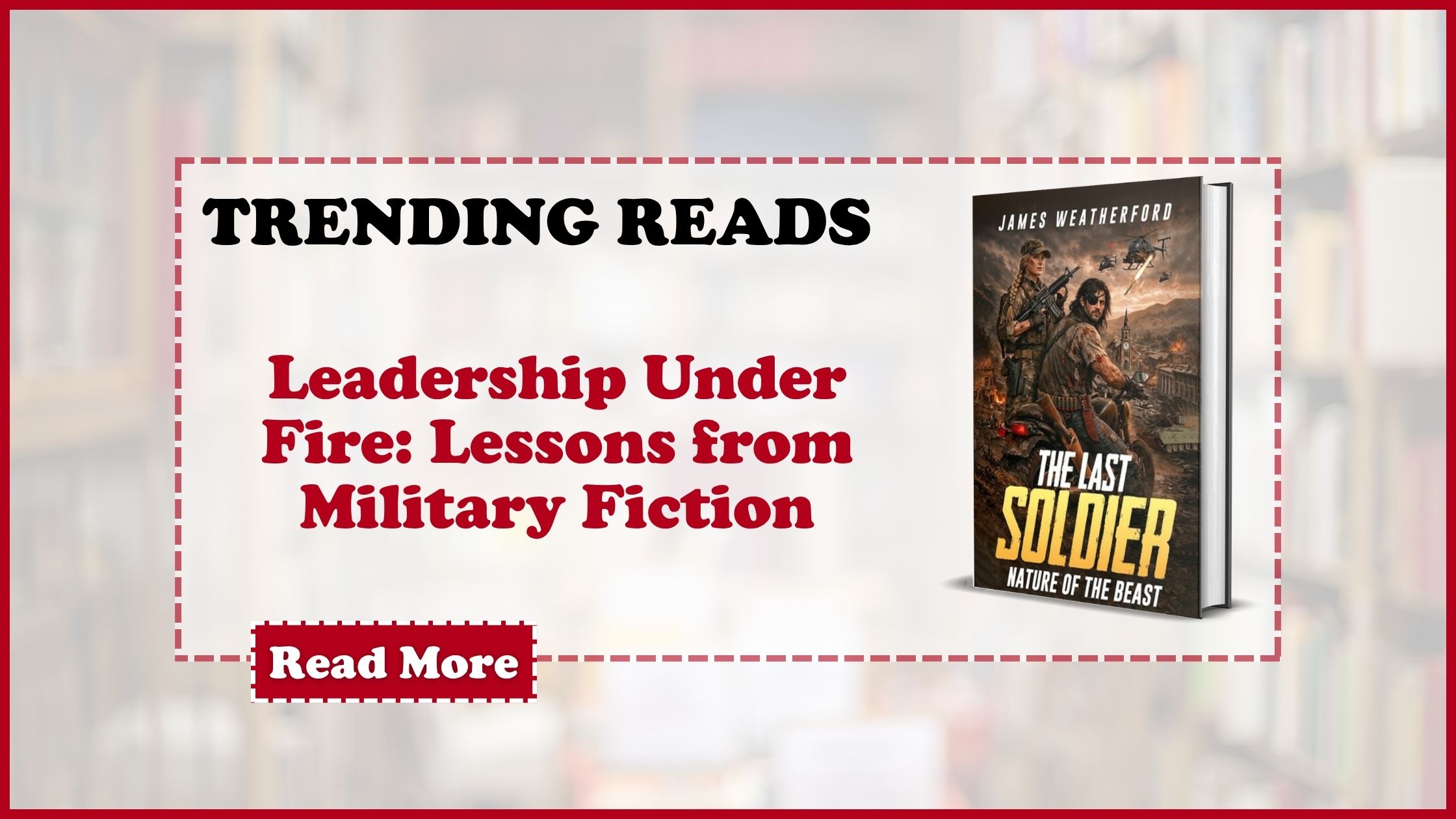
Leadership is easy to define in calm conditions. Rank, authority, and structure guide decisions. But under pressure, when lives are at stake and uncertainty dominates, leadership reveals its true nature. The Last Soldier: Nature of the Beast by James Weatherford presents a raw and compelling view of what it means to lead when everything is crumbling.
One of the most important lessons from the novel is that leadership is earned through action, not assigned by rank. Jason Randal operates in a world where formal authority often fails to command respect. What sets him apart is not his title, but his experience, decisiveness, and willingness to take responsibility. In crisis, soldiers do not follow orders blindly. They follow those they trust to keep them alive.
Another key lesson is adaptability. In stable environments, plans can be followed with precision. In the world of The Last Soldier, plans rarely survive first contact with reality. Ambushes, shifting threats, and unreliable intelligence force leaders to think quickly and adjust constantly. Jason’s ability to read situations and act decisively often determines whether his men survive. Leadership, in this context, becomes less about control and more about responsiveness.
The novel also highlights the importance of moral clarity in uncertain conditions. Crisis blurs the line between right and wrong. Decisions must often be made with incomplete information and no perfect outcome. Strong leaders do not avoid these choices. They face them, understanding that hesitation can be as dangerous as a wrong decision. Jason’s actions reflect this reality. He makes difficult calls, not because they are easy, but because they are necessary.
Communication plays a critical role as well. In high pressure situations, clarity can mean the difference between order and chaos. Instructions must be direct, timely, and understood by everyone involved. The breakdown of communication in the novel often leads to confusion and vulnerability. Effective leaders ensure that their intent is clear, even when conditions are far from ideal.
Trust within the team is another essential element. Leadership is not a one way dynamic. It depends on mutual confidence between leader and followers. Jason builds this trust by sharing risk, standing with his men, and proving that he will not ask them to do what he would not do himself. This creates cohesion, even in the most dangerous situations.
The story also exposes the dangers of poor leadership. Characters who rely solely on authority, or who abuse their position, quickly lose control. Their decisions create resentment, weaken discipline, and put lives at risk. This contrast reinforces a powerful idea. Leadership is not about power. It is about responsibility.
Resilience is another defining trait. Crisis does not end after one decision or one battle. It continues, often without relief. Leaders must endure alongside their teams, maintaining focus and composure even when exhaustion sets in. In The Last Soldier, survival is not a single event. It is an ongoing challenge that tests both physical and mental strength.
Perhaps the most important lesson is that leadership under fire is deeply human. It involves fear, doubt, and pressure. What separates effective leaders is not the absence of these factors, but their ability to act despite them. They acknowledge the risk, but they do not allow it to paralyze them.
The Last Soldier: Nature of the Beast delivers more than action. It offers insight into how leadership functions when stripped of comfort and certainty. It shows that in the most extreme conditions, leadership becomes a combination of courage, judgment, and integrity.
For readers drawn to military fiction with depth and realism, this novel provides a powerful exploration of what it truly means to lead when everything is on the line.
Read this book now on Amazon: https://www.amazon.com/dp/B009H66YQM