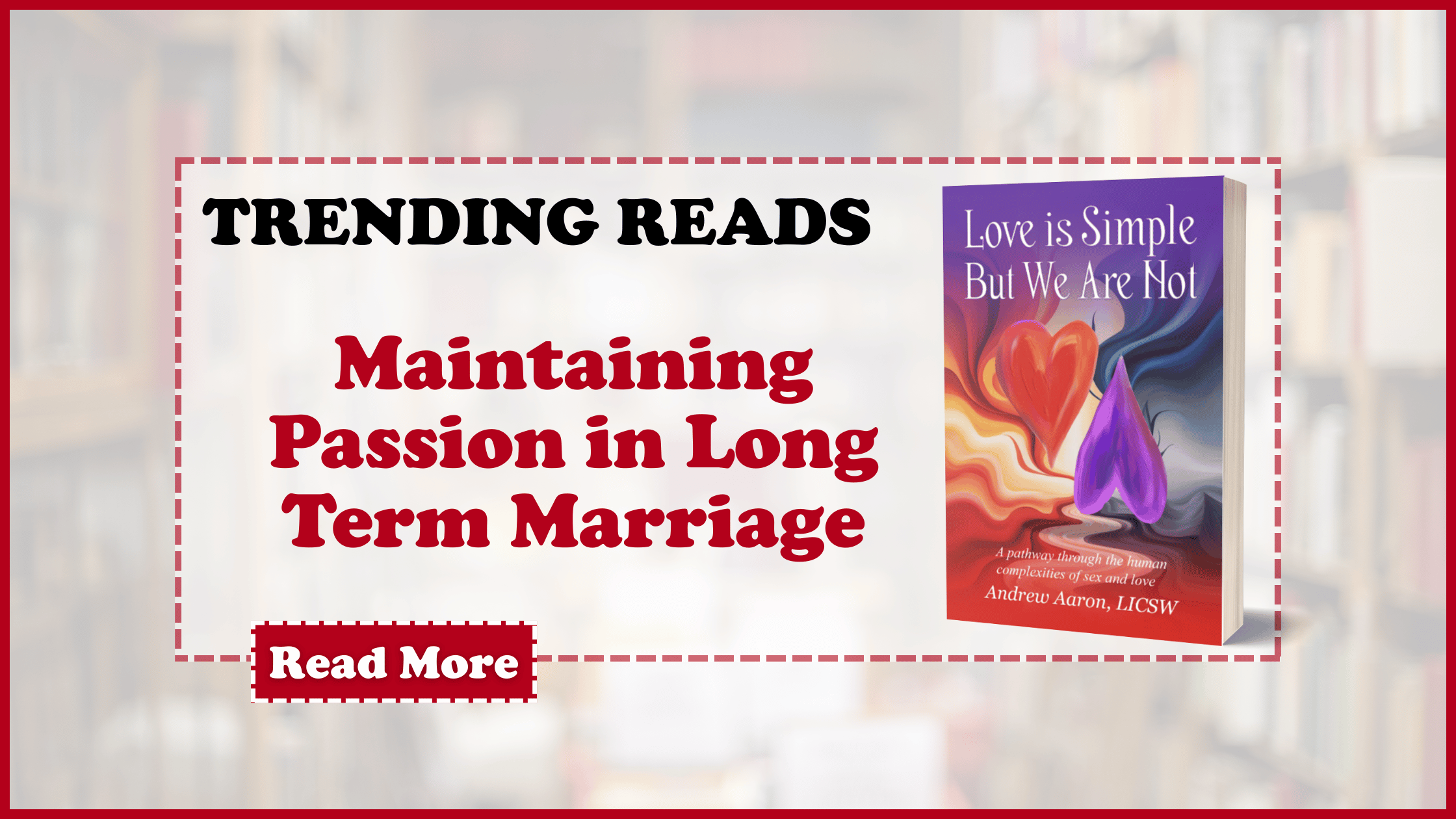
In Love Is Simple, But We Are Not: A Pathway Through the Human Complexities of Love and Sex by Andrew Aaron, LICSW passion is not treated as a fleeting spark that inevitably fades. It is presented as something sustainable, but only when couples understand that emotional and psychological forces can either nurture or suffocate it.
Many people assume that passion naturally declines over time. The early intensity of courtship, driven by novelty and anticipation, gives way to routine. Responsibilities increase. Resentments accumulate. Familiarity replaces mystery. The conclusion often drawn is that desire has simply expired. In reality, passion rarely disappears without reason. It is usually crowded out.
Long term marriage introduces competing priorities. Careers demand attention. Children require energy. Financial pressure narrows focus. Fatigue reduces spontaneity. Under these conditions, couples shift from lovers to logistical partners. Conversations revolve around schedules, bills, and responsibilities. Emotional and sexual connection become secondary.
One of the most common barriers to sustained desire is unresolved resentment. Small disappointments left unaddressed accumulate invisibly. Emotional distance grows incrementally. When partners feel unheard or undervalued, their bodies respond. Desire is closely linked to emotional safety. If tension lingers beneath daily interaction, physical intimacy becomes strained.
Maintaining passion begins with reducing emotional friction. This means addressing conflict constructively with solutions instead of anger. It means choosing humility over pride and clarity over assumption. When couples feel safe expressing frustration without fear of retaliation, trust deepens. Trust can help unblock desire.
Sexual communication is equally critical. Many long married couples have difficulty discussing intimacy . They assume their partner should already know what feels good, what is needed, or what has changed. Silence replaces curiosity. Over time, sex can become predictable or infrequent, not because attraction has vanished, but because the conversation has.
Desire evolves. Bodies change. Stress fluctuates. Without open dialogue, partners may misinterpret natural shifts as rejection. Maintaining passion requires active negotiation, not passive hope. Asking directly for what brings pleasure, tolerating vulnerability about expressing insecurities, and remaining receptive to feedback protects intimacy from stagnation.
Another overlooked factor is relaxation. Chronic stress suppresses connection and desire. Our nervous systems cannot simultaneously prepare for threat and embrace pleasure. Couples who prioritize rest, shared leisure, and emotional calm create an environment where passion can reemerge naturally. Intimacy flourishes when togetherness feels safe.
Novelty also plays a role, though not in the dramatic ways often portrayed. Passion does not require constant reinvention. It requires intentional variation. A different setting, a slower pace, extended foreplay, or simple undistracted time together can reawaken attention. Goals and performance is not the way. It is about more engagement.
Importantly, passion in long term marriage shifts from unrealistic expectation to intentional devotion. Early attraction is fueled by the exciting side of uncertainty. Mature passion is fueled by mutual care and a commitment or respect. Knowing a partner thoroughly and still choosing them creates a different kind of heat. It is steadier, more grounded, and often more deeply satisfying.
Self-awareness strengthens this process. Individuals who maintain their own physical health, emotional growth, and personal interests remain dynamic within the relationship. Attraction is sustained when both partners continue evolving rather than becoming static. Growth keeps curiosity alive.
Ultimately, maintaining passion is less about chasing excitement and more about protecting connection. When couples cultivate emotional safety, communicate openly about sex, reduce stress, and prioritize intentional time together, desire becomes resilient.
Love Is Simple, But We Are Not reminds readers that passion does not disappear because love fades. It diminishes when complexity overwhelms clarity. When partners remove the barriers of resentment, silence, and exhaustion, passion does not need to be forced. It returns naturally, strengthened by maturity and sustained by choice.
Amazon Book Link : https://www.amazon.com/dp/B0GQ2HSCB1/