
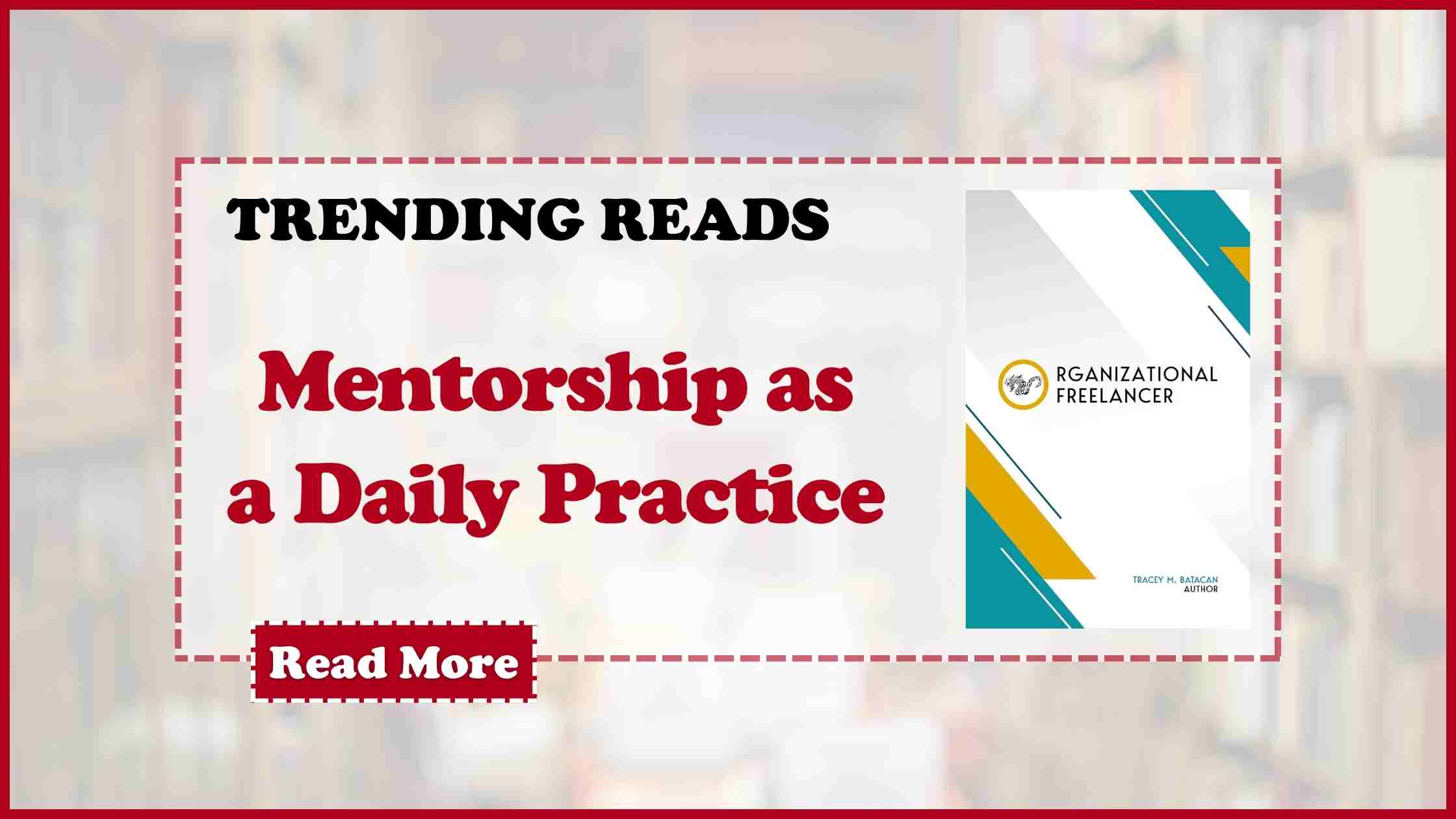
When most people hear the word “mentorship,” they picture formal programs, scheduled meetings, or annual workplace initiatives. But mentorship does not have to be limited to occasional check-ins or once-a-year events. It can be part of everyday work life. Seeing mentorship as a daily practice is what Tracey M. Batacan, in her book Organizational Freelancer, calls the 365-mentoring mindset, and it may very well be the future of career development.
Daily mentorship is about small, consistent acts of guidance, support, and learning. It is not about long speeches or structured training sessions. It is about being available to share advice when a colleague has a quick question, listening when someone is unsure of a next step, or taking a few minutes to show how to use a tool more effectively. These everyday moments build trust and encourage growth, often more effectively than a formal program that happens once in a while.
One of the strengths of the 365-mentoring mindset is that it works in both directions. You can be a mentor and a mentee at the same time. For example, an experienced professional might mentor a new hire on communication skills while learning new technology shortcuts from that same colleague. This exchange makes mentorship a two-way street, which keeps it fresh and relevant.
In Organizational Freelancer, Batacan shares insights on how professionals can use mentorship to navigate change and strengthen their skills. She explains that offering and receiving guidance should not be treated as separate from everyday tasks. Instead, it can happen naturally within team projects, brainstorming sessions, or even casual workplace conversations. By normalizing this approach, organizations create environments where knowledge flows freely and employees feel supported at every stage of their careers.
Think of an example where a project hits a roadblock. Instead of waiting for a manager to assign solutions, a team member might step up to guide others through brainstorming new approaches. That person is practising mentorship in real time, even if they are not in a formal leadership role. These small moments accumulate and strengthen both the mentor’s and mentee’s confidence.
Another example is when professionals take time to share lessons learned from past challenges. A colleague who once struggled with a difficult client might mentor others by offering practical tips for communication and boundary-setting. This everyday sharing helps others avoid mistakes and shows that mentorship is not about hierarchy but about experience and perspective.
Why is the 365-mentoring mindset the future of career development? Because workplaces are moving faster than ever, and employees cannot afford to wait for annual reviews or formal training to grow. They need feedback, guidance, and encouragement as situations arise. By practising mentorship daily, individuals and teams become more adaptable, creative, and resilient.
The power of daily mentorship lies in its simplicity. It does not require grand gestures, just a willingness to listen, share, and support each other in real time. Over weeks and months, these small acts build stronger teams, stronger skills, and stronger careers.
For more on how to apply the 365-mentoring mindset and make mentorship a natural part of your professional life, read Organizational Freelancer by Tracey M. Batacan. It offers real-world stories and practical advice on why mentorship as a daily practice can transform how we work and grow together.
Discover Tracey M. Batacan’s book now. Available on Amazon: https://www.amazon.com/dp/1968615636/.


