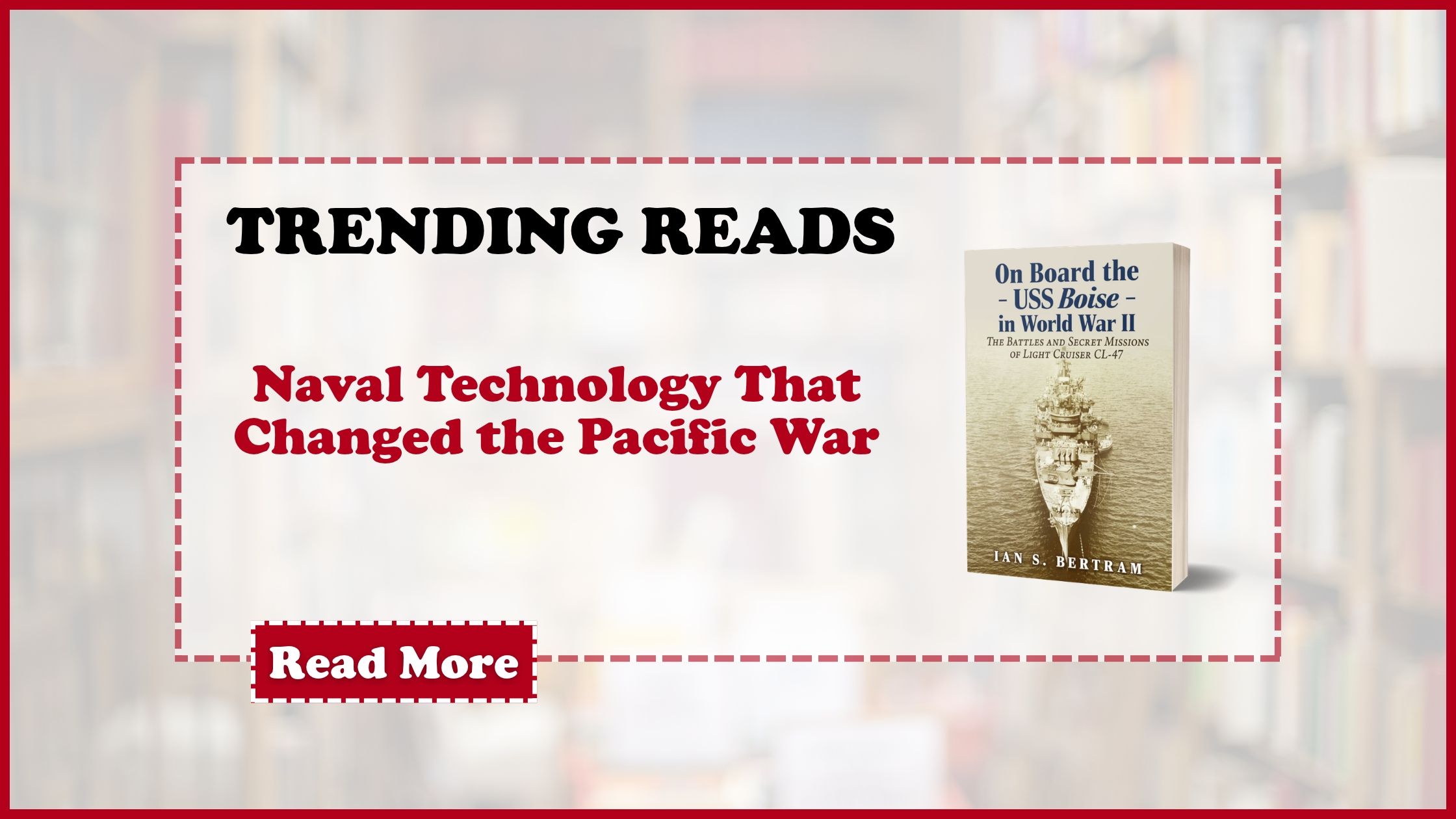
Victory in the Pacific was won by courage, sacrifice, discipline, and machines pushed to their limits. On Board the USS Boise in World War II captures that world through the story of a fighting ship and the men who learned to trust steel, radar, guns, aircraft, and one another in waters where a single mistake could mean death.
The USS Boise was not just a ship moving across a map. She was a floating system of firepower, navigation, communication, repair, and survival. Her crew depended on every tool aboard, from binoculars and compasses to radar screens and massive naval guns. The book shows how technology changed the way sailors fought, but it also shows that machines were only as strong as the men operating them.
Radar became one of the great turning points of the Pacific War. It gave ships like Boise the ability to detect danger beyond what human eyes could see. In dark seas, bad weather, and tense night operations, radar could mean the difference between surprise and survival. Yet this new technology required skill, judgment, and trust. Sailors had to learn how to read signals, understand what they meant, and act before the enemy struck first.
The ship’s firepower was equally formidable. Boise carried 6 inch guns capable of sending a devastating volume of shells toward enemy targets. These weapons were not simple instruments of destruction. They required coordination, timing, training, and nerve. Men below deck handled ammunition. Others aimed, loaded, calculated, and fired. In battle, every second mattered, and the success of the ship depended on men performing their tasks with precision under pressure.
Aircraft also played a vital role. Scout planes extended the ship’s reach, searched for threats, and helped locate enemy movement across vast waters. In a theater defined by distance, islands, and hidden dangers, the ability to see farther was priceless. The Pacific War proved that naval combat was no longer only about ships facing ships. Airpower had become central to survival and victory.
What makes On Board the USS Boise in World War II so compelling is that it does not treat technology as cold machinery. It places readers beside the sailors who lived with it, repaired it, feared its failure, and relied on it when the enemy was near. Through Donald “DB” Fitch’s wartime diary and the wider story of the crew, the book reveals how young men adapted to a changing kind of war.
This is a book for readers who want more than dates and battle names. It offers the sound of guns, the strain of watch duty, the tension of radar contacts, and the human cost behind every naval advance. On Board the USS Boise in World War II brings to life the technology that helped shape the Pacific War, and the sailors who made it matter.
Discover the unforgettable true story behind the USS Boise today. https://www.amazon.com/Board-USS-Boise-World-War-ebook/dp/B0FRXHV2R6/