When you practice emergency medicine in rural Texas, you learn very quickly that a medical degree doesn’t make you the only authority figure in the room. The ER is a fascinating cultural crossroads where cutting-edge Western science frequently collides head-on with ancient cultural traditions, folklore, and deeply rooted spiritual beliefs. For a physician trained to rely strictly on data, anatomy, and pharmacology, these encounters require a rapid shift from clinical coordinator to cultural diplomat.
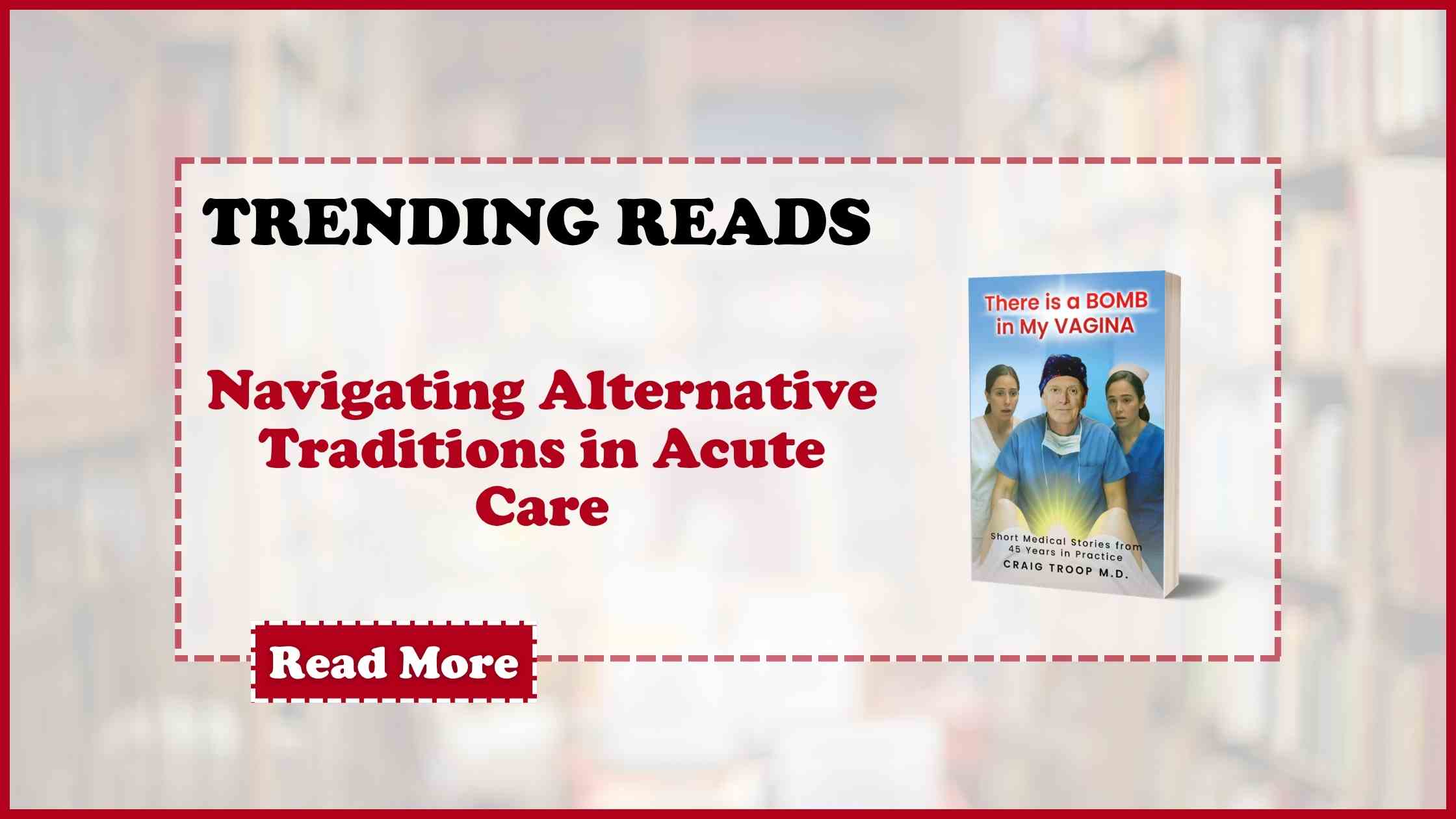
In my book, There is a Bomb in My Vagina, I recount a specific, unforgettable shift that put this delicate balance to the test: the night of the rural Texas “spooky chant” emergency room encounter.
A patient from a tight-knit, traditional community was brought in under acute distress. As the medical team rushed to hook up monitors, establish IV lines, and stabilize the patient, the family members filled the small curtained cubicle. They weren’t just passive observers; they began enacting an intense, rhythmic, traditional ritual, complete with what the staff quietly whispered about as a “spooky chant.” To the nurses and techs accustomed to the sterile, calculated rhythms of modern resuscitation, the scene was jarring. The atmosphere in the room grew thick with a palpable tension that had nothing to do with blood pressure readings.
In a high-stress medical scenario, a heavy-handed doctor might demand that the family leave, citing hospital protocol or the need for a quiet workspace. But medicine is a human endeavor, not a purely mechanical one. If you alienate the family or mock their traditions, you spike the patient’s panic, destroy trust, and compromise the history-gathering process.
Instead, you have to learn the art of coexistence. You monitor the heart rate while respecting the prayer. You administer the pharmaceutical cocktail while allowing the family to execute their spiritual rituals, provided it doesn’t cause physical harm or impede life-saving interventions. That night, by stepping back, practicing radical humility, and allowing the chant to weave through the sound of the beeping monitors, we stabilized the patient while honoring the family’s reality.
These psychological and sociological intersections are where real healing happens. Patients are more than just a collection of failing organs; they are bound to cultures, histories, and belief systems that dictate how they process fear and pain. 45 years in clinical medicine taught me that a stethoscope can tell you how a heart is beating, but listening to the room tells you how to care for the soul.
Head to Amazon to purchase your copy: https://www.amazon.com/dp/196964446X/