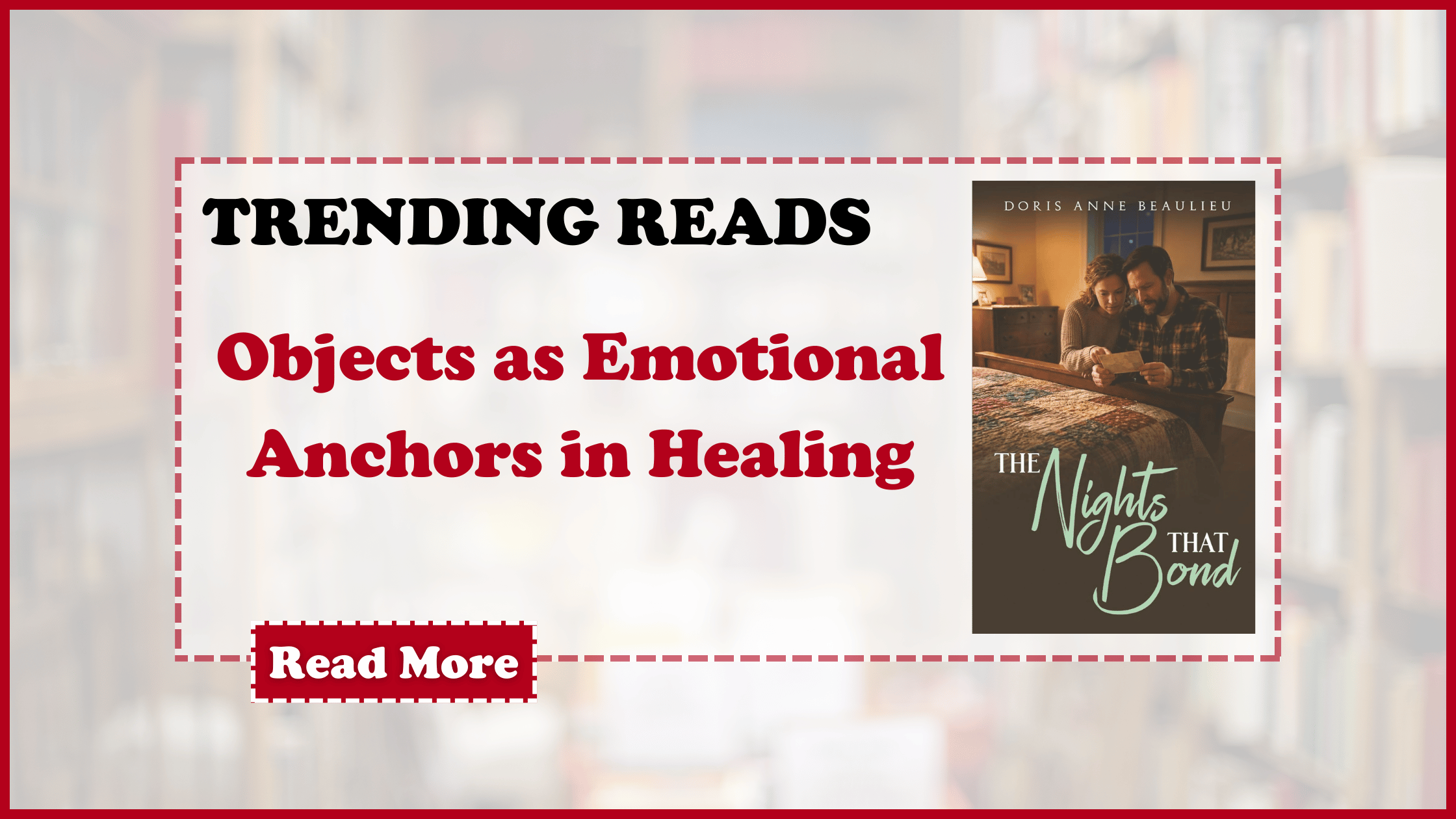
Objects often carry emotional weight far beyond their material value, a theme explored with depth and compassion in The Nights That Bond by Doris Anne Beaulieu. They hold memory, comfort, and identity in ways that words cannot always access, especially during periods of trauma or loss. When the mind struggles to recall the past, familiar objects can become emotional anchors, grounding a person in a sense of safety and continuity. In times of healing, these objects serve not as reminders of what was lost, but as quiet guides pointing toward who someone has always been.
Emotional anchors work because memory is not stored solely in conscious thought. It lives in the body, in repetition, in instinct, and in emotional response. A familiar texture, a scent, or the weight of an object can awaken feelings long before facts return. These reactions are not intellectual. They are visceral. They bypass logic and speak directly to the nervous system, offering reassurance when the mind cannot yet make sense of its surroundings.
Objects become especially powerful when trauma disrupts identity. After loss or injury, people often feel disconnected from themselves, as though their life has been interrupted or erased. In these moments, objects provide evidence of continuity. They silently affirm that a life existed before the fracture and that it can exist again. Even without clear recollection, the presence of familiar items can restore a sense of belonging and emotional orientation.
The author beautifully describes the role of objects deeply tied to ritual and routine. Handling personal items, sorting belongings, or returning objects to their proper place can create structure when internal order feels absent. These actions are grounding. They allow a person to participate in their own recovery without needing to fully understand it. The process itself becomes therapeutic, offering control and stability during a period defined by uncertainty.
Objects also hold relational memory. They often represent love, care, and connection rather than events. A handmade item, a photograph, or a carefully kept box can embody affection that survives even when details are forgotten. These items communicate emotional truth without demanding cognitive recall. They say, you were loved, you mattered, and you were known.
Importantly, emotional anchors do not force memory to return. They invite it. They allow healing to unfold at a pace the mind can tolerate. This gentleness is essential. Forcing recollection too quickly can traumatize rather than restore. Objects, by contrast, offer safety. They allow the individual to engage with the past in fragments, choosing when and how to approach it.
These themes are explored with warmth and sensitivity throughout The Nights That Bond by Doris Anne Beaulieu. The novel portrays how quilts, boxes, photographs, and everyday household items become emotional anchors for Penny as she navigates memory loss and healing. Rather than serving as mere plot devices, these objects function as bridges between who she was and who she is becoming. Through them, the story illustrates how healing often begins not with answers, but with touch, familiarity, and the quiet reassurance of being surrounded by pieces of one’s own life.
Using objects as part of healing respects the person’s autonomy. It does not interrogate or pressure. It trusts that the self will reemerge when conditions are right. This approach honors the complexity of recovery, recognizing that remembering is not always the first or most important step.
Want To Discover More? Head Over To Our Website : https://dorisannebeaulieu.com
This novel is available on Amazon: https://www.amazon.com/dp/B0GCC2GZLW/.