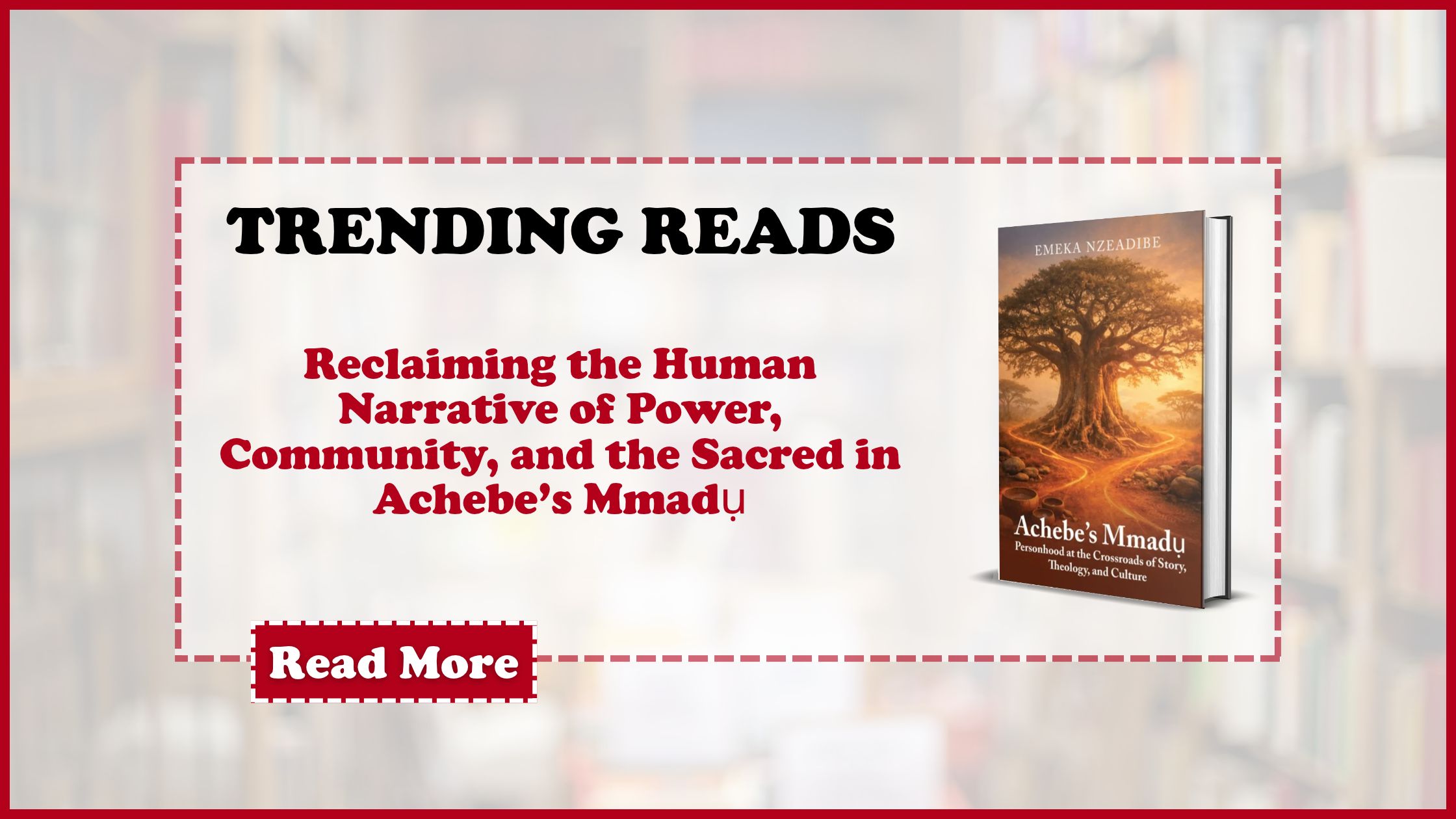
Global philosophical discourse has historically suffered from a severe blind spot,, as the tendency to overlook or devalue non-Western frameworks has led to dilemmas in our modern lives and culture. We are getting used to treating Eurocentric paradigms as the universal baseline for human consciousness, overlooking the basic needs we need to be called human. Emeka Nzeadibe’s Achebe’s Mmadụ: Personhood at the Crossroads of Story, Theology, and Culture directly confronts this oversight and treats Chinua Achebe’s fiction as a serious source of philosophical and theological enlightenment. Nzeadibe constructs a compelling defense of African dignity, self-awareness, and intellectual depth, with meticulous examination of how traditional societies manage power, conflict, and communal survival. Through the narrative arcs of Things Fall Apart and Arrow of God, the book explores the delicate balance between individual autonomy and the primacy of the clan.
The book presents traditional Igbo societies with their strengths, imperfections, and internal divisions and examines how rigid leadership styles, such as Okonkwo’s inflexible extremism or Ezeulu’s prideful entanglement with his priestly office ultimately clash with the community’s demand for balance and flexibility (Ife kwụlụ, ife akwụdebe ya). This structural and psychological analysis provides lesson is leadership ethics and shows how the failure to adapt to changing historical realities leads to systemic collapse.
Nzeadibe’s monograph also serves as a powerful meditation on the role of narrative, as it draws on Paul Ricoeur’s hermeneutics. This examines Achebe’s mastery of proverbs and metaphors. The book illustrates how storytelling acts as a vessel for preserving human worth.
In the wake of colonial discourses that sought to portray Africa as a continent without history or culture, Nzeadibe’s retrieval of Mmadụ acts as an intellectual restoration. He demonstrates that stories do not merely reflect reality. Rather, they shape it, giving voice to marginalized human experiences and providing the imaginative space necessary to rebuild lost dignity.
Achebe’s Mmadụ: Personhood at the Crossroads of Story, Theology, and Culture is much more than a literary commentary. It is a profound, timely guide for anyone who is navigating the tensions of cultural particularity and global connection. For anyone seeking a relational understanding of human dignity, this book is a transformative and deeply rewarding journey, which is able to build a bridge, demonstrating how indigenous African categories can deeply enrich Christian reflections on the Trinity, human rights, and the sacredness of every human life.
Upon reading this book, readers would know that it is an urgent summons. In a world constantly negotiating the tension between local particularity and global connection, Nzeadibe proposes a capacious vision of humanity that honors both difference and a shared destiny. It challenges readers to step past Eurocentric blind spots and embrace an integrated, relational understanding of personhood that values the body, the community, and the transcendent.
Emeka Nzeadibe has written a transformative book that bridges worlds. Achebe’s Mmadụ: Personhood at the Crossroads of Story, Theology, and Culture challenges us to look anew at the stories we tell and the philosophical foundations upon which we build our societies. Whether you are deeply passionate about African literature, eager to explore intercultural theology, or simply searching for a more relational understanding of what it means to be human, this book is an absolute must-read that will teach you the meaning behind being human and kind, with others and yourself as well.
Through proverbs, myths, and narratives, a culture continues to speak. Emeka Nzeadibe’s book shows that when those voices are heard carefully, they can enrich not only one community’s understanding of humanity but also the wider human conversation.
Read the book on Amazon: https://a.co/d/0363OG8A
Visit the Author’s Official Website: https://achebesmmadu.com/