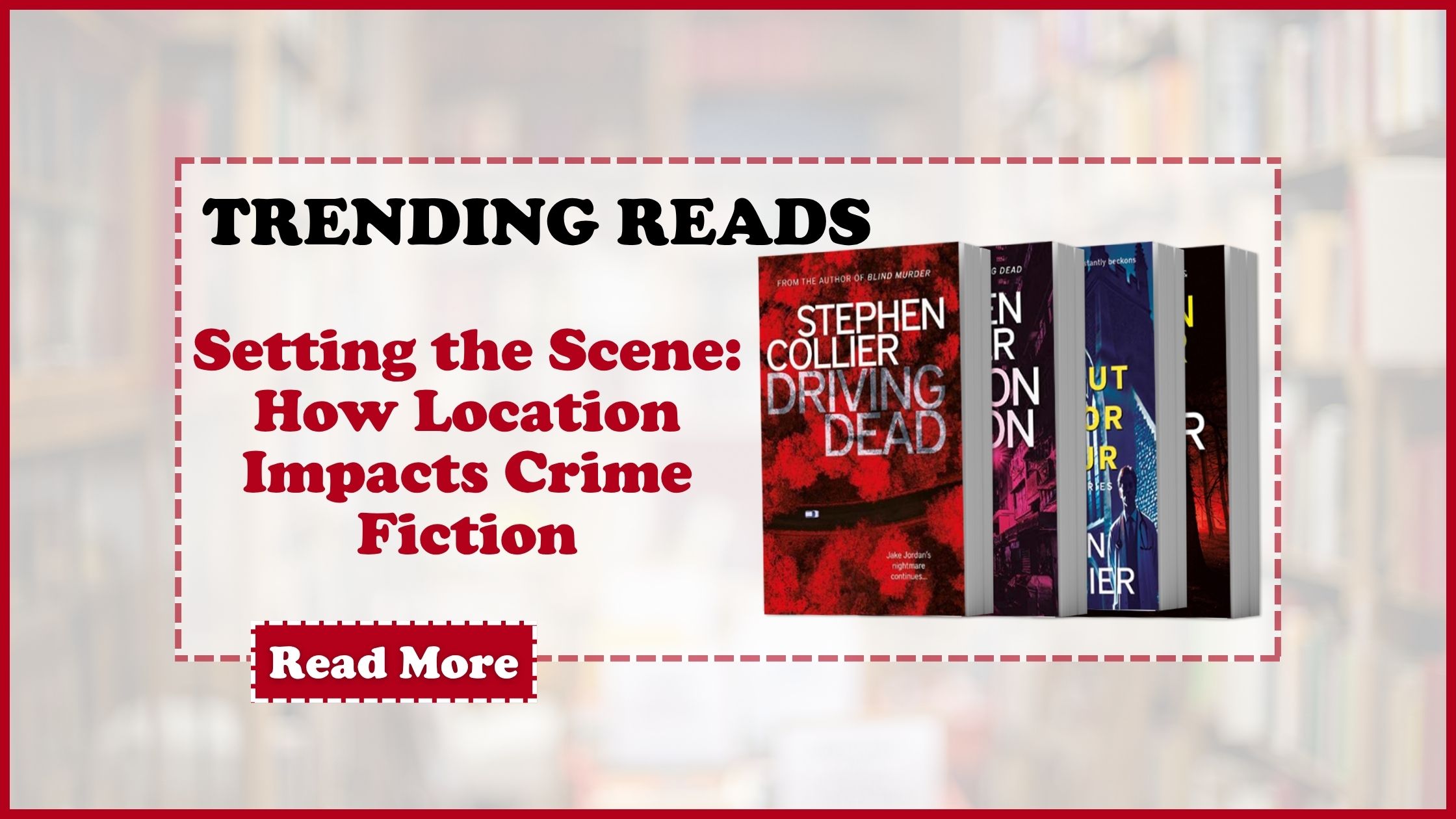
In crime fiction, the setting is more than just a backdrop for the action; it is an integral part of the narrative that shapes the story, influences characters, and drives the plot forward. The location in which a crime takes place can deepen the sense of tension, provide clues, and even create obstacles for the investigators. Stephen Collier’s work, particularly in Blind Murder and Crimson Dragon, demonstrates how carefully chosen settings contribute to the richness and authenticity of a crime fiction narrative.
In Blind Murder, Collier sets the stage in Northamptonshire, England, a location that offers both familiarity and a touch of mystery. By grounding the story in a relatively quiet, suburban setting, Collier contrasts the mundane aspects of everyday life with the brutal nature of the crime being investigated. The juxtaposition between the peaceful environment and the gruesome murder draws readers into the tension of the story, highlighting the unsettling idea that crime can strike anywhere, even in the most unsuspecting places. The familiarity of the setting also adds realism to the narrative, as it mirrors the author’s own experience as a police officer in the region, making the events feel more authentic.
Collier’s expertise in law enforcement plays a significant role in his choice of locations. In Driving Dead, he shifts the action to a new set of locations—ones that bring fresh challenges to the investigation. The novel deals with a new drug affecting drivers, and Collier takes readers on a journey through busy city streets, isolated country roads, and places that feel both familiar and tense. These settings serve not only as locations for the crime but also as a reflection of the investigation’s complexity. The challenge of solving a crime is made more difficult by the terrain, the urban sprawl, and the limitations of technology in reaching crucial locations. The sense of place enhances the stakes of the story, forcing the characters to confront not only the criminals but the physical and logistical obstacles that impede their progress.
Crimson Dragon marks a significant shift in Collier’s approach to setting by taking the action beyond the UK to the bustling city of Hong Kong. The move to an international location introduces new challenges for Collier’s characters, particularly Detective Mandy Lee. The city’s rich cultural landscape, its dense urban environment, and its underworld of crime create a dynamic and complex backdrop that drives the investigation forward. Hong Kong’s vibrant, sometimes chaotic, atmosphere is contrasted with the more subdued, controlled environment of the UK, adding layers of conflict and tension to the story. Collier uses the city’s geography to amplify the narrative’s stakes, as characters navigate unfamiliar terrain and cultural barriers in pursuit of justice.
The setting in Crimson Dragon not only enhances the action but also deepens the emotional stakes of the story. The contrast between the high-tech city of Hong Kong and the gritty streets of London offers a unique lens through which to explore the themes of loyalty, justice, and betrayal. Collier’s portrayal of Hong Kong is authentic, reflective of the real-life challenges that police officers may face when working in foreign, unfamiliar jurisdictions. The city becomes more than just a backdrop; it is a character in its own right, influencing the direction of the investigation and the choices made by the characters.
Overall, location plays a pivotal role in shaping the narrative of a crime novel. Whether it’s the quiet suburbs of Northamptonshire or the bustling streets of Hong Kong, the setting in Collier’s books enhances the story’s tension, provides depth to the characters, and adds layers of complexity to the plot. Through his careful choice of locations, Collier demonstrates how the environment can impact the investigation, create obstacles, and deepen the emotional stakes of the narrative. For readers, the setting becomes an integral part of the experience, making the crime feel more immediate and the characters’ journeys all the more compelling.
Read this book now on Amazon: https://www.amazon.co.uk/dp/173944423X/