In the quiet rhythm of a hospital ward, everything can change in an instant. A stable patient suddenly crashes, alarms echo through the corridor, and within seconds, nurses and doctors are expected to respond with precision, speed, and calm control. These are the moments that define healthcare professionals-not just by what they know, but by how they think and feel under pressure.
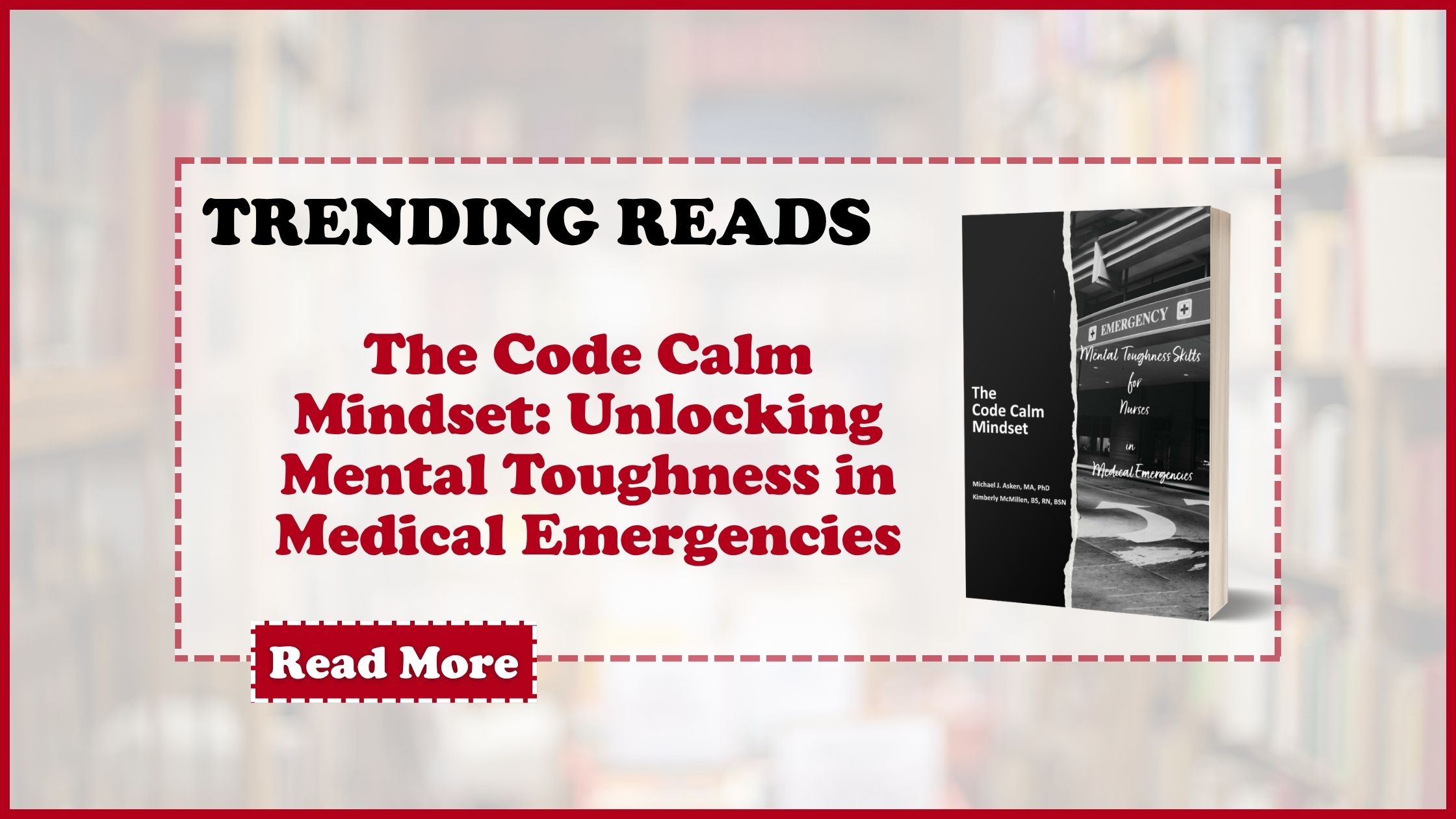
That is why The Code Calm Mindset by Michael J. Asken and Kimberly McMillen is a highly relevant publication in the field. This book not only provides technical knowledge for healthcare practitioners but also helps them understand that being a successful nurse requires mental and psychological readiness as well. Indeed, it is clear that even very experienced specialists can be frightened by unexpected situations at work.
It is possible to imagine that a nurse or physician is at the bedside of a patient who suffers from cardiac arrest. Their technical training, as well as protocols of care, can help professionals make decisions; however, in order to cope with a situation and save a life, the mental skills of healthcare practitioners should also be developed.
The truth of this proposition is evident in its honesty. While healthcare practitioners are often celebrated as superheroes, they are humans first and foremost. They experience pressure, emotional strain, and moments of self-doubt, just like everybody else. According to Michael J. Asken and Kimberly McMillen, mental toughness is not defined by the absence of fear but rather by how one handles it. One must be able to be in tune with reality, have clarity of thought, and perform effectively despite being emotionally overwhelmed.
It is in this regard that the value of The Code Calm Mindset becomes evident. In presenting it, the book refrains from glorifying mental toughness as something unattainable but emphasizes it as a skill that needs development through practice. Through such actions as mental rehearsals, positive self-talk, and controlled breathing, it gradually builds up confidence and control.
Furthermore, there is a more emotional aspect to this discussion. There is always a human angle to any emergency situation. There are worried relatives, people fighting for their lives, and professionals who hope that they are doing what they should do. This is why mental toughness cannot be simply a matter of performing well-it is also a compassionate response.
In the end, the concept presented in The Code Calm Mindset by Michael J. Asken and Kimberly McMillen refutes the idea that experience is sufficient. Although experience counts, it is the mindset that dictates whether such experience is put to proper use. Through the development of mental toughness, medical practitioners will not only be able to react to emergency situations but also respond to them.
In an industry where minutes make all the difference, composure in the face of adversity can mean the difference between life and death.
Available On Amazon : https://www.amazon.com/dp/B0CQF13ZRH/