Democracy rests on a simple idea: the people should have a meaningful voice in choosing their leaders. In the United States, however, presidential elections are decided through the Electoral College rather than by the national popular vote.
That raises an important question about democratic representation.
The Electoral College was created at a time when the country was very different. Communication was slow, political participation was limited, and the population was far smaller. The system reflected concerns about how a president should be selected in a new and uncertain republic.
More than two centuries later, the country has changed dramatically. Americans can communicate instantly, follow national campaigns closely, and vote in elections shaped by modern media, polling, and technology. Yet the Electoral College remains largely intact.
Supporters argue that the system protects the role of individual states and prevents presidential elections from being determined only by the most populated areas. They see it as part of the federal structure established by the Constitution.
Critics focus on a different problem. A candidate can win the presidency without receiving the most votes nationwide. When that happens, the result raises questions about whether political power truly reflects the consent of the governed.
Democratic representation becomes even more complicated when voters in different states receive different levels of attention from presidential campaigns. Candidates often concentrate their efforts on competitive states while giving far less attention to states considered safely Republican or Democratic. Millions of voters may participate, but their states receive little serious campaign attention.
The deeper issue is not simply whether the Electoral College is old. Age alone does not make an institution ineffective. The real question is whether the system still serves the democratic principles it is supposed to support.
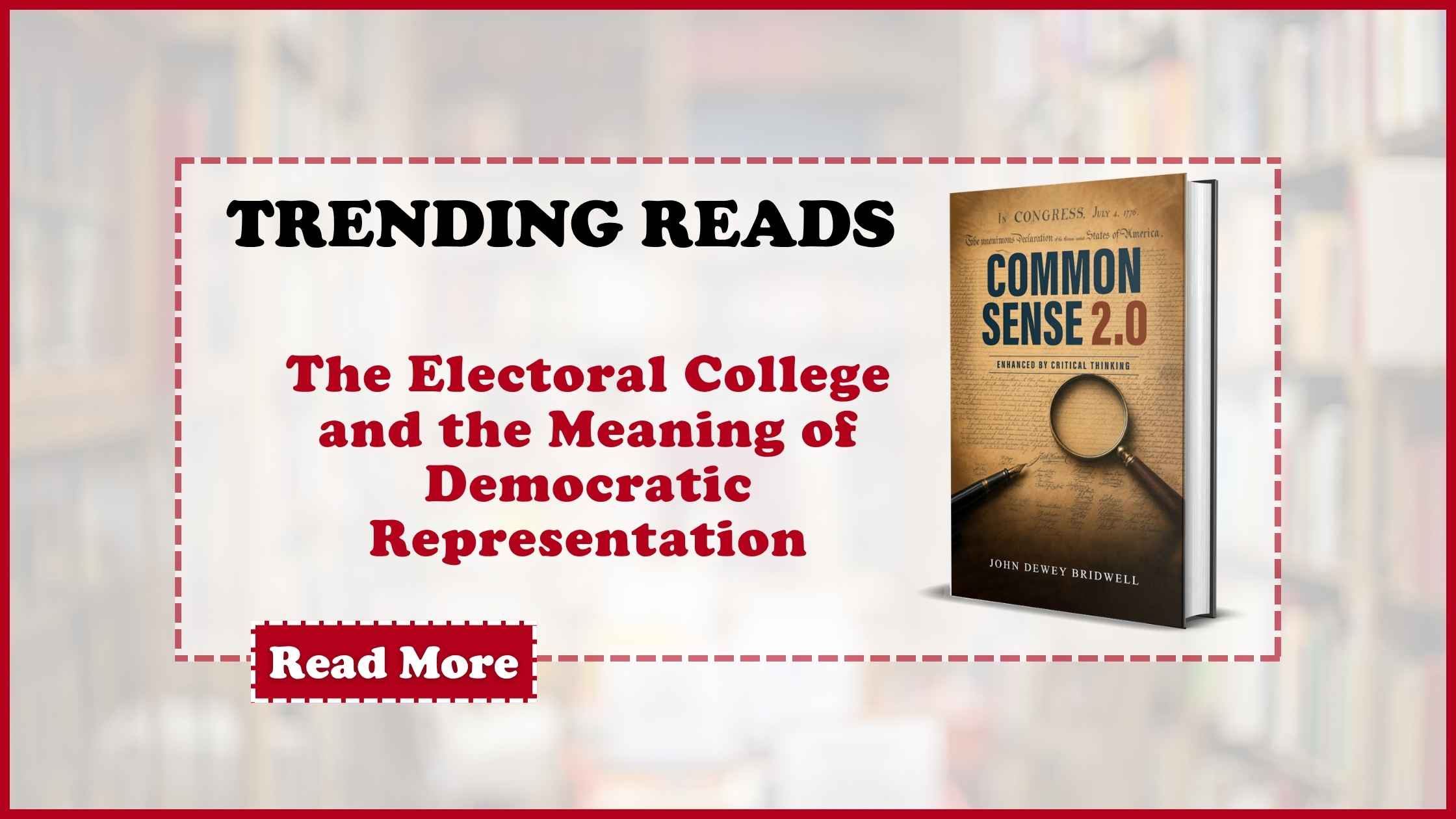
John Dewey Bridwell examines this question in Common Sense 2.0: Enhanced by Critical Thinking. The book argues that America should judge its political institutions against the principles of Equality, Life, Liberty, the Pursuit of Happiness, and government based on the consent of the governed.
From that perspective, the Electoral College deserves careful examination.
A democratic system should encourage citizens to believe that their votes matter and that political authority reflects the choices of the people. When an election produces a result that differs from the national popular vote, that confidence can be tested.
The Electoral College therefore represents something larger than a debate about election procedure. It asks Americans to decide what democratic representation should mean in the twenty first century and whether institutions created generations ago should be reconsidered when they no longer appear to serve the principles behind them.