Nonprofit organizations are often praised for accomplishing remarkable things with limited resources. Employees stretch their responsibilities, outdated equipment remains in use, and leaders find creative ways to maintain essential services despite financial constraints.
But what happens when doing more with less becomes a permanent organizational philosophy?
While financial discipline is essential, constantly minimizing expenses can gradually weaken the very organizations communities depend upon. True nonprofit sustainability requires more than careful spending. It demands thoughtful investment in people, infrastructure, leadership, and organizational growth.
The Problem With a Culture of Scarcity
Many nonprofit professionals enter the sector because they believe deeply in serving others. However, dedication to a mission can sometimes create an unhealthy acceptance of inadequate resources.
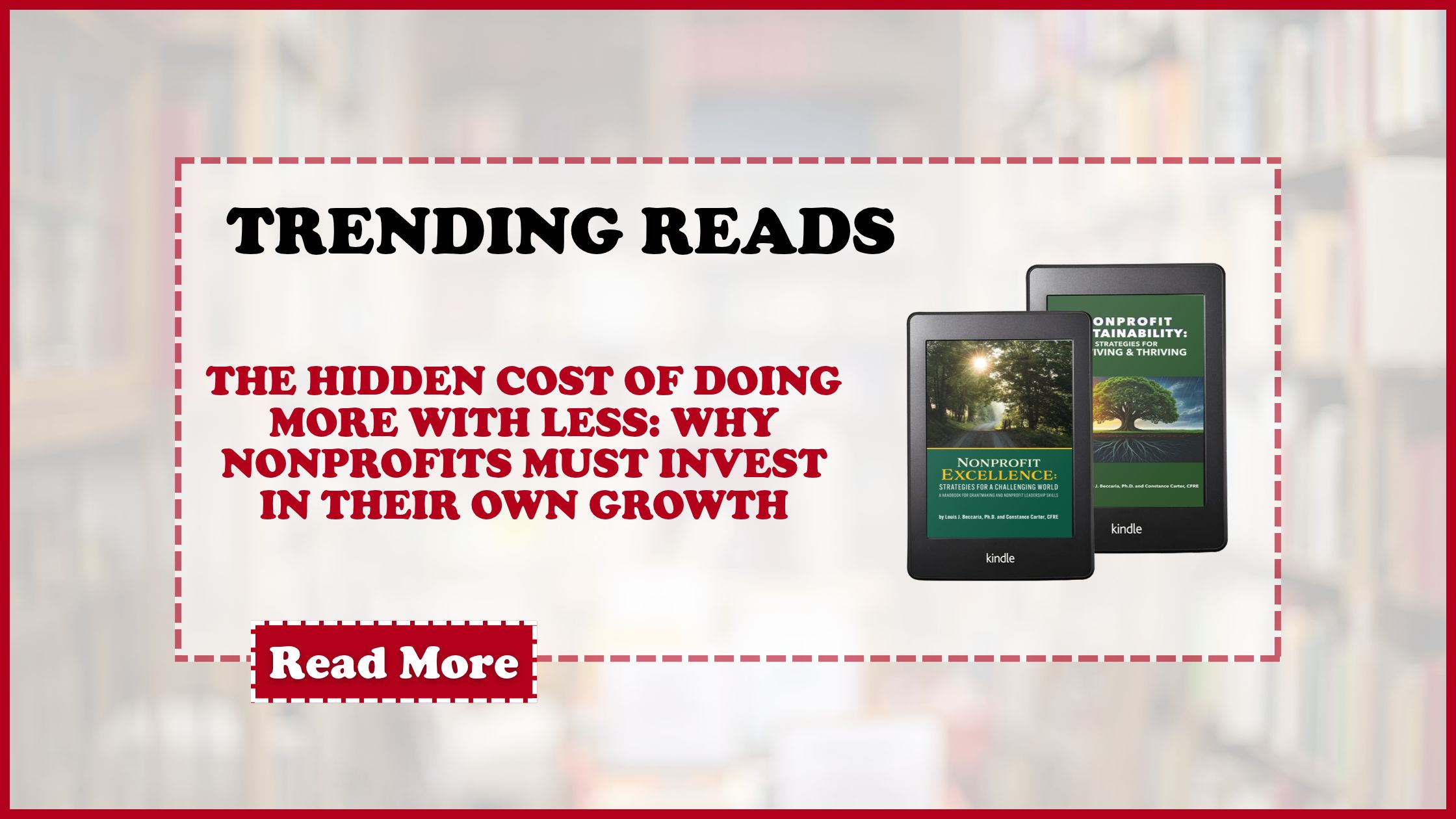
In Nonprofit Excellence: Strategies for a Challenging World, Louis J. Beccaria and Constance Carter examine this challenge through the concept of the nonprofit “vow of poverty” mentality.
This mindset encourages organizations to accept outdated technology, limited professional development, inadequate facilities, and insufficient employee compensation as unavoidable realities of charitable work.
Although such sacrifices may appear financially responsible, they can undermine employee effectiveness, restrict innovation, and weaken organizational performance.
The challenge is recognizing that investing in organizational operations is not separate from serving the mission. It is part of making that service possible.
Investing in People Is Investing in the Mission
A nonprofit’s greatest resources include the knowledge, commitment, and capabilities of its employees and volunteers.
When staff members lack training, appropriate technology, or opportunities for professional growth, their ability to perform effectively becomes limited.
Organizations benefit from providing employees with practical tools, competitive compensation, and continuing education that strengthens their expertise.
Nonprofit Sustainability: Strategies for Surviving and Thriving, edited by Louis J. Beccaria and Constance Carter, explores organizational capacity-building as an essential component of long-term sustainability.
Strengthening internal capabilities enables nonprofits to improve operations, respond to changing circumstances, and continue delivering meaningful services.
Growth Requires Strong Organizational Foundations
Investing in employees is only one part of organizational development.
Effective nonprofit growth also depends on capable boards, strategic planning, sound financial management, and responsible leadership.
The capacity-building discussions in Nonprofit Excellence: Strategies for a Challenging World emphasize strengthening organizational functions to improve efficiency, effectiveness, and community impact.
For nonprofit leaders, this means examining whether existing systems genuinely support the mission.
Are board members adequately prepared? Does the organization have effective financial procedures? Are employees equipped with appropriate resources? Is strategic planning guiding future decisions?
These questions encourage leaders to identify weaknesses before they become serious operational problems.
Moving From Survival to Sustainability
Organizational investment does not mean spending without restraint. Every expenditure should be considered in relation to financial capacity, mission priorities, and expected benefits.
The sustainability framework presented in Nonprofit Sustainability: Strategies for Surviving and Thriving connects financial strength, governance, organizational effectiveness, and community support.
Together, these areas help leaders evaluate what their organizations need to remain effective over time.
Building stronger institutions requires moving beyond immediate survival and developing the capacity to serve future generations.
A nonprofit should not have to choose between supporting its mission and strengthening its own operations. Responsible investment can advance both objectives.
The real measure of financial responsibility is not simply how little an organization spends, but how wisely it uses its resources to sustain meaningful community impact.
Explore Both Books on Amazon
Discover practical insights into nonprofit leadership, organizational growth, capacity-building, financial sustainability, and effective governance.
Book 1 — Nonprofit Excellence
Available Now on Amazon: https://www.amazon.com/dp/B09HYLP6G5/
Book 2 — Nonprofit Sustainability
Available Now on Amazon: https://www.amazon.com/dp/B0HK9WC88S/
Build a stronger foundation for your organization’s future. Explore both books today!