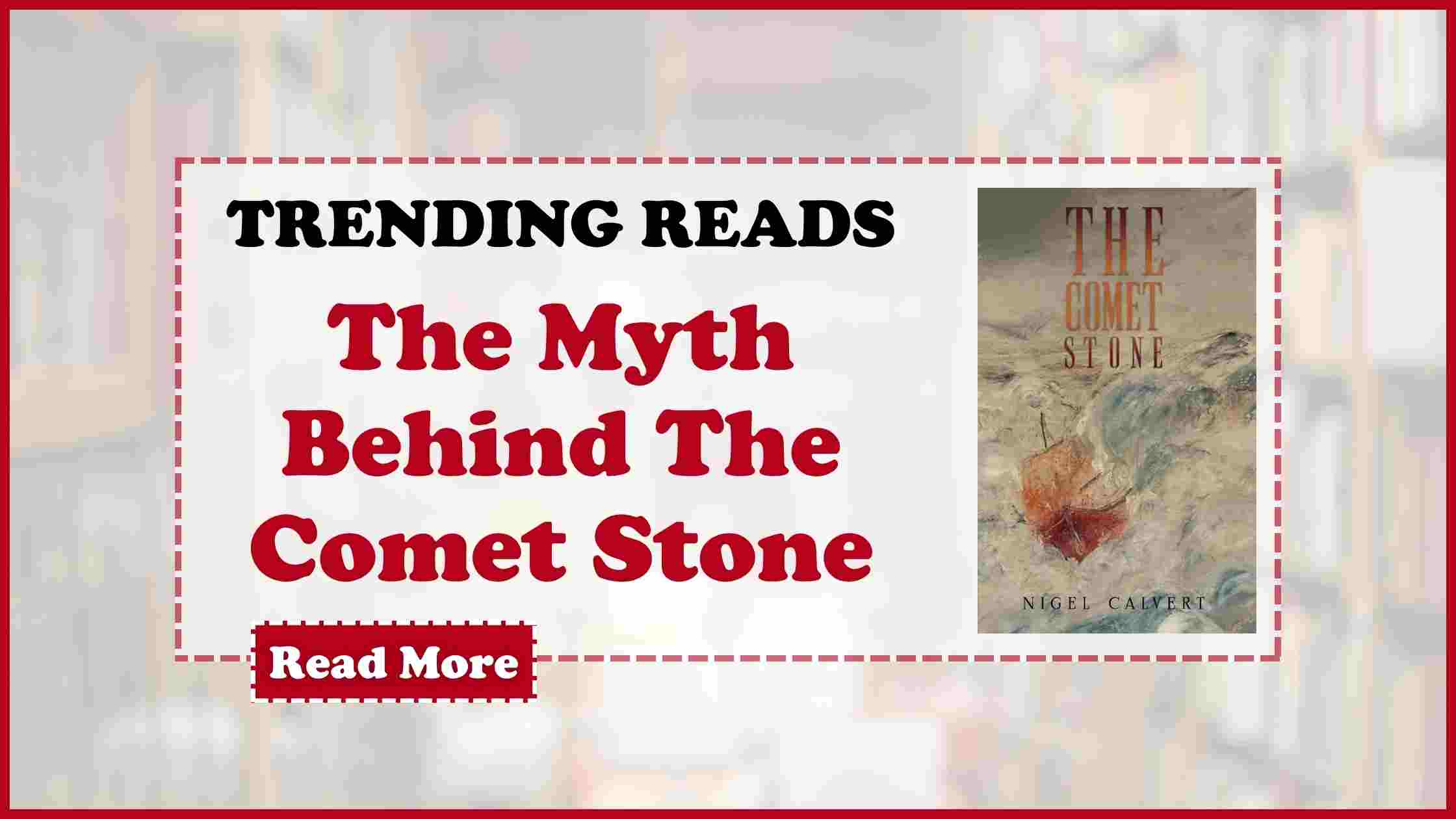
Every legend begins with a spark, a story whispered across generations, half believed and half forgotten. In Nigel Calvert’s The Comet Stone, that spark comes from the heavens themselves. A blazing comet cuts across the sky, leaving behind not only a trail of light but also a fragment that falls to Earth, a mysterious stone said to possess the power to alter destiny. What begins as ancient myth becomes the heart of a modern adventure, connecting past and present in a tale that explores how the stories we inherit still shape the choices we make.
At first glance, The Comet Stone feels like a classic adventure. Two sisters, Tamarind and Daisy, stumble upon an ancient artifact during a seaside summer, setting off a chain of events that will transform their understanding of the world and themselves. But beneath the surface lies something older and deeper: a myth born in Hero’s time, centuries earlier, when sailors worshipped the stars and believed their fates were written among them. The comet stone, its surface etched with swans and a firebird rising from flames, was more than an object of beauty. It was believed to hold cosmic power, capable of altering fortune itself. To possess it was to invite both wonder and danger.
Nigel Calvert reimagines this myth with remarkable complexity, blending the mysticism of ancient legend with the realism of modern life. Through alternating timelines, the author crafts a seamless bridge between history and myth, using Hero’s ancient voyage and Tamarind’s contemporary discovery to show how the same symbols and questions endure through time. Hero’s world is one of ritual and superstition, where the heavens dictate human fate; Tamarind’s world is one of reason and rebellion, where the struggle is for self-definition. However, both find themselves guided by the same cosmic mystery, the comet that burns above them, illuminating destiny and desire alike.
What makes Calvert’s use of mythology so powerful is its subtlety. The comet stone never behaves like a conventional magical artifact. Its influence is intangible, shaping events through coincidence, intuition, and courage rather than direct intervention. It mirrors how myths often work in real life: not as literal truths, but as metaphors for the invisible forces that steer us, love, fear, faith, and the choices we make in their shadow.
By weaving myth into a contemporary narrative, The Comet Stone reminds readers that ancient stories never truly fade. They evolve. The legends of firebirds and celestial omens may seem distant, but they reflect the same human questions that define modern storytelling: Can we change our fate? Do we control our path, or are we following a pattern older than time? In Calvert’s world, these questions don’t just haunt the characters; they inspire them to grow.
Ultimately, The Comet Stone shows that myths aren’t relics of the past. They’re living threads connecting generations of dreamers and seekers. Whether in Hero’s quest for meaning or Tamarind’s search for freedom, the power of the comet endures as a symbol of transformation, reminding us that destiny is as vast and mysterious as the night sky itself.
If you’re drawn to stories where myth meets modernity and fate glows with the light of adventure, The Comet Stone is a journey worth taking. It’s not just a story about a fallen star. It’s a rediscovery of how legends continue to guide us through the ages.
Read The Comet Stone by Nigel Calvert on Amazon: https://www.amazon.com/dp/B0D52X5WFK.