What makes a place feel like home? Is it the familiar streets, the surrounding landscape, or the people whose lives become connected with our own? Often, our strongest memories are attached to ordinary places and experiences that seemed unremarkable at the time. Years later, those moments can reveal how deeply our surroundings have shaped our sense of belonging.
A community is more than a collection of buildings and neighbourhoods. It develops its identity through shared traditions, personal relationships, local history, and the everyday contributions of its residents. These connections help transform a geographical location into somewhere people recognise as their own.
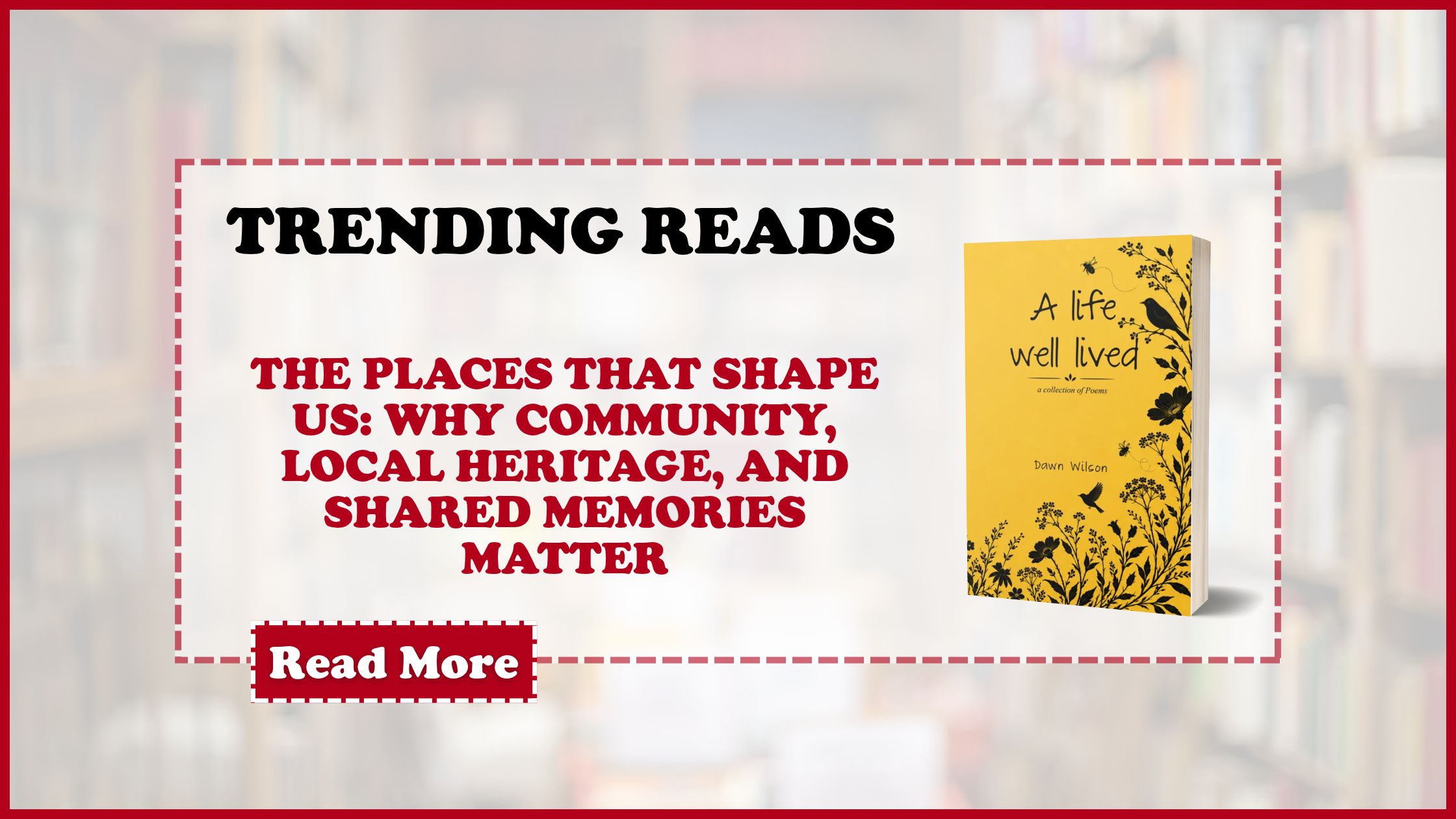
In A Life Well Lived, Dawn Wilson reflects on this relationship through memories of Wiltshire, its countryside, and the people who helped define her experiences there. Her observations reveal how local places become meaningful through the lives unfolding within them.
One particularly revealing example comes from her recollections of working in Wiltshire, where gardeners, household staff, and agricultural workers formed part of a distinctive rural environment. She remembers two gardeners, Jack and Gerald, whose dedication to their work and friendly disagreements about planting potatoes left a lasting impression.
Such memories demonstrate that local heritage is not preserved through historic buildings alone. It also survives through personal stories, working traditions, and relationships that connect one generation’s experiences with another.
The disappearance of a familiar landscape can make these connections especially noticeable. Wilson recalls an apple farm whose orchards were eventually replaced by fields of wheat. Although agricultural land continued to serve a purpose, the transformation marked the passing of a particular way of life.
Changes like these encourage us to consider what communities lose when familiar places disappear. The physical environment may change, but memories of the people, activities, and traditions associated with it can remain.
Shared celebrations offer another powerful expression of belonging. In A Life Well Lived, the poem “Community” recalls how residents of Pewsey Vale gathered to create colourful road artwork ahead of a cycling event. Their collective effort transformed an ordinary road into a celebration of local identity.
The significance of such occasions extends beyond the event itself. Working together allows neighbours to contribute their creativity, strengthen relationships, and experience the satisfaction of achieving something collectively.
Dawn Wilson also captures the quieter importance of place through descriptions of Wiltshire’s open countryside, walking routes, wildlife, and changing seasons. These observations suggest that belonging can develop through simple familiarity with the natural environment.
A familiar hill, a woodland path, or the arrival of spring may hold meaning because of the experiences associated with it.
Preserving community identity does not necessarily mean resisting every change. Places must evolve, and new residents will create their own memories and traditions. The challenge lies in recognising the value of what already exists while making room for what comes next.
We can contribute by sharing local stories, participating in community activities, appreciating familiar landscapes, and recognising the people whose everyday efforts help sustain them.
Ultimately, the places that shape us are not always famous or extraordinary. Their importance comes from the relationships, experiences, and memories they hold.
A place becomes truly meaningful not simply because we have lived there, but because something of its history has become part of our own.