Everyone loves a good mystery, but the ones that stay with us are the ones that make us feel like part of the investigation. They hand us just enough pieces to keep us guessing without giving the whole picture away too soon. That balance is what makes a story both fun and suspenseful.
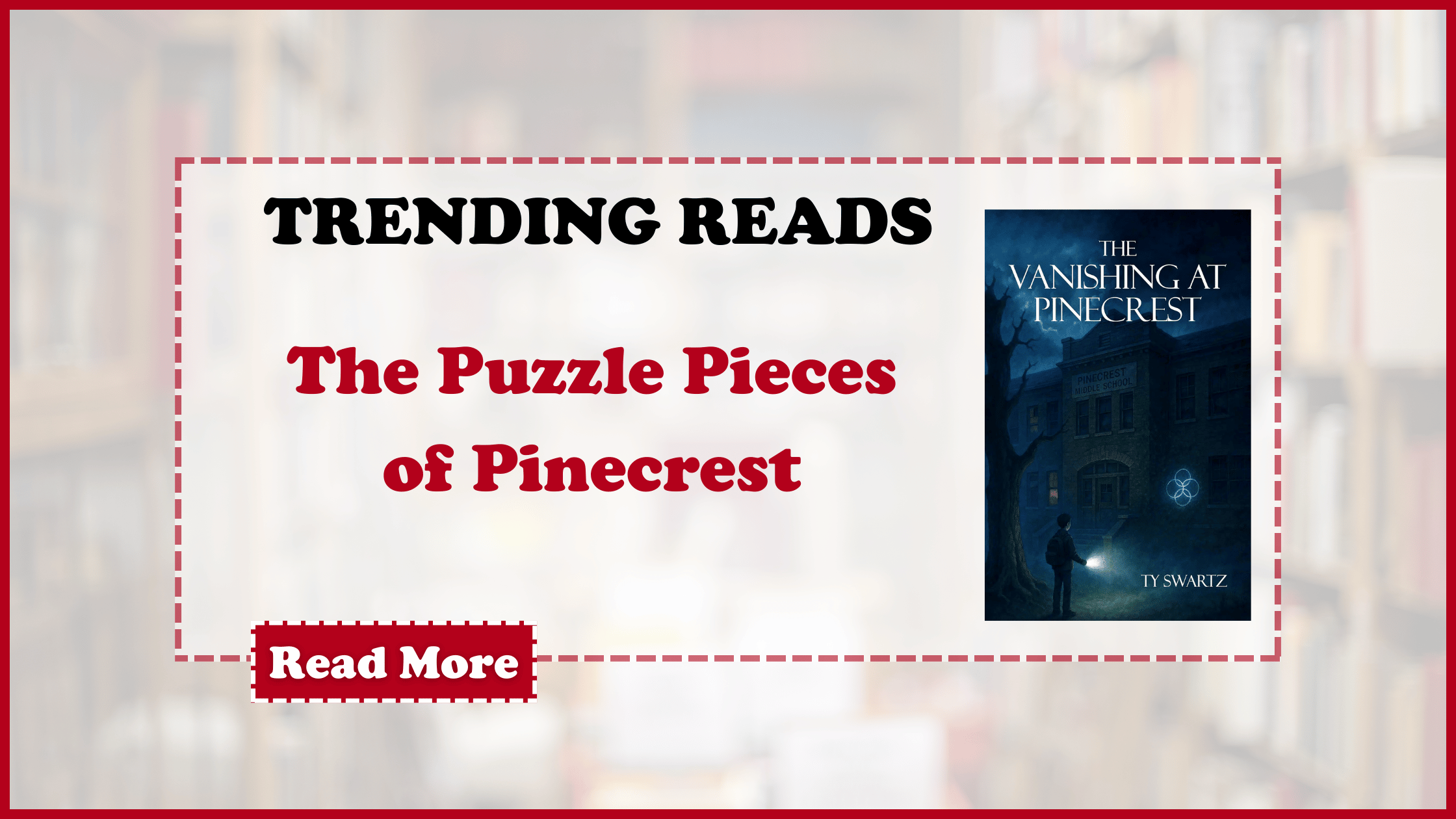
In The Vanishing at Pinecrest by Ty Swartz, the puzzle is not solved all at once. Instead, it is built piece by piece through hidden clues, strange symbols, and maps that reveal secrets about the school and its dark history. Each detail feels small at first, but together they form a pattern that explains why students have been vanishing every twelve years. For readers, following these clues is like walking beside Sam Rivera, the main character, as he puts the pieces together.
One of the most effective ways the story builds suspense is by placing clues in everyday spaces. A crooked painting, a note left in an old locker, or a symbol carved into a wall may seem like nothing at first glance. But when Sam notices them and begins connecting the dots, readers start to see how the school itself holds the answers. This approach keeps the mystery grounded because the details are believable and easy to imagine in a real school setting.
The recurring symbols throughout the book tie directly into the ritual behind the disappearances. They are simple enough for readers to recognize but mysterious enough to spark curiosity. Each one raises questions. What does it stand for? Why is it in this location? Who put it there? By slowly revealing the purpose of these symbols, the story gives readers the satisfaction of uncovering meaning along with the characters.
Nothing fuels suspense like the promise of hidden places. In Pinecrest, old blueprints and maps of the East Wing become key to solving the mystery. They point to rooms that no longer appear on current school plans, hallways that were sealed off, and spaces that have been forgotten over time. For readers, following these maps feels like solving a puzzle while exploring alongside the characters. Each discovery of a new room or corridor adds another layer to the puzzle.
What makes the clues, symbols, and maps work so well is that they are introduced at the right pace. Readers are never handed too much information at once. Instead, the story drops hints in manageable pieces, giving time to think about them before moving on to the next revelation. It prevents the mystery from becoming overwhelming, especially for younger readers, while still keeping the tension high.
For young adult readers, puzzles like these are more than just entertaining. They encourage observation, problem-solving, and persistence. They also make the reading experience interactive. Instead of passively watching the story unfold, readers are invited to look closely, make predictions, and test their theories. It is this kind of engagement that makes a mystery satisfying to read and hard to put down.
The Vanishing at Pinecrest is filled with puzzle pieces waiting to be connected. From symbols fixed into walls to maps of hidden corridors, each clue pulls readers deeper into the mystery without overwhelming them. If you enjoy stories where every detail matters and solving the puzzle is part of the fun, this book is one you will not want to miss.
This book will soon be available on Amazon. (https://www.amazon.com/dp/1969868074/)