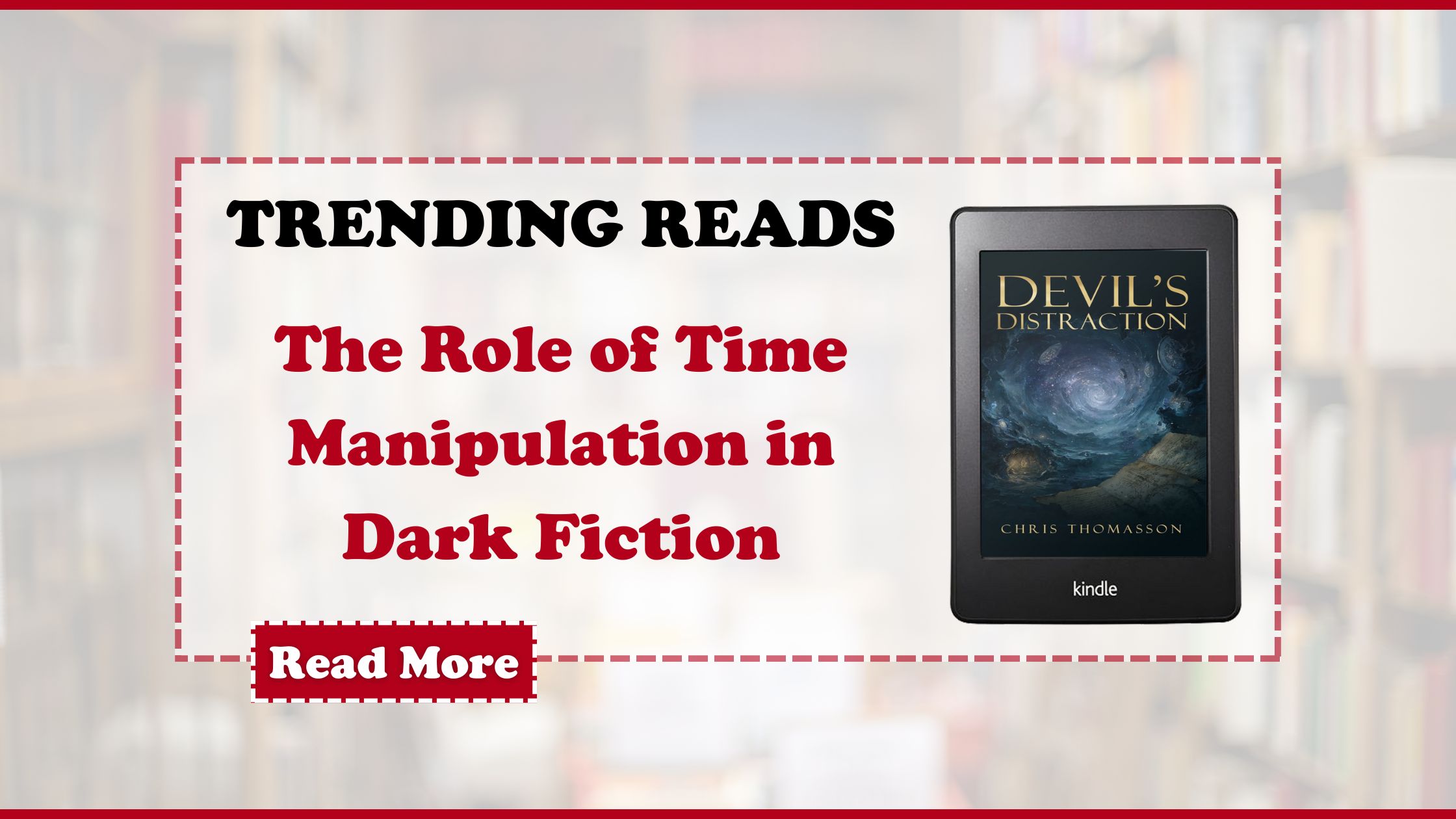
Time is one of the few forces that no one can outrun. It shapes lives, decisions, and legacies. That is why stories that bend or break time often feel instantly gripping. In dark fiction, time manipulation does more than add excitement. It deepens tension, raises moral questions, and exposes hidden truths about human nature. When used well, it becomes a tool that reshapes both the plot and the characters who must navigate the consequences. In Devil’s Distraction by Chris Thomasson, time is not just a pathway. It is a battlefield.
The idea of altering timelines is powerful because it addresses a question many people ponder. What would change if one moment in the past had gone differently? Dark fiction explores this idea in its rawest form. Instead of imagining small shifts, these stories often explore what happens when entire bloodlines, communities, or futures are placed at risk. In Devil’s Distraction, the devil uses time to break Jack Skye’s lineage by attacking his ancestors. This simple idea creates immediate tension because it impacts every version of Jack’s future. His very existence becomes uncertain unless he can stop the damage at its source.
This approach adds emotional weight to the story. Instead of facing a single danger, Jack must confront threats spread across different eras. Each period presents its own challenges, beliefs, and dangers, which raise the stakes of every decision he makes. For example, Kathmandu in the 1960s introduced spiritual trials and moral uncertainty. Ancient Germany carries a raw, physical kind of danger linked to superstition and tribal conflict. These shifts demonstrate how time manipulation can stretch a character in ways they could never have expected. It also shows how evil can grow stronger when it has the freedom to strike from multiple points in history.
Time manipulation also increases moral complexity. Dark fiction often employs altered timelines to illustrate how even minor choices can have lasting consequences. When the past changes, the present becomes unstable. Characters may find themselves questioning whether they are fighting for the right version of reality or whether their attempts to fix the timeline will worsen the situation. Jack faces this problem throughout Devil’s Distraction. Saving one ancestor might shift a future event. Allowing another to fall might protect a different timeline. These choices compel him to think not only as a warrior, but also as someone responsible for the lives of generations.
This moral struggle brings depth to the story. Readers are not just watching battles. They are witnessing a character weigh purpose, duty, and sacrifice. Dark fiction thrives on this mix of action and introspection. Time becomes both an enemy and an ally, giving the narrative a constant sense of motion. No moment feels secure because the past is no longer set in stone.
Ultimately, time manipulation in dark fiction is not about complicated rules or grand theories. It is about exploring how fragile life becomes when the past is open to attack. Devil’s Distraction uses this idea to push its characters and storyline into deeper territory, blending supernatural danger with personal reflection.
If you enjoy stories that examine how time shapes destiny, consider reading Devil’s Distraction for a fresh take on this powerful theme. Available on Amazon: https://www.amazon.com/dp/B0G22H9S8X/.