Education systems across the Caribbean continue to search for ways to improve student achievement, often through curriculum reform, assessment changes, and accountability measures. While these efforts are important, they rarely address the conditions inside schools that shape how teaching and learning actually unfold. Factors such as leadership practices, relationships among staff, expectations for students, and the overall atmosphere of the school influence whether improvement efforts succeed or fail. Understanding these internal dynamics is essential for any meaningful discussion about educational quality and equity in the region.
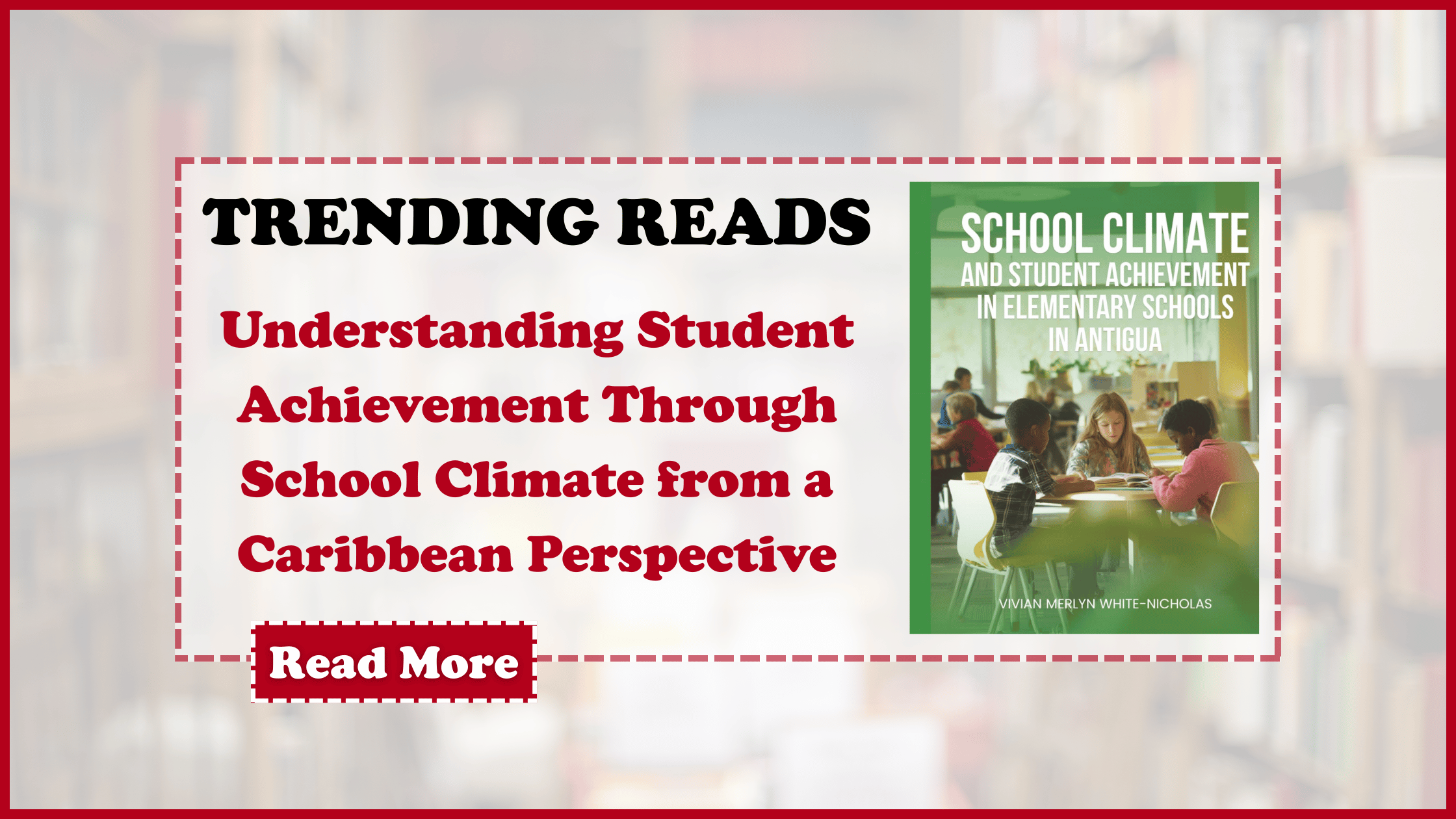
School Climate and Student Achievement in Elementary Schools in Antigua makes a compelling case for why school climate must be taken seriously in any discussion of student achievement in the Caribbean and offers a careful, grounded, and much-needed examination of the subject in local realities, empirical evidence, and the lived experiences of schools in Antigua.
One of the book’s strongest contributions is its insistence that student achievement cannot be understood in isolation from the environment in which learning takes place. Too often, discussions about educational outcomes focus narrowly on examinations, curriculum changes, or teacher qualifications. This book challenges that limited view by demonstrating that relationships, leadership practices, institutional stability, and shared academic values play a decisive role in shaping how students perform and how schools function over time.
The author presents school climate not as an abstract concept but as a measurable and observable set of conditions that influence daily life in schools. Through clear explanations and well-supported research, the book shows how elements such as collegial leadership, teacher affiliation, institutional integrity, resource influence, and academic emphasis interact to create environments that either support or hinder learning. These factors are explained in a way that is accessible to educators without oversimplifying their complexity.
Much of the existing literature on school climate originates from contexts that differ significantly from those of Caribbean schools. By addressing this gap and school climate within the social, cultural, and administrative structures of Antigua, this book provides insights that are both contextually appropriate and transferable across similar education systems in the region.
The research design strengthens the book’s credibility because the author draws on established school climate instruments while adapting them thoughtfully to the local context. Plus, the analysis of student achievement data, particularly in relation to national assessments, adds depth to the discussion and allows readers to see how climate variables relate to measurable outcomes. The findings reinforce the idea that academic success is not accidental but emerges from consistent patterns of leadership, expectations, and support.
Rather than promoting a single leadership style, the author acknowledges the complexity of school leadership and the limitations of traditional approaches. The discussion highlights how leadership effectiveness depends not only on authority or management skills, but on trust, collaboration, and responsiveness to teachers and students. This perspective is especially valuable in systems where leadership roles are often constrained by external pressures.
The book also addresses teacher morale and professional commitment with sensitivity and clarity. It recognizes teachers as central contributors to school climate and student achievement, while also acknowledging the challenges they face. By linking teacher experiences to broader organizational conditions, the author avoids placing responsibility solely on individuals and instead emphasizes systemic factors that can be addressed through thoughtful leadership and policy.
For policymakers, the book offers an important reminder that reforms focused solely on accountability and assessment may fall short if school climate is ignored. The evidence presented suggests that sustainable improvement requires attention to the internal dynamics of schools. For principals and school leaders, the book provides a framework for reflection and action, encouraging leaders to assess not only outcomes but the conditions that produce them.
Overall, this book makes a meaningful contribution to Caribbean education research. It combines theory, data, and practical insight in a way that invites reflection rather than prescription. Readers are encouraged to think critically about their own school environments and to consider how deliberate attention to school climate can lead to improved student achievement and healthier school communities. It is a valuable resource for educators, researchers, and decision makers who are committed to understanding and improving the quality of education in the Caribbean.
Head to Amazon to purcahse your copy: https://www.amazon.com/dp/197161033X/.