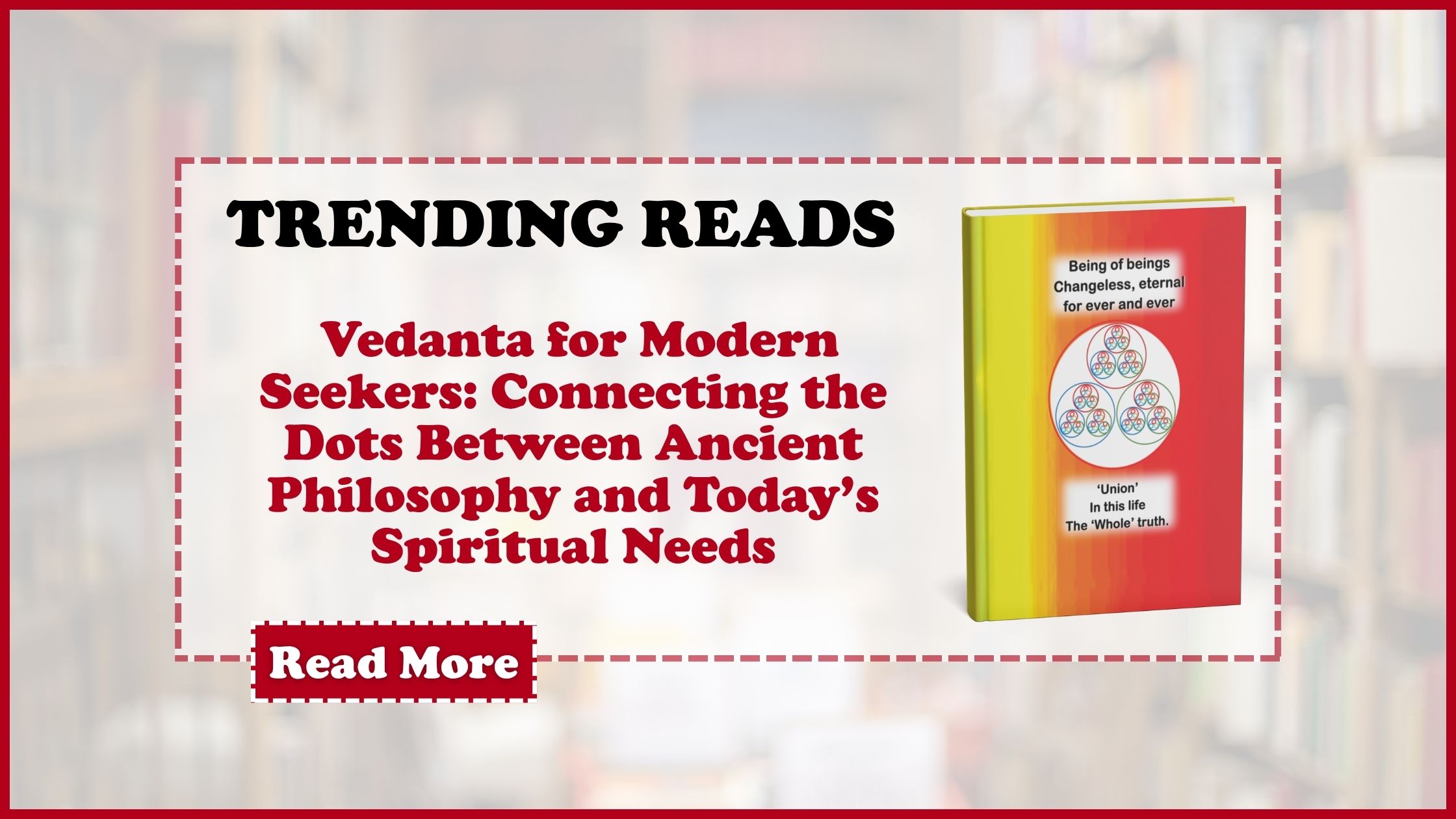
In an increasingly complex and fast-paced world, many individuals seek spiritual clarity and understanding. Amid the noise of daily life, ancient philosophies can offer profound insights that resonate with contemporary spiritual needs. Vedanta, one of the six orthodox schools of Hindu philosophy, presents concepts such as Atman (the individual self) and Brahman (the universal consciousness) that can guide modern seekers toward deeper self-awareness and inner peace. Peter Luscombe’s Being of Beings: Changeless, Eternal for Ever and Ever complements these teachings, providing a contemporary interpretation that bridges ancient wisdom with modern spiritual aspirations.
Understanding Atman and Brahman
Atman and Brahman are foundational concepts in Vedanta that address the nature of existence and our place within it:
- Atman refers to the true self or soul, which is eternal and beyond the physical body and mind. It represents our innermost essence, the part of us that is unchanging and unaffected by external circumstances.
- Brahman, on the other hand, is the ultimate reality, the infinite and formless source of all existence. It encompasses everything and transcends the limitations of time and space. In the context of Luscombe’s work, Brahman is portrayed as the changeless, eternal “screen” upon which the film of life is projected.
Together, these concepts illustrate the non-duality that is central to Vedanta: the idea that the individual self (Atman) is not separate from the universal consciousness (Brahman). This understanding is vital for spiritual seekers today, as it encourages a sense of connection to something greater than oneself.
Bridging Ancient Wisdom with Modern Spiritual Needs
Luscombe’s Being of Beings serves as a modern interpretation of Vedantic principles, presenting them in a way that resonates with contemporary readers. By emphasising the eternal and changeless nature of God, Luscombe invites us to explore our spiritual essence and the divine presence that permeates our lives.
- Experiencing the Divine: Luscombe’s portrayal of God as both impersonal (the eternal screen) and personal (a guiding presence) encourages a more nuanced understanding of divinity. This duality allows seekers to engage with the divine in multiple ways—both through contemplative practices that reveal the impersonal nature of Brahman and through personal relationships with the divine that foster love and devotion.
- Encouraging Direct Experience: Vedanta is not merely a set of beliefs; it is an invitation to direct experience. Luscombe emphasises that intellectual acceptance of these concepts is insufficient; true understanding arises through personal exploration and meditation. This aligns with the core teachings of the Bhagavad-Gita, where Krishna urges Arjuna to experience and realise the truth for himself.
- Fostering a Sense of Purpose: In a world where many feel lost or disconnected, Vedanta provides a sense of purpose rooted in the understanding of our true nature. Recognising that we are manifestations of the universal consciousness inspires us to live authentically and serve others. This awareness encourages us to engage in actions that reflect our inner truth, contributing to the greater good.
The teachings of Vedanta, centered around the concepts of Atman and Brahman, offer invaluable insights for modern seekers navigating the complexities of contemporary life. By emphasising the interconnectedness of all beings and the eternal nature of the self, Vedanta invites us to cultivate inner peace, embrace spiritual practices, and address existential questions with clarity.
Peter Luscombe’s Being of Beings: Changeless, Eternal for Ever and Ever resonates with these timeless teachings, bridging the gap between ancient philosophy and modern spirituality. By exploring and embodying these concepts, we can find spiritual clarity and fulfillment in our lives, realising that the journey inward leads us to a deeper connection with the divine that is ever-present within and around us. In this pursuit, we uncover not just the essence of who we are, but also the infinite possibilities of existence that lie ahead.
Available Now On Amazon: https://a.co/d/0gNc4A8j