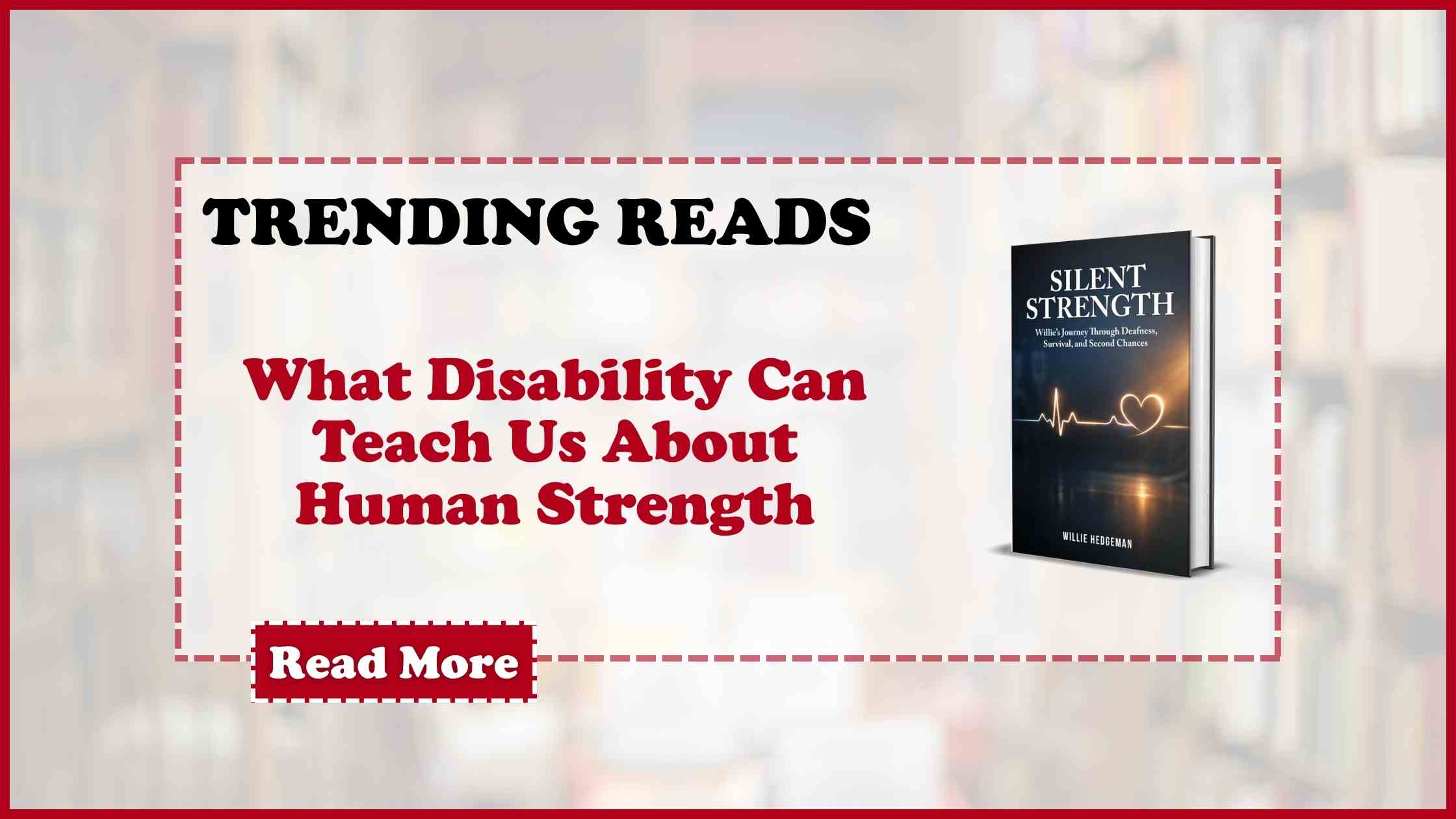
Strength is often measured by physical ability, independence, or achievement. Yet some of the strongest people in the world quietly redefine what strength truly means every single day. Silent Strength: Willie’s Journey Through Deafness, Survival, and Second Chances invites readers to see disability through a different lens, one that reveals resilience, determination, and hope rather than limitation. Silent Strength encourages readers to look beyond medical diagnoses and visible differences through Willie’s remarkable journey. The book demonstrates that true strength is measured by perseverance, character, hope, and the courage to keep moving forward, and disability does not define a person’s future. When we begin seeing strength through this wider perspective, we also begin seeing people for who they truly are, as Willie and his mother shared in Silent Strength
That being said, disability does not diminish human potential. In many cases, it reveals remarkable qualities that might otherwise remain hidden.
Strength Is Not Always Visible
When people think about strength, they often picture dramatic moments of courage. Real strength, however, frequently appears in ordinary routines.
It is found in learning new ways to communicate, adapting to daily challenges, overcoming misunderstandings, and continuing to move forward despite obstacles that others may never notice.
For many people living with disabilities, these quiet victories happen every day.
Resilience Is Built Through Experience
Life rarely follows the path we expect. Disabilities often require individuals and families to adapt in ways they never imagined.
Those experiences develop resilience. They teach patience, creativity, flexibility, and determination. Rather than giving up when circumstances become difficult, many people discover strengths they never knew they possessed.
Resilience grows because challenges require it.
Compassion Becomes Stronger
Living with disability often creates a deeper understanding of other people’s struggles. Individuals who have experienced barriers themselves frequently develop exceptional empathy and compassion.
They understand what it feels like to be misunderstood, overlooked, or underestimated. That perspective often inspires kindness toward others facing their own battles.
Communication Extends Beyond Words
Disability reminds us that meaningful communication involves far more than speech.
Facial expressions, body language, patience, eye contact, touch, and genuine attention all become essential. These forms of communication strengthen relationships and encourage deeper human connection.
Sometimes listening begins with simply being present.
Success Has Many Different Forms
Society often defines success through competition, career milestones, or financial achievement. Disability challenges those narrow definitions.
Success can also mean learning a new skill, gaining confidence, completing rehabilitation, advocating for accessibility, or simply facing another day with courage.
Every person’s journey deserves respect because every journey is unique.
Families Grow Stronger Together
Disability rarely affects only one individual. Families learn together, adapt together, celebrate together, and overcome together.
Parents become advocates. Siblings become supporters. Friends become encouragers. Communities learn the importance of inclusion and understanding.
These shared experiences often strengthen relationships in remarkable ways.
Ability Matters More Than Limitation
People are often defined by what others think they cannot do. Yet countless individuals living with disabilities continue to demonstrate extraordinary talent, leadership, creativity, and perseverance.
When we focus on abilities instead of limitations, we begin to recognize the full potential within every person.
Inclusion starts by changing the questions we ask. Instead of wondering what someone cannot do, we begin asking what strengths they bring.
Human Worth Never Changes
Perhaps the greatest lesson disability teaches is that every person’s value remains unchanged regardless of physical or sensory differences.
Dignity is not earned through perfect health or physical ability. Every individual deserves respect, opportunity, and belonging simply because they are human.
Recognizing this truth creates more compassionate families, workplaces, schools, and communities.