What if a Civil War soldier were still alive today? Not as a statue in a town square or a faded photograph in a history book, but as a living witness to nearly two centuries of American transformation. What perspective would he bring to a world of satellites, smartphones, and modern medicine?
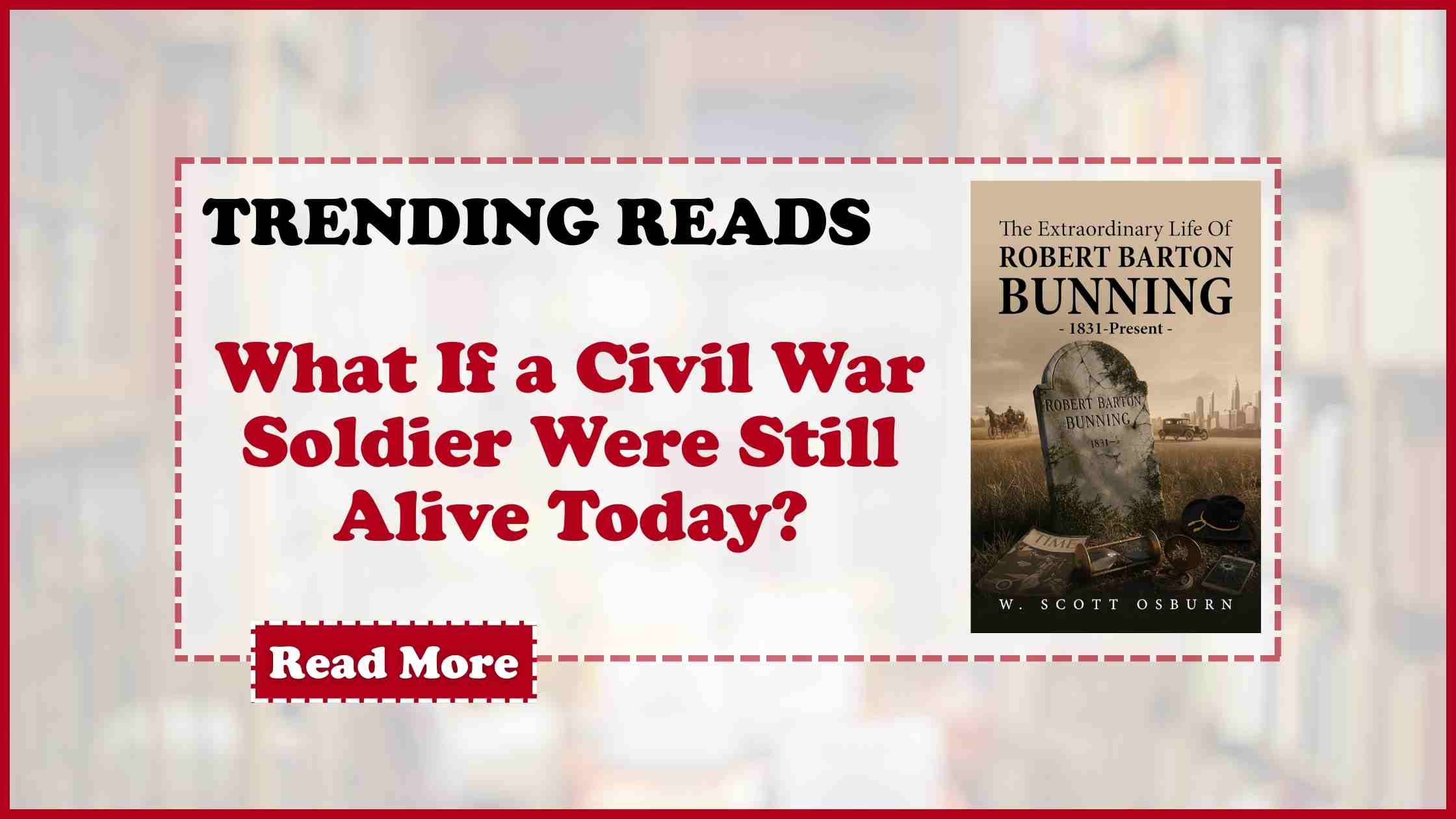
In The Extraordinary Life of Robert Barton Bunning: 1831–Present by W. Scott Osburn, that question becomes the driving force of the narrative. Robert Barton Bunning is born in 1831 in frontier Missouri and later serves during the Civil War. After a mysterious illness in his youth, his biological aging slows dramatically, allowing him to move through generations while retaining the appearance of a much younger man. While the premise is speculative, the historical backdrop is grounded in real events, real people, and real social change.
If a Civil War soldier were alive today, he would remember a fractured nation fighting for its survival. He would recall the uncertainty of enlistment, the raw fear of combat, and the fragile hope that the Union could endure. He would have seen the country rebuild, expand westward, industrialize, and eventually rise to global prominence. The transformation from horse drawn wagons to jet engines would not be theoretical to him. It would be lived experience.
He would also carry personal memory of figures who now exist only in textbooks. In the novel, Bunning crosses paths with individuals such as Quanah Parker and Babe Ruth, weaving fictional longevity into authentic historical threads. Through these encounters, the story invites readers to imagine what it would feel like to stand beside legends not as distant admirers, but as contemporaries.
Economic upheaval would be another chapter in his long memory. A man who survived the Civil War would later face the panic of the Great Depression, watching banks close and fortunes vanish. Financial crises that feel catastrophic in the present would be measured against earlier disasters he already endured. Time would alter the scale of fear.
Perhaps most striking would be his view of medical progress. In the nineteenth century, infections, tuberculosis, influenza, and minor injuries often proved fatal. A simple cut could become deadly. A fever could mean the end. A Civil War soldier alive today would see antibiotics, vaccines, surgical advances, and public health systems not as routine, but as miracles. He would recognize that while technology has transformed convenience and communication, medicine has transformed survival itself.
Yet extraordinary longevity would carry emotional cost. To live across centuries would mean watching spouses age while he remained young in appearance. It would mean burying children, friends, and fellow soldiers. It would require secrecy, restraint, and constant adaptation. In Osburn’s novel, Bunning resists publicity and medical exploitation, choosing privacy over notoriety. The burden of outliving everyone who shares your memories might outweigh any benefit of extended years.
He would also observe how society has evolved in its values, expectations, and pace. From frontier cabins with dirt floors to climate controlled homes filled with digital devices, the standard of living would appear astonishing. At the same time, human struggles would remain familiar. Political division, social unrest, economic anxiety, and personal loss would echo patterns he has seen before.
If a Civil War soldier were still alive today, he might remind us that our moment, however turbulent, is not unprecedented. He would see continuity where we see chaos. He would measure progress not only by invention, but by compassion, resilience, and the ability to heal.
Through The Extraordinary Life of Robert Barton Bunning: 1831–Present, W. Scott Osburn explores more than the fantasy of extended life. He explores perspective. A man who has witnessed nearly two centuries would not merely recount history. He would challenge us to understand our present as part of a much longer human journey.
Book now available on https://www.amazon.com/dp/B0GP1QR19Y.