Consent is the foundation of every healthy intimate relationship. It cannot be assumed, demanded, or treated as permanent permission. True consent must be clearly communicated, freely given, continuously maintained, and respected without hesitation.
Clear consent means that everyone involved understands what is being agreed to. Silence, uncertainty, fear, or a lack of resistance should never be interpreted as permission. A person should feel able to express what they want, what they do not want, and where their boundaries lie. Honest communication removes confusion and creates an environment where trust can develop.
Consent must also be continuous. Agreeing to one act does not mean agreeing to everything that follows. Permission given in the past does not automatically apply in the present. Feelings can change at any moment, even during an intimate encounter. A person always has the right to pause, reconsider, or withdraw consent completely.
This principle becomes especially important in relationships involving power exchange, dominance, submission, or structured control. These dynamics may appear intense, but they still depend on mutual agreement. Submission is not the absence of choice. It is a choice made within clearly established limits. Without consent, power exchange becomes exploitation.
Respecting consent requires more than simply listening for the word “no.” It means paying attention to hesitation, discomfort, body language, and changes in emotional response. A responsible partner checks in, asks questions, and makes safety more important than personal desire. When someone withdraws consent, the appropriate response is to stop immediately, without anger, pressure, guilt, or punishment.
For survivors of abusive relationships, consent can be particularly complex. Abuse often teaches people that their boundaries do not matter or that refusing will lead to consequences. Rebuilding a healthy understanding of consent may require time, patience, and emotional safety. A trustworthy partner allows that process to happen without forcing progress.
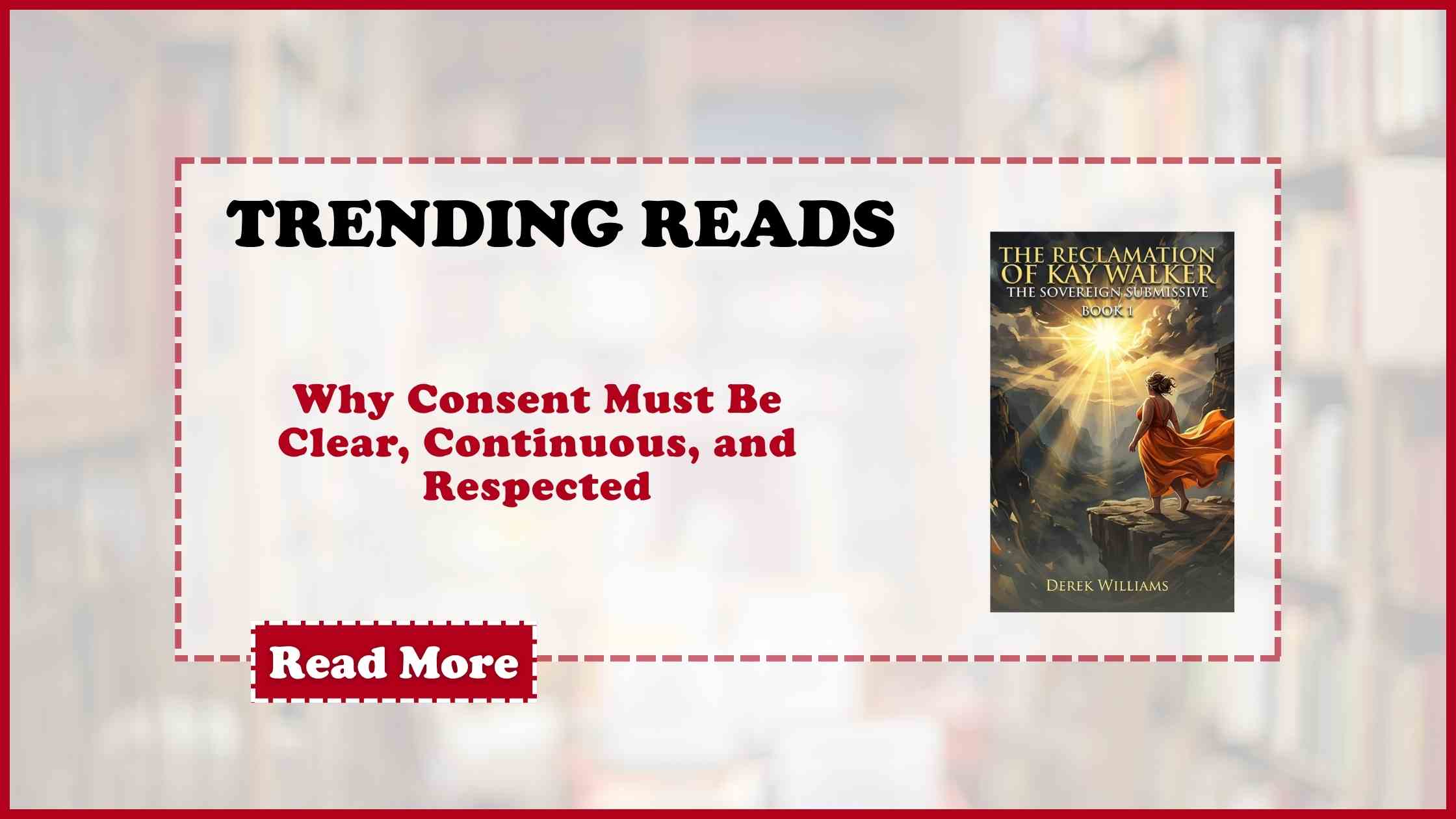
In The Reclamation of Kay Walker: The Sovereign Submissive, Book 1, Derek Williams examines the complicated relationship between control, trust, vulnerability, and personal choice. Kay’s journey challenges the idea that surrender and powerlessness are the same. Her experiences reveal that meaningful submission can exist only when a person’s autonomy remains protected.
The novel invites readers to consider how trauma can affect trust and how genuine intimacy requires responsibility from everyone involved. It explores the difference between control that is willingly shared and control that is taken through manipulation or fear.
Consent is not an obstacle to intimacy. It is what makes intimacy safe, honest, and meaningful. When consent is clear, continuous, and respected, people are free to explore connection without losing ownership of themselves.