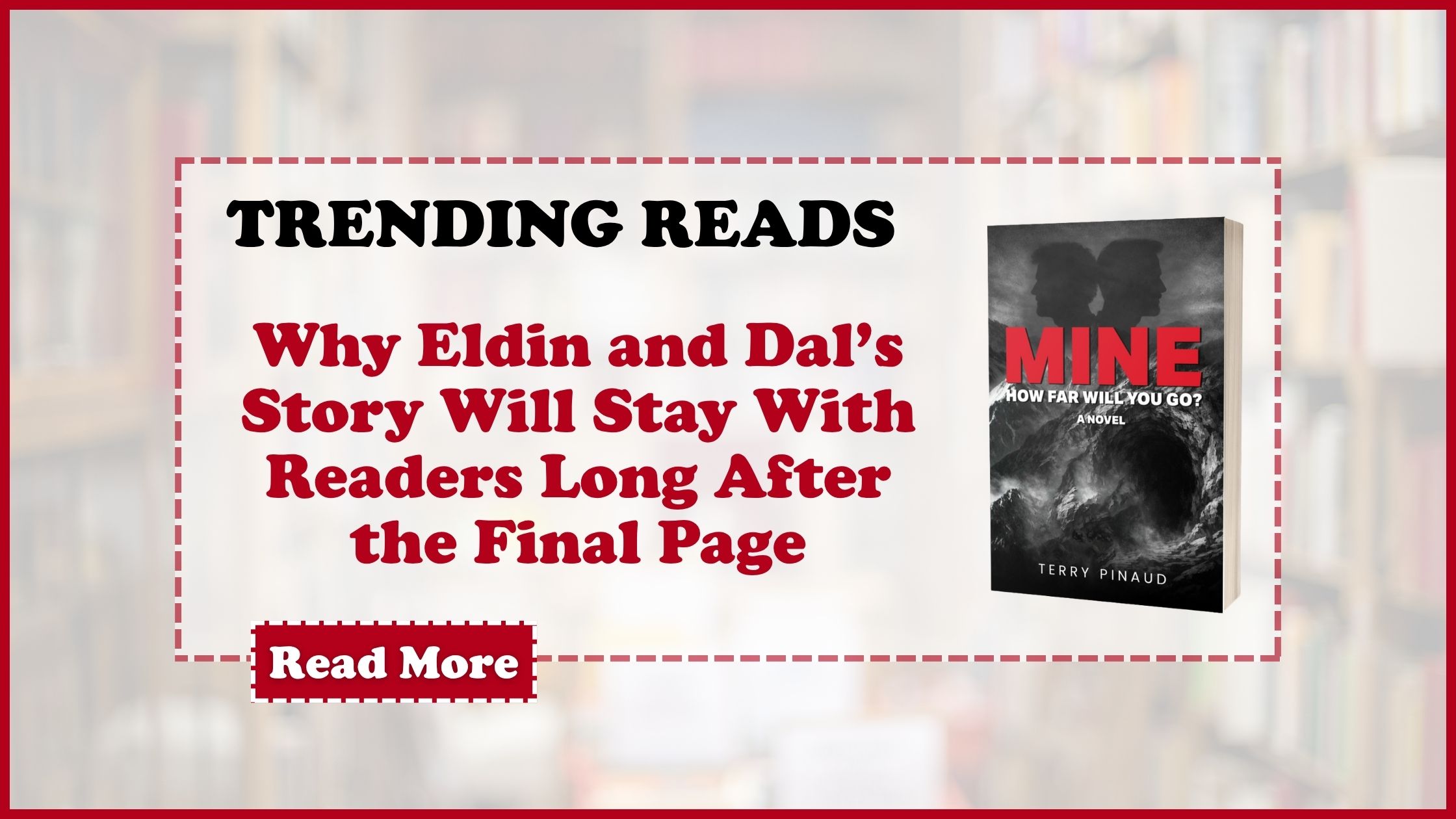
Some fictional relationships are memorable because they are romantic. Others stay with readers because they reveal something deeper about courage, identity, sacrifice and the need to be truly seen. In Mine by Terry Pinaud, the relationship between Eldin and Dal belongs to the second kind. Their story is not simply about falling in love. It is about discovering a sense of belonging in a world shaped by war, prejudice, fear and political control.
Eldin enters the novel as a thoughtful young man accustomed to change. His father’s career has repeatedly uprooted the family, forcing him to leave behind familiar schools, homes and friendships. When they relocate to a western city damaged by war, Eldin once again finds himself trying to adapt. This time, however, the move changes more than his surroundings.
At school, he meets Dal Amitola.
Dal is quiet, intelligent, strong and misunderstood. Rumors follow him and many of his classmates judge him without making any effort to know him. Eldin initially approaches Dal with curiosity, but he soon begins to recognize the sensitivity and depth hidden beneath his reserved exterior. Their bond develops through small acts of kindness, shared schoolwork, poetry, conversation and moments of trust.
That gradual development makes their relationship feel believable. Eldin and Dal do not simply fall into a convenient romance. They learn how to understand one another. They also become a source of strength for each other. Dal helps Eldin confront feelings he has struggled to name, while Eldin gives Dal the acceptance and emotional safety that have largely been missing from his life.
Readers are likely to remember their story because love transforms both characters without making their struggles disappear. Eldin becomes more courageous, outspoken and certain of who he is. Dal allows himself to imagine a future built on connection rather than isolation. Together, they create moments of happiness in circumstances designed to deny them freedom.
However, the world surrounding them grows increasingly dangerous. War enters classrooms, homes and family conversations. Recruitment campaigns target young people, while propaganda presents sacrifice as the highest form of loyalty. At the same time, Eldin and Dal must confront social expectations about masculinity, religion, sexuality and obedience.
This pressure gives every tender moment greater meaning. A conversation, a shared meal or a peaceful journey can feel precious because readers understand how quickly it may be taken away. Terry Pinaud balances romance and tension so effectively that hope and dread often coexist in the same scene.
Family relationships deepen the emotional impact. Eldin’s parents must decide whether fear will overpower their love for their son. His conflict with his brother Ebo shows how prejudice can turn even a close family bond into something bitter and dangerous. Dal’s difficult home life further emphasizes how powerful genuine acceptance can be.
By the final pages, Eldin and Dal are no longer simply two characters in a romance. They represent the dreams and futures that war attempts to erase. Their love insists that individual lives matter, even when governments and societies reduce people to labels, recruits or casualties.
That is why their story lingers. Mine reminds readers that love may not always defeat violence, but it can give people the courage to live truthfully. For fans of emotionally intense LGBTQ+ fiction, wartime drama and unforgettable character-driven storytelling, Terry Pinaud’s novel offers an experience that will remain long after the book is closed.
Get Your Copy On Amazon: https://www.amazon.com/dp/B0GX32SRXZ/