Most people do not wake up intending to join an extreme movement. They are not born with radical beliefs or a desire to challenge society. More often, they arrive there gradually, shaped by disappointment, frustration, and the feeling that no one is listening. When trust in institutions weakens and hope begins to fade, ideas that once seemed unthinkable can suddenly appear reasonable.
One of the strongest forces behind this shift is the search for belonging. People want to feel valued, heard, and understood. When they believe that governments, communities, or social systems have ignored their concerns, they naturally seek groups that promise purpose and identity. Extreme movements often provide simple answers to complex problems, offering certainty where confusion exists and direction where people feel lost.
Fear also plays a powerful role. Economic uncertainty, rising crime, political instability, and social division create an atmosphere where anxiety becomes part of everyday life. In such conditions, strong voices and decisive action can become attractive, even when those solutions carry serious consequences. People under pressure often value certainty more than compromise.
Another factor is the loss of confidence in established systems. When citizens repeatedly see scandals, corruption, or ineffective leadership, they begin to question whether traditional institutions are capable of solving real problems. As confidence declines, alternatives gain attention. Some offer constructive change, while others encourage confrontation and division. The difference is not always obvious in moments of crisis.
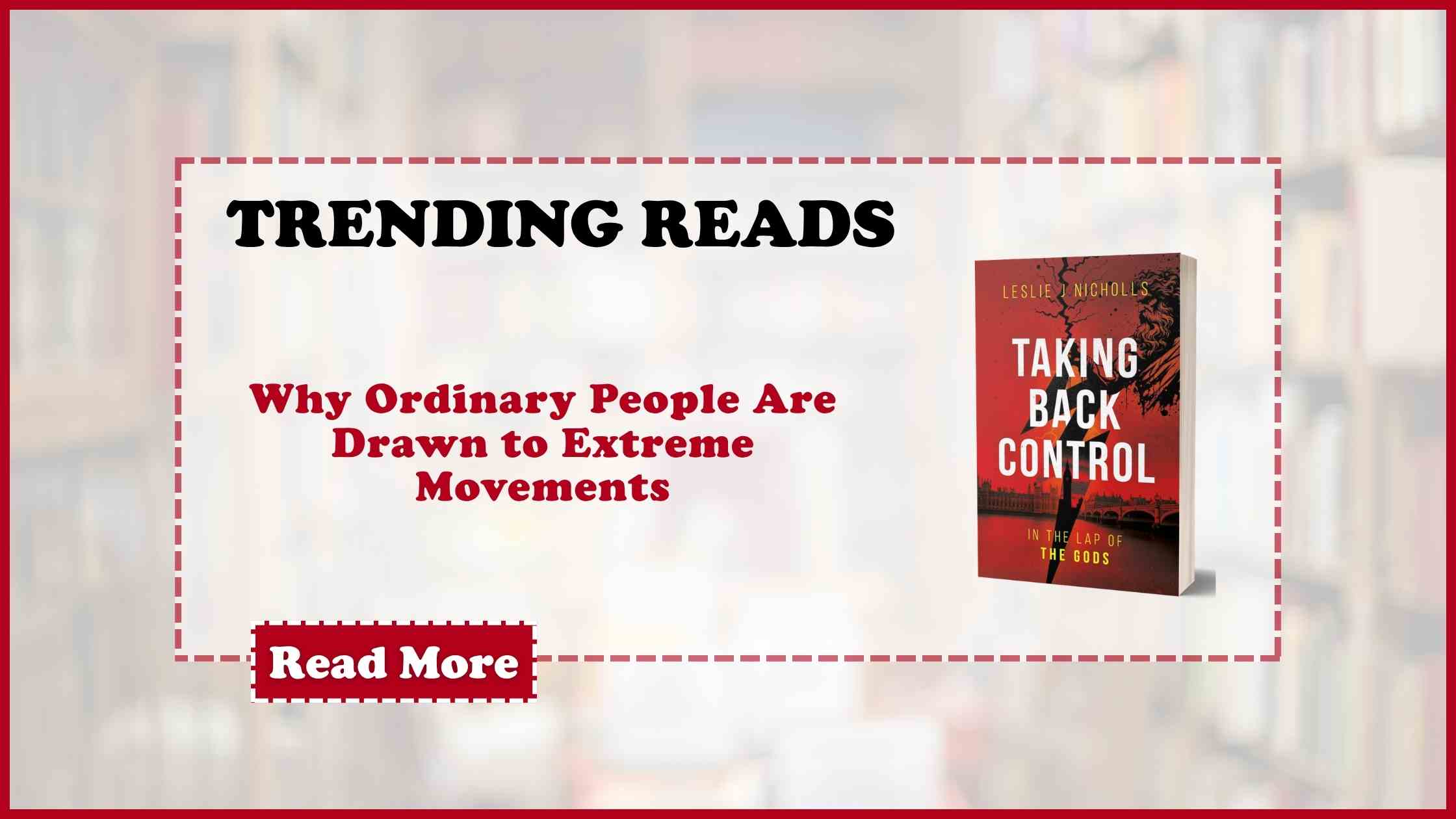
These tensions are explored with remarkable intensity in Taking Back Control by Leslie J Nicholls. The novel presents a society where growing public frustration collides with political failure, crime, and institutional weakness. It examines how ordinary individuals respond when they believe the systems around them are no longer capable of protecting them or delivering justice.
Rather than presenting simple heroes or villains, Nicholls explores the emotional and moral pressures that influence human behaviour. Readers witness how fear, disappointment, and anger can gradually reshape beliefs and actions. The story demonstrates that extreme movements rarely grow in isolation. They emerge where trust has been broken and where people feel they have exhausted every other option.
What makes Taking Back Control so compelling is its relevance. It reflects concerns that exist across many societies today, encouraging readers to think beyond headlines and political slogans. The novel challenges them to consider not only how extreme movements grow, but why they continue to attract support from people who once lived ordinary lives.
For readers who enjoy political thrillers filled with suspense, social commentary, and thought provoking questions, Taking Back Control offers a gripping journey into the pressures that shape modern society. It is a story that reminds us that the greatest challenges often begin long before they become visible, growing quietly in the space where trust, hope, and confidence have slowly disappeared.
Explore the full story here: https://www.amazon.com/dp/B0G4F2KTJC.