In nineteenth century Appalachia, a woman’s life was often shaped by marriage, family, faith, and work. Yet some women found a measure of independence through healing.
In remote mountain communities, medical care was not always nearby. Families often depended on women who knew how to deliver babies, treat wounds, prepare remedies, and recognize the signs of serious illness. Their knowledge gave them an important place within the community.
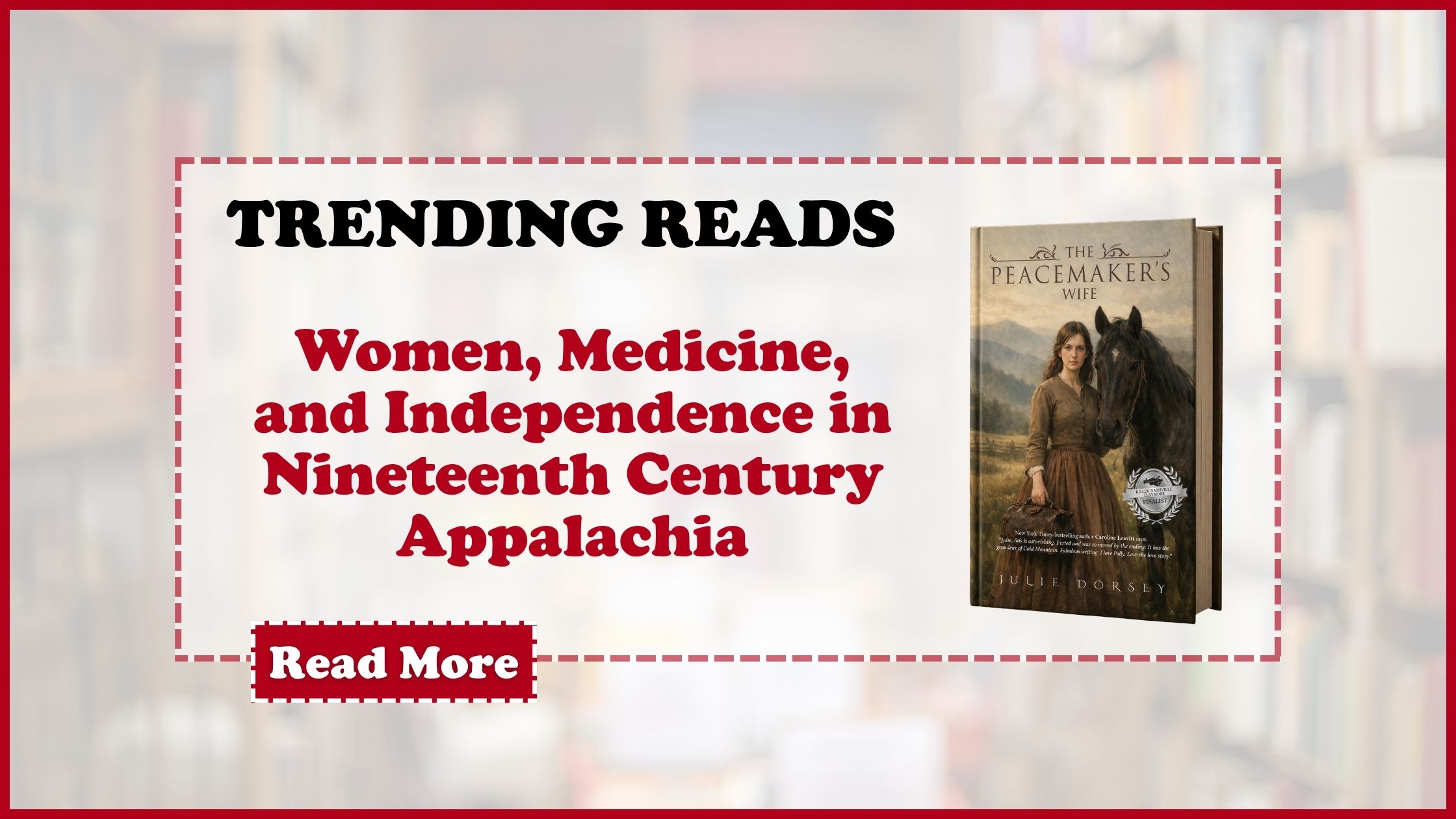
Julie Dorsey explores that world in The Peacemaker’s Wife, a historical novel set in the Blue Ridge Mountains.
The story follows Polly Justice, a young woman who refuses to give up her desire to become a healer. She studies medicine, learns from Nan Clark, the local granny woman, and slowly builds the knowledge needed to care for others.
For Polly, medicine becomes more than a skill. It gives her purpose.
Her home life is difficult, and her husband, John, expects her attention to remain centered on him and their household. Polly sees things differently. She believes healing is her calling, and she continues to pursue it even when John objects.
That choice matters.
At a time when women had limited control over many parts of their lives, being known as a capable healer could give a woman authority that extended beyond her own home. People came to her for help. Families trusted her judgment. Her knowledge had value.
Polly’s independence does not arrive all at once. It grows each time she learns something new, treats a patient, faces a difficult birth, or makes a decision without waiting for someone else to approve it.
Her path is not easy. She carries guilt from the death of her baby sister, worries about making mistakes, and struggles with a violent marriage. She also lives through murder, loss, motherhood, and the upheaval of the Civil War.
Still, she keeps doctoring.
That persistence is central to The Peacemaker’s Wife. Polly’s strength is not based on escaping responsibility. It comes from deciding which responsibilities are truly hers.
Through Polly’s story, Julie Dorsey shows how healing could become a source of identity, respect, and independence for women in mountain communities.
The Peacemaker’s Wife is not only a story about medicine. It is also a story about a woman learning that her knowledge, judgment, and calling deserve a place in the world.