Babies cannot tell us what happened before they entered foster care. They cannot explain what they heard, what they felt, what they lost or why a new environment suddenly feels unfamiliar.
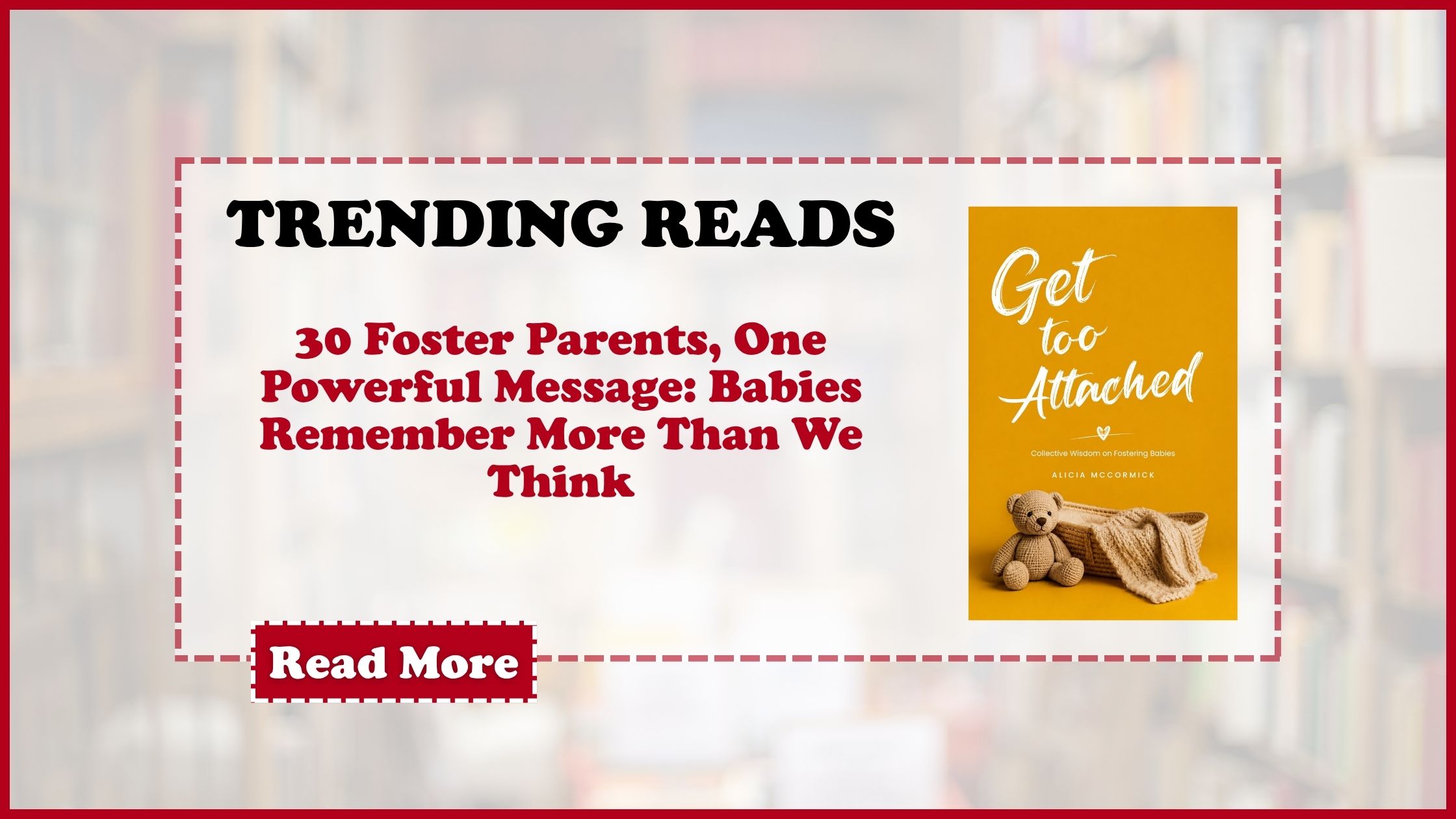
But according to the foster parents featured in Alicia McCormick, PhD’s forthcoming book, Get Too Attached: Collective Wisdom on Fostering Babies, that does not mean those experiences disappear.
Across 30 chapters, McCormick gathers the voices of foster parents who have cared for babies through prenatal substance exposure, neglect, medical complications, disrupted attachment, family separation and other forms of early trauma. The book is built around six recurring questions, including what caregivers have learned about trauma in babies, what signs they have seen and how they have responded.
One message emerges again and again: babies may not remember trauma in words, but their bodies and behavior can still reflect what they have experienced.
Some foster parents describe babies who struggle to eat or gain weight. Others care for infants who barely sleep, cry inconsolably, resist being held or seem unusually quiet. Some babies show withdrawal symptoms after prenatal substance exposure, while others develop separation anxiety, feeding difficulties, sensory sensitivities or attachment challenges as they grow.
What makes these stories especially powerful is that no two babies respond exactly the same way.
A child who appears calm may still be carrying stress. Another may be intensely dysregulated from the beginning. Some effects are visible immediately, while others emerge months or years later. Several contributors in the book emphasize that even babies placed with loving caregivers very early in life can still be affected by what came before.
That is why Get Too Attached does more than describe trauma. It focuses on what caregivers can do next.
Throughout the book, foster parents talk about creating consistent routines, responding quickly to cries, reducing overstimulation, using skin-to-skin contact, pursuing early-intervention services, supporting biological-family connections when appropriate and learning to recognize the meaning behind behavior.
McCormick brings deep personal experience to the conversation. She has fostered 34 babies, including medically complex and substance-exposed newborns and teaches foster-care workshops on caring for substance-exposed infants and developing and supporting attachment.
Yet the book’s power comes from its collective voice.
These 30 foster-parent stories do not offer a single formula for healing. Instead, they reveal how much patience, flexibility, advocacy, education and emotional presence fostering can require.
They also challenge a dangerous assumption: that a baby is too young for trauma to matter.
A baby may not be able to say, “I remember.”
But a disrupted sleep pattern, a feeding struggle, a fear response or difficulty attaching may still be telling a story.
And that is why adults must learn to listen differently.
Get Too Attached ultimately asks readers to see foster babies not as blank slates, but as whole human beings whose earliest experiences matter and whose future can be shaped by caregivers willing to respond with consistency, compassion and connection.
Get Too Attached: Collective Wisdom on Fostering Babies by Alicia McCormick, PhD, will be available soon.