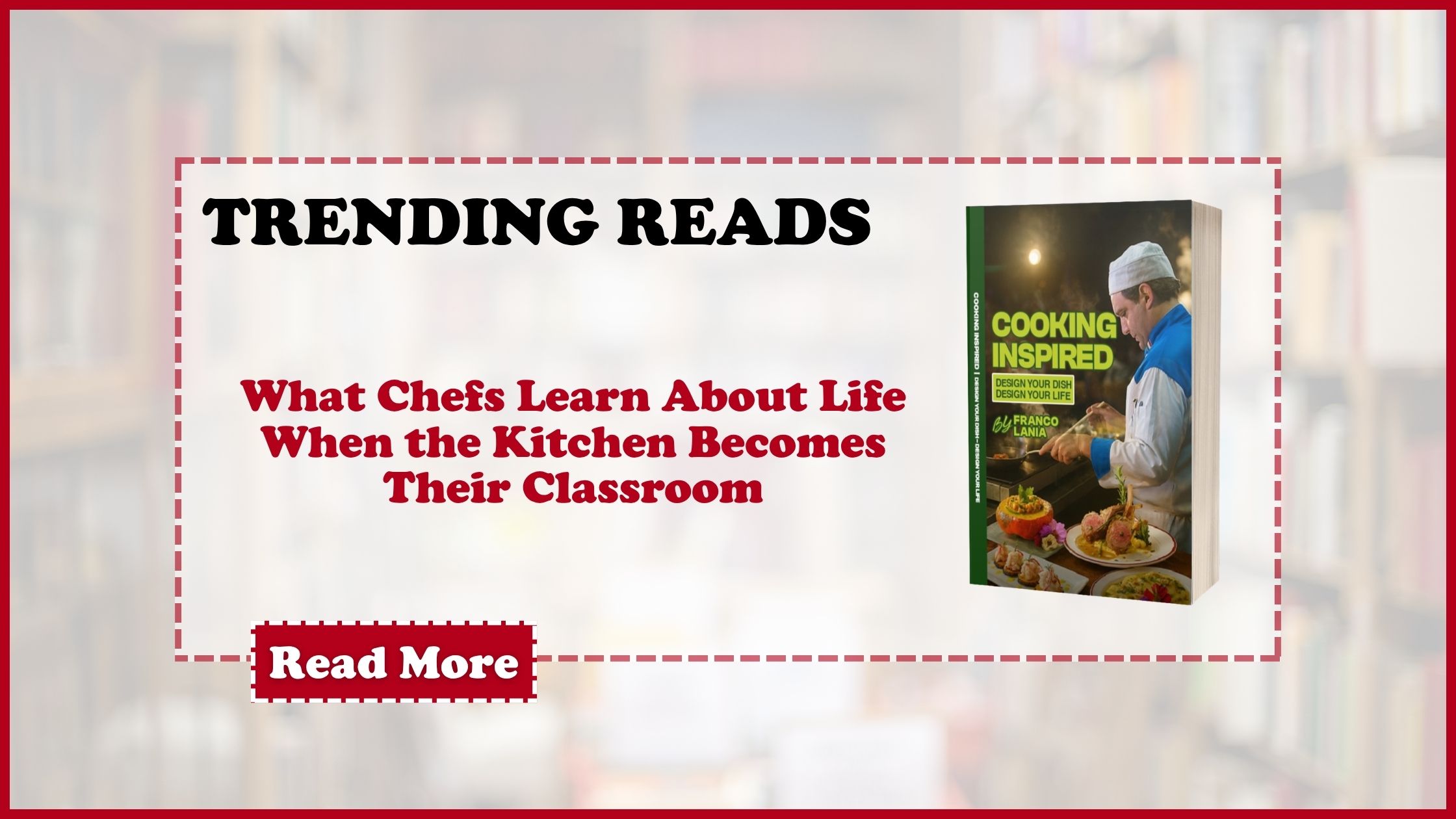
In Cooking Inspired: Design Your Dish, Design Your Life, Chef Franco Lania transforms the kitchen into something far greater than a place to prepare food. It becomes a classroom where discipline is learned, identity is shaped and life itself is quietly rebuilt one service at a time. This is not a traditional culinary memoir. It is a lived experience told through movement, pressure, failure, recovery and ultimately, growth.
At its core, the book reveals a simple truth: the kitchen teaches what life demands. There are no shortcuts in either. Every dish requires attention, timing, repetition and respect for process. In the same way, every stage of life requires structure, resilience and the willingness to keep showing up even when things are uncertain.
For Franco Lania, cooking was never just a career choice. It became a system of survival and self-definition. Early experiences across kitchens in the United States, Europe, cruise lines and international culinary environments exposed him to a world where discipline was non-negotiable. Orders had to be executed precisely. Mistakes were immediate and visible. Success depended on teamwork, communication and endurance under pressure.
But beyond technical skill, the kitchen offered something deeper: structure for a life that was otherwise unpredictable. In environments where personal struggles and instability might have led to collapse, the rhythm of cooking provided grounding. Prep, service, cleanup, repetition, these cycles became a form of stability that carried over into personal transformation.
Cooking Inspired highlights how chefs often learn life lessons the hard way, not through theory but through experience. Responsibility is not optional in a working kitchen. One missed step affects the entire team. One lack of focus can change the outcome of a service. These realities mirror life itself, where choices accumulate and consequences cannot always be undone.
Yet the book does not romanticize hardship. Franco Lania openly reflects on periods of uncertainty, poor decisions and the process of rebuilding direction. What makes the narrative powerful is not perfection, but honesty. The kitchen does not erase struggle; it organizes it, forces it into motion and turns it into something workable.
Through travel and exposure to global culinary cultures, Lania also discovers that food is a universal language. Whether in a high-end restaurant in New York or a simple coastal kitchen abroad, the act of preparing and sharing food creates connection. It breaks barriers. It brings people into the same moment, even if only briefly. This realization becomes a foundation for understanding both cooking and life more deeply.
Another key lesson from the book is that mastery is not instant. Chefs do not arrive fully formed. They evolve through repetition, correction, mentorship and time. The same is true for personal growth. Identity is not something found in a single moment; it is built through years of practice, adaptation and persistence.
Cooking Inspired ultimately shows that kitchens are more than workplaces. They are training grounds for character. They teach patience when things go wrong, humility when success arrives and focus when everything feels overwhelming. Most importantly, they teach people how to continue.
For readers, the book offers more than culinary stories. It offers a reflection on what it means to rebuild, to learn discipline through action and to find meaning in work that demands everything from you. Franco Lania’s journey demonstrates that even in high-pressure environments, growth is always possible when structure and passion meet.
In the end, Cooking Inspired is not just about cooking. It is about what cooking reveals about endurance, about transformation and about the quiet, steady process of designing a life with intention.