A man known for settling disputes should be the last person anyone suspects of creating fear in his own home.
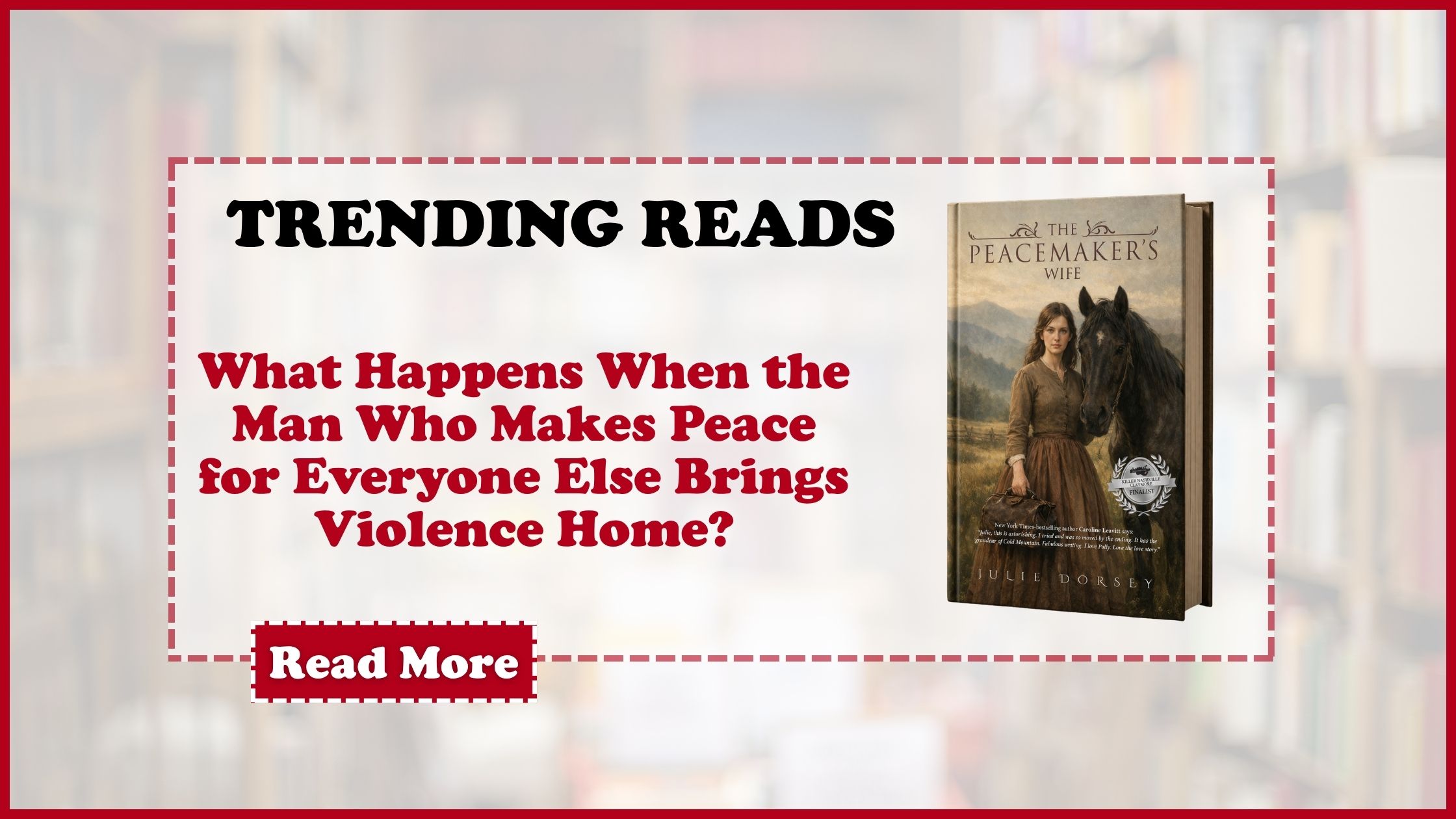
That contradiction gives Julie Dorsey’s The Peacemaker’s Wife much of its emotional power.
Set in the Blue Ridge Mountains of North Carolina in the years surrounding the Civil War, the novel follows Polly Justice, a young woman married to John Justice. To the people around him, John is clever, capable and unusually gifted at resolving conflicts. He becomes known as “The Peacemaker” because neighbors trust him to step into disagreements, calm tempers and reach decisions that seem fair.
But Polly knows another John.
Behind closed doors, the man who brings peace to others can become controlling, drunken, unpredictable and violent. That contrast forces Polly to confront a painful question: what does public respectability mean when private life tells a completely different story?
The Peacemaker Everyone Admires
John’s reputation does not come from nothing.
He has a real talent for handling quarrels. In one memorable dispute, two men argue over whether a cow was already sick when it was sold. Rather than simply choosing sides, John finds a clever way to expose the truth and settle the disagreement.
Moments like this help explain why Polly once believed she had chosen a dependable husband. John can be thoughtful, persuasive and intelligent. He has ambition and people in Blue Ridge respect his judgment.
That makes his behavior at home even harder for Polly to understand.
How can someone show such patience with strangers and so little restraint with his own wife?
When Home Becomes the Most Dangerous Place
Polly discovers early in her marriage that love does not protect her from John’s anger.
His drinking worsens his behavior and Polly learns to read his moods carefully. At times, she hides the reality of her marriage because exposing John could destroy his reputation and bring even more turmoil into her life.
Yet Julie Dorsey does not portray Polly as someone who simply accepts what happens to her.
She pushes back. She continues studying. She pursues her calling as a midwife and healer even when John objects. Most importantly, she gradually begins to understand that his violence is not something she must quietly endure forever.
Her growth gives the novel its emotional backbone.
The Irony Behind the Title
The title The Peacemaker’s Wife becomes increasingly meaningful as the story develops.
At first, Polly is identified through John. She is his wife, while he is the respected man with an important role in the community.
Over time, however, the balance shifts.
While John’s contradictions deepen, Polly becomes more capable. She learns traditional remedies, studies medicine, delivers babies, treats the sick and earns the community’s trust as Dr. Polly.
In a sense, the woman married to “The Peacemaker” becomes the person who creates a more meaningful kind of peace: comfort for frightened mothers, relief for the sick, safety for her children and eventually greater control over her own life.
A Historical Novel With Difficult Questions
Julie Dorsey uses Polly and John’s marriage to explore more than domestic conflict. The Peacemaker’s Wife asks readers to consider reputation, power, marriage, forgiveness, faith, independence and the difference between who a person appears to be and who they truly are.
Alongside these themes, the novel offers romance, murder mystery, Appalachian folk medicine, Civil War history and a vivid portrait of a mountain community undergoing enormous change.
For readers drawn to historical fiction with complicated characters and a strong female protagonist, The Peacemaker’s Wife delivers a story in which peace is not simply something one man claims to create.
For Polly Justice, real peace is something she must fight to find for herself.
Read the book on Amazon: https://a.co/d/0j0TaE7e