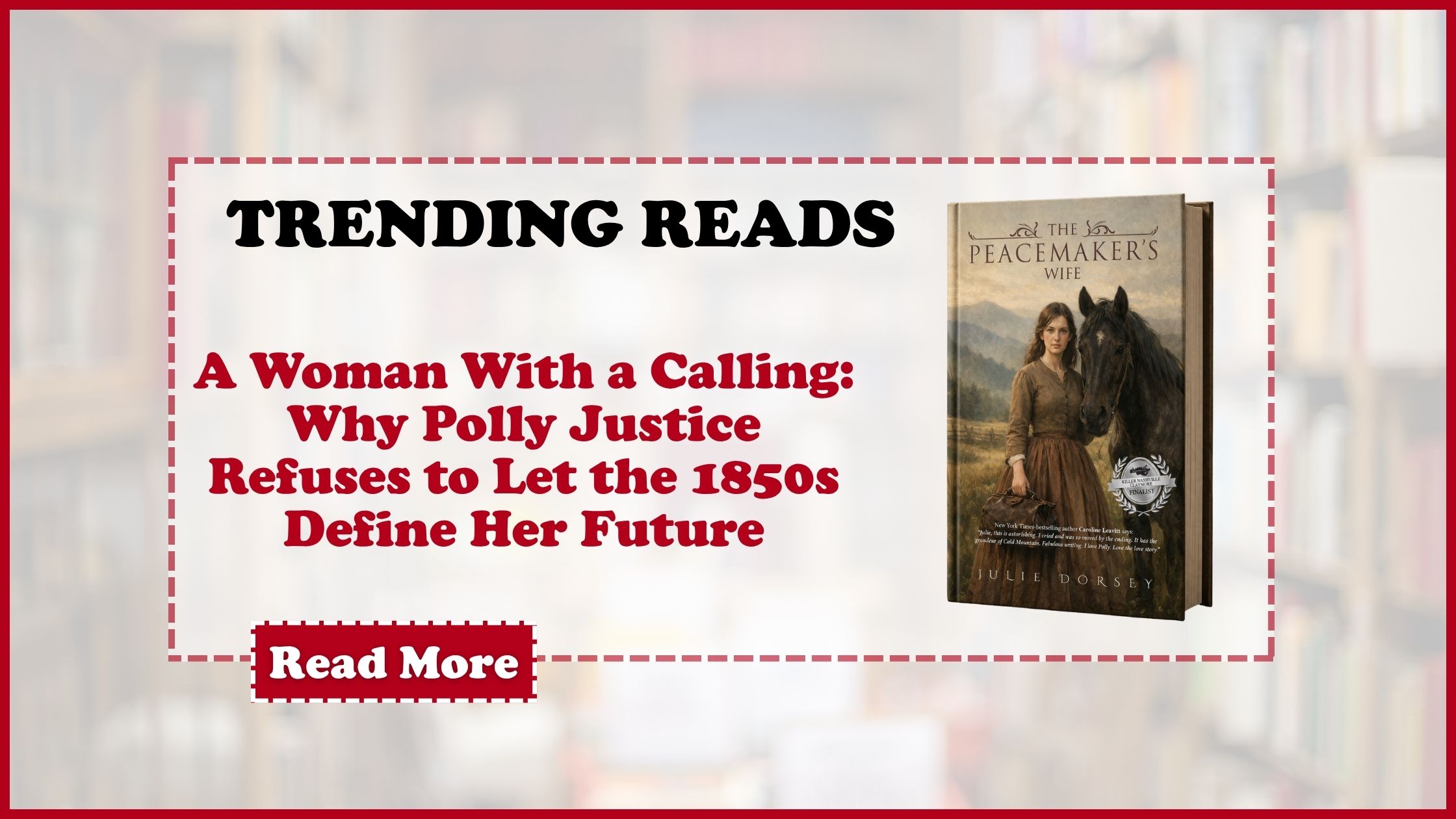
In Julie Dorsey’s The Peacemaker’s Wife, Polly Justice lives in a world where a woman’s future is often expected to revolve around marriage, children, home and obedience. But Polly has something stronger than convention pulling at her: a calling.
Set in the Blue Ridge Mountains of North Carolina in the 1850s, the novel follows Polly as she tries to build a meaningful life in a time when women had limited opportunities for formal education or professional independence. She is young, married and surrounded by expectations about what a wife should be.
Yet Polly wants more.
She wants to heal.
A Purpose Born From Pain
Polly’s desire to become a healer is rooted in one of the most painful experiences of her childhood.
During the difficult birth of her twin sisters, she is left to help her mother when the second baby, Lucindy, arrives with the umbilical cord wrapped around her neck. Polly does not know what to do quickly enough and Lucindy dies. For years, Polly carries the belief that her ignorance caused the tragedy.
That guilt becomes a powerful force in her life.
Instead of turning away from childbirth and medicine, Polly makes a private vow to learn. She studies from The Medical Companion, practices reading and writing, expands her vocabulary and refuses to accept ignorance as permanent.
Her determination becomes one of the clearest signs that she will not allow the limitations of her time to dictate what she can become.
Learning From the Women Who Came Before Her
Polly’s education does not happen in a classroom.
Much of what she learns comes from Nan Clark, the experienced “granny woman” of Blue Ridge. Nan teaches her about herbs, roots, salves, tinctures, childbirth and the practical realities of caring for sick and injured neighbors.
This apprenticeship connects Polly to a tradition of women whose medical knowledge was passed down through experience rather than formal institutions.
With every lesson, Polly becomes more capable.
She learns that the mountains themselves can provide remedies. She learns how to observe symptoms, prepare treatments and stay calm when others are frightened.
Most importantly, she learns to trust herself.
Marriage Cannot Silence Her Ambition
Polly’s determination becomes even more significant because her husband, John Justice, does not always welcome her independence.
John is admired by others as “The Peacemaker,” a man skilled at settling disputes. At home, however, Polly faces his drinking, controlling behavior and violence.
Still, she does not surrender her calling.
She continues studying. She keeps helping women give birth. She treats the sick. She follows Nan on medical calls. Even when her marriage becomes restrictive, Polly refuses to abandon the work that gives her life meaning.
That resistance is not loud at first. It grows gradually.
So does Polly.
Becoming Dr. Polly
When Nan dies, Polly can no longer remain a student.
Blue Ridge still needs someone to tend the sick and deliver babies and the responsibility falls to her. The role frightens her, but she steps into it anyway.
That is when her transformation becomes unmistakable.
Polly is no longer simply John Justice’s wife. She is the woman people seek when they are ill, injured or in labor.
She has become Dr. Polly.
Julie Dorsey’s The Peacemaker’s Wife is ultimately a story about what happens when a woman refuses to let her century decide the boundaries of her life.
Polly may live in the 1850s, but her determination to learn, serve and claim an identity of her own makes her journey feel timeless.
Read the book on Amazon: https://a.co/d/0j0TaE7e