
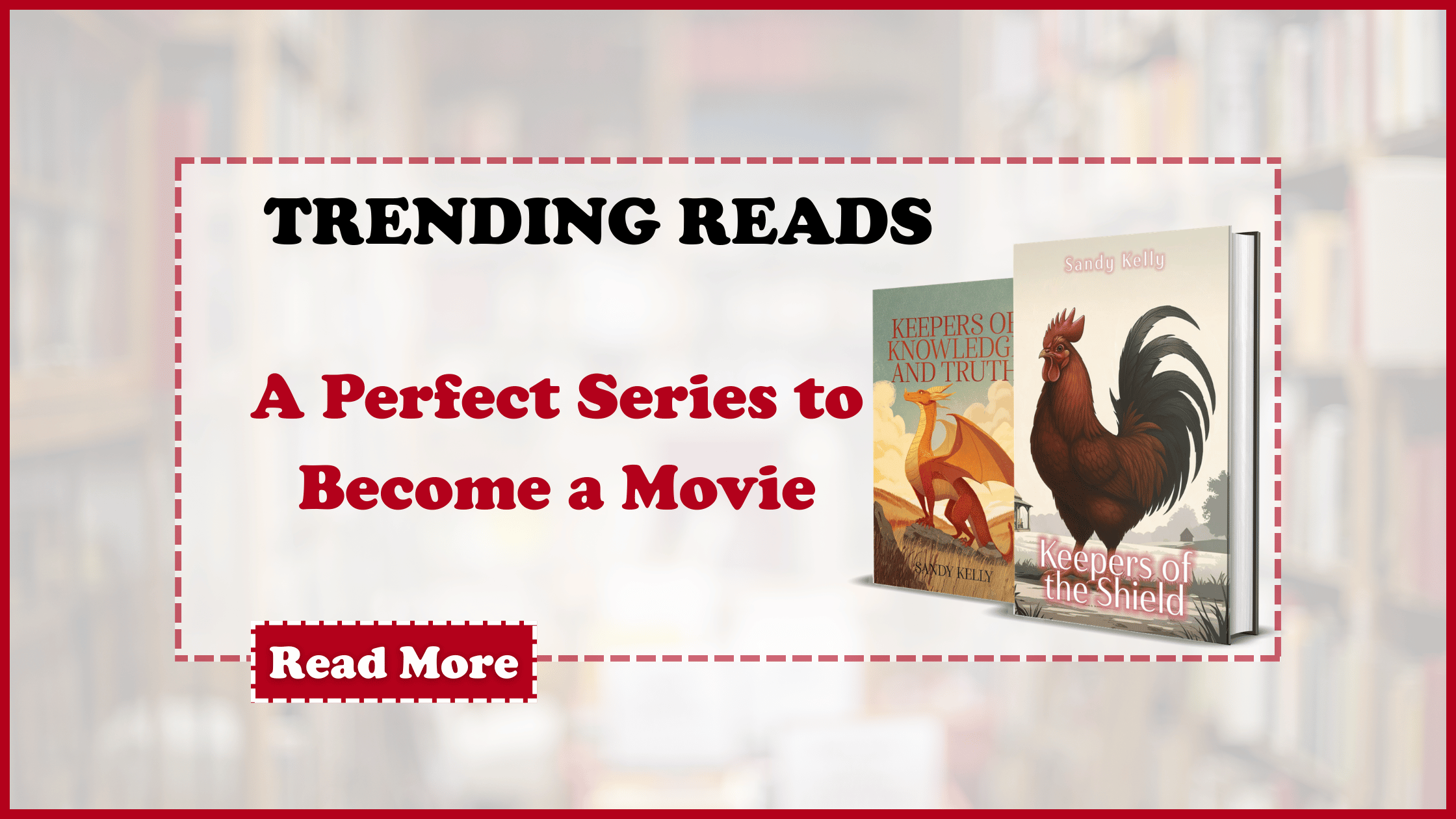
Some book series feel cinematic from the very first chapter. Not because they rely on constant action, but because the story unfolds in a way that invites visual storytelling. The Keepers series by Sandy Kelly is one of those rare examples. Across Keepers of the Shield and Keepers of Knowledge and Truth, the narrative, characters, and worldbuilding align naturally with what makes a strong film adaptation.
A Story Built for the Screen
At its core, the series follows Jesse Finch, an ordinary teenager whose online role playing game begins to echo real world danger. Players vanish. Rules change. Ancient forces observe from a distance. This setup translates cleanly to film because it starts small and familiar, then expands outward. Viewers would first see Jesse’s everyday life, his frustrations, his time gaming, and the subtle moments where something feels off. That slow shift from normality to threat is exactly the kind of progression that works well on screen.
The story does not rush. It allows tension to build through unanswered questions and quiet discoveries. For a film or series adaptation, this pacing creates room for atmosphere, visual contrast, and character focus rather than relying on nonstop spectacle.
A Fantasy World That Feels Grounded
Xanthara is a fantasy realm that would translate visually without overwhelming the audience. Its structure is clear. Magic follows rules defined by colour. Elders observe rather than dominate. Talismans respond to presence and identity. Ancient councils debate rather than dictate. These elements provide visual anchors that help viewers understand the world without heavy explanation.
A film adaptation could use colour subtly to signal magic, authority, and danger, allowing viewers to grasp the system through sight rather than dialogue. The balance between mortals, immortals, and guardians gives the world depth while remaining accessible.
Characters with Emotional Range
What makes the series especially suitable for film is its focus on character growth. Jesse does not become confident overnight. His hesitation, self doubt, and gradual acceptance of responsibility would give an actor space to deliver a layered performance. His relationship with Gran adds warmth and humor, grounding the story emotionally. Gran’s unconventional mentorship would translate well on screen, offering moments of levity without undermining the seriousness of the plot.
Cami’s character adds further depth. Her real world disability contrasted with her freedom and power in Xanthara offers strong visual and emotional storytelling potential. Her role avoids sentimentality and instead focuses on competence and presence, something modern audiences often look for.
Rambo, with his dual nature, would likely become a standout on screen. Beginning as an ordinary rooster and later revealed as something far more, he offers both humor and surprise, without turning into a gimmick.
A Natural Arc for Adaptation
The first book provides a strong foundation for an initial film. It introduces the world, establishes the rules, and hints at a larger threat without resolving everything. The second book deepens the emotional stakes. Jesse’s captivity, recovery, and blocked magic shift the tone toward healing and leadership. This progression mirrors the way successful film series evolve, moving from discovery to consequence.
Tazeron’s influence grows quietly. Landscapes change. Threats expand. The danger does not rely on constant confrontation, which allows a film adaptation to focus on suspense, atmosphere, and choice.
Themes That Resonate on Screen
The series explores ideas that translate well to film audiences. Preparation before conflict. The cost of responsibility. Trust built through experience. Healing after trauma. These themes do not require complex exposition. They show through action, silence, and relationship dynamics.
The gaming element also adds relevance. The idea that skills developed in a digital space could prepare someone for real responsibility feels timely and relatable, especially for younger audiences.
Why This Series Fits the Moment
The Keepers series avoids extremes. It does not rely on constant darkness or forced humor. It offers balance. That balance is what many recent adaptations struggle to achieve. This story understands that viewers connect most with characters who feel human, worlds that feel structured, and conflicts that grow rather than explode.
As a film or limited series, Keepers of the Shield and Keepers of Knowledge and Truth would offer strong visual storytelling, emotional depth, and room to grow. It is a story that invites viewers in, rather than overwhelming them, and that makes it a natural candidate for the screen.
Head to Amazon to purchase your copies:
Keepers of Knowledge and Truth: https://www.amazon.com/dp/B0FWLC7BN9.
Keepers of the Shield: https://www.amazon.com/dp/B0FJZPGKDJ.


