Workplace safety has entered a new era. Risks are no longer limited to chemicals, machinery, noise, heat, or poor ergonomics. Today, employees also face invisible pressures from intelligent workplace systems that monitor performance, shape decisions, control pace, and influence how people feel about their roles.
This is where exposure assessment must evolve.
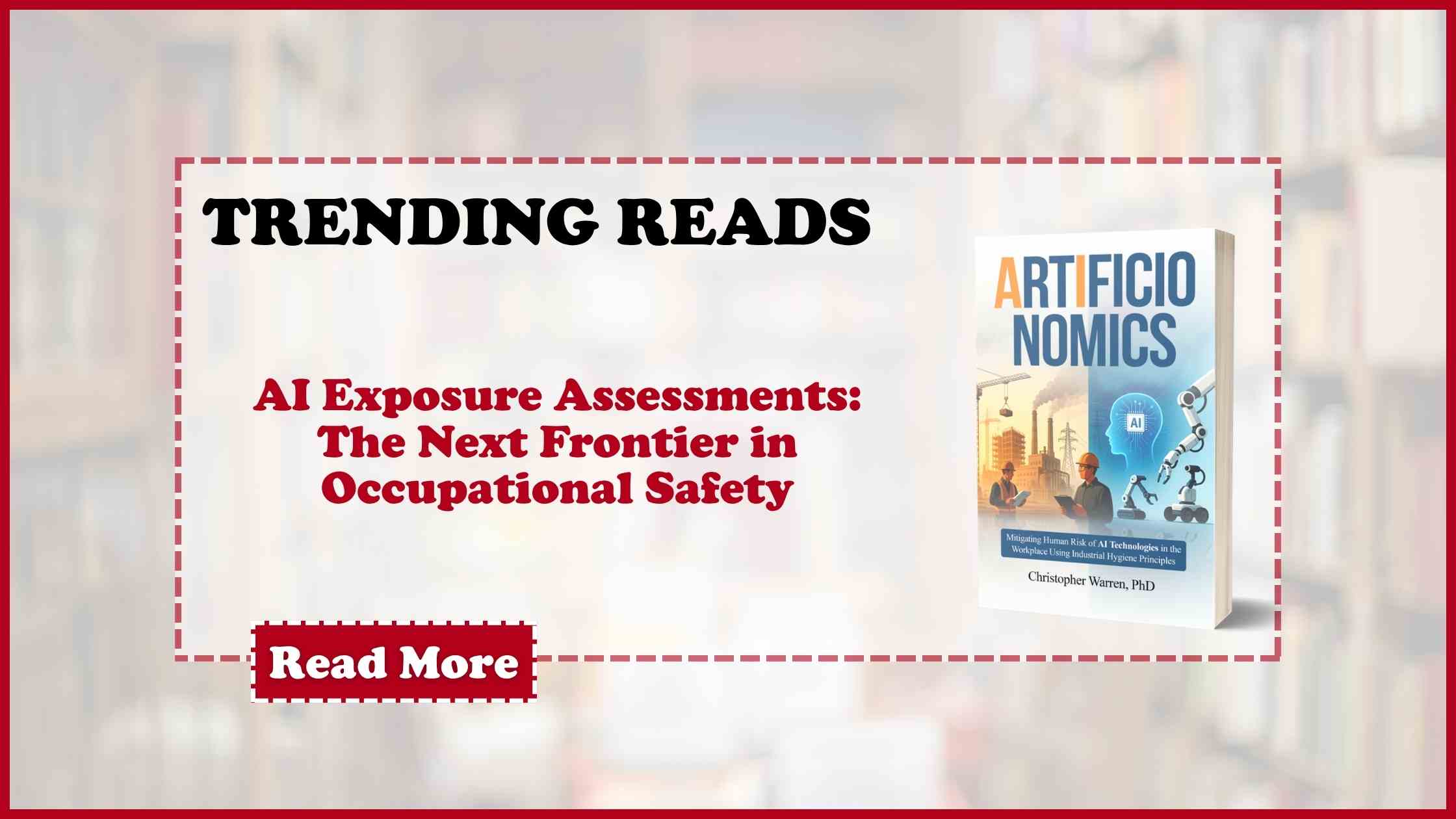
Artificionomics: Mitigating Human Risk of AI Technologies in the Workplace by Christopher Warren, PhD, presents a timely framework for measuring these emerging hazards. The book explains that modern occupational safety must look beyond physical harm and examine cognitive strain, emotional fatigue, surveillance stress, reduced autonomy, and trust breakdowns.
Traditional assessments ask: What is the worker exposed to?
Christopher Warren expands that question: How is the worker affected by the technology surrounding them?
This shift matters because many workplace harms are now subtle. A scheduling system may create fatigue. A monitoring tool may increase anxiety. A robotic process may change posture, pace, and attention. A decision platform may leave employees feeling powerless or judged by standards they cannot see or challenge.
Exposure assessment in this new environment requires both data and human insight. Organizations must listen to workers, review stress indicators, study workflow pressure, evaluate ergonomic effects, and examine whether systems are creating confusion, fear, isolation, or burnout. Safety is no longer only about measuring what can be seen. It is also about understanding what workers experience.
The strength of Artificionomics is its practical use of industrial hygiene principles. It gives leaders a clear method: identify the risk, evaluate the exposure, and apply controls before harm becomes normalized. This approach helps organizations protect wellbeing while still benefiting from innovation.
For safety professionals, the book offers a needed expansion of their role. The workplace of the future will require experts who can assess digital pressure as carefully as physical hazards. For executives, it provides a roadmap for reducing turnover, improving trust, and preventing hidden risks from becoming cultural or legal problems.
Christopher Warren does not argue against progress. He argues for responsible progress. Artificionomics shows that worker health, dignity, and performance are deeply connected. When people feel safe, respected, and included, technology works better too.
In a world where workplace hazards are becoming less visible but more personal, exposure assessment is the next frontier of occupational safety. Artificionomics gives organizations the language, structure, and urgency needed to meet it.
Get your Copy Now on Amazon: https://www.amazon.com/dp/B0GFY4RL6B.