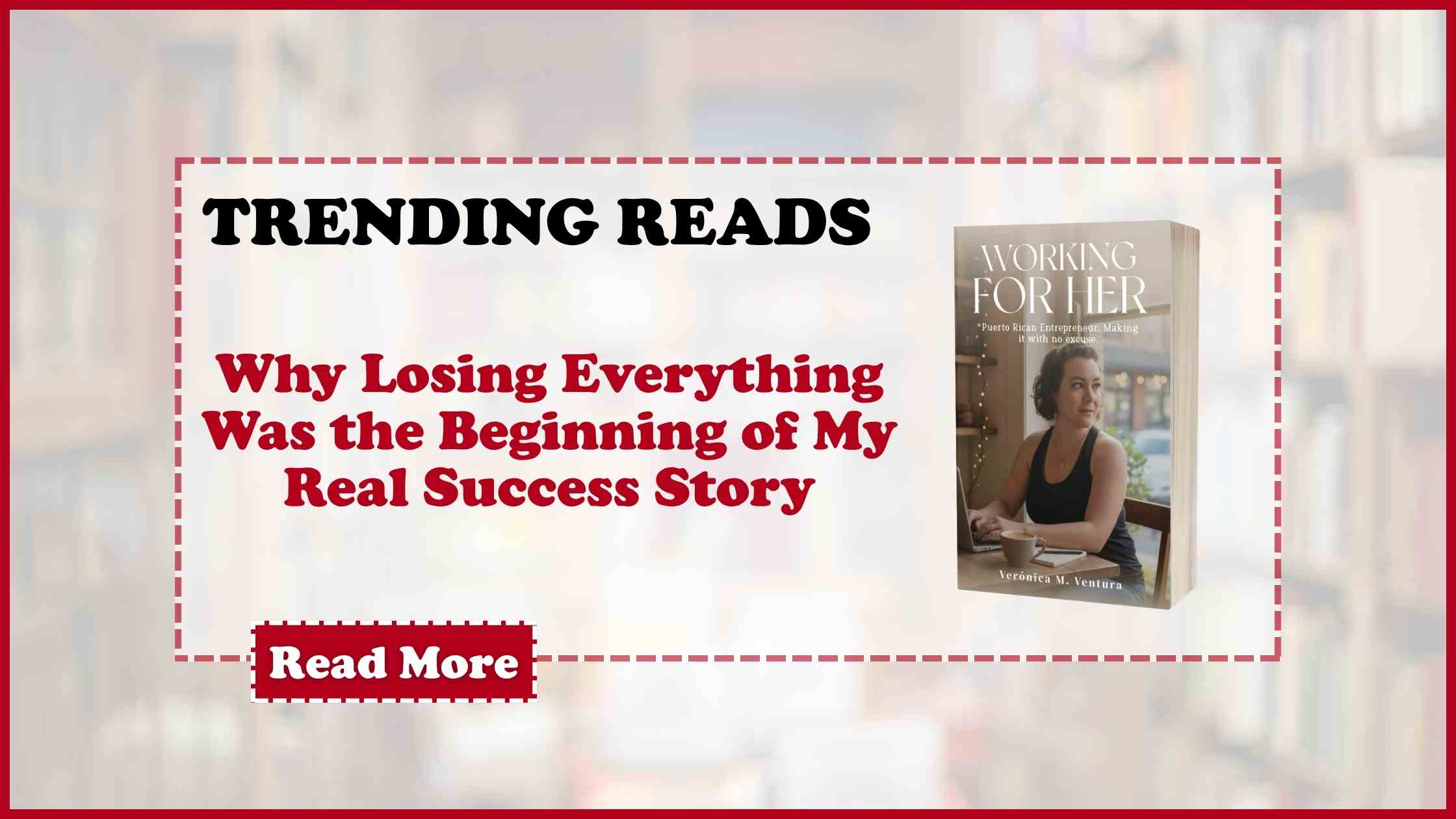
There are moments in life that feel like endings while they are happening, only to reveal themselves later as the first real beginning. For Veronica M. Ventura, those moments didn’t arrive quietly. They came through collapse, accusation, emotional exhaustion and the kind of betrayal that rewrites everything you thought you understood about loyalty, work and identity.
At the center of Working for Her is a question many professionals never ask until it’s too late: what happens when the person you built your stability around suddenly decides you are the problem?
For years, Veronica was the invisible backbone of someone else’s world. She managed the systems, the accounts, the logistics, the constant behind-the-scenes machinery that kept a life and a business functioning. She worked remotely, often from home, balancing professional responsibilities with motherhood, grief and the everyday weight of being indispensable to someone else’s success.
Then everything changed.
What began as routine trust and long-standing professional dependency slowly unraveled into suspicion. Everyday transactions, routine tools and long-approved systems were reinterpreted through a different lens, one shaped not by context but by emotion. The same actions that once defined reliability were suddenly recast as evidence of wrongdoing.
The turning point wasn’t a resignation or a conversation. It was an accusation.
In Working for Her, Veronica recounts the moment she went from being the person who held everything together to being labeled the person who broke it. There was no gradual transition, just a sharp rupture. Years of loyalty were compressed into a single narrative of blame. The emotional impact was immediate, but the more serious damage came from something more difficult to process: the erasure of context.
Because when you are the one managing everything, accounts, bills, systems, responsibilities that span personal and professional boundaries, the lines inevitably blur. Not from deceit, but from survival. From necessity. From being the person who simply gets things done when no one else will.
But in the aftermath of conflict, nuance rarely survives.
What makes Veronica’s story compelling is not just the accusation itself, but what it exposed: the emotional and psychological cost of being “the capable one.” The one who fixes things. The one who absorbs chaos. The one who is trusted until trust becomes inconvenient.
Losing that role meant losing more than a job. It meant losing identity, stability and the illusion that loyalty is always recognized in the same language it is given.
And yet, this is where the story shifts.
Because what looks like destruction from the inside often looks like redirection from a distance.
Out of that collapse emerged something unexpected: clarity. Space. And eventually, creation. Veronica didn’t just recover, she rebuilt. Candles by M&M was born not as a distraction, but as a reclamation. A business rooted in creativity, family and ownership. Something that couldn’t be rewritten by anyone else’s narrative.
The irony is that what was meant to diminish her became the catalyst for her independence.
Working for Her is not just a workplace story. It is a study in what happens when emotional labor, professional loyalty and personal sacrifice intersect for too long without boundaries. It asks uncomfortable questions about dependency, recognition and the invisible costs of being reliable in environments that take reliability for granted.
At its core, the book carries a simple but powerful truth: sometimes you have to lose everything you built for someone else before you can finally build something for yourself.
And for Veronica M. Ventura, that loss was not the end of her story.
It was the beginning of her own.
Get Your Copy On Amazon: https://www.amazon.com/dp/1972134450/