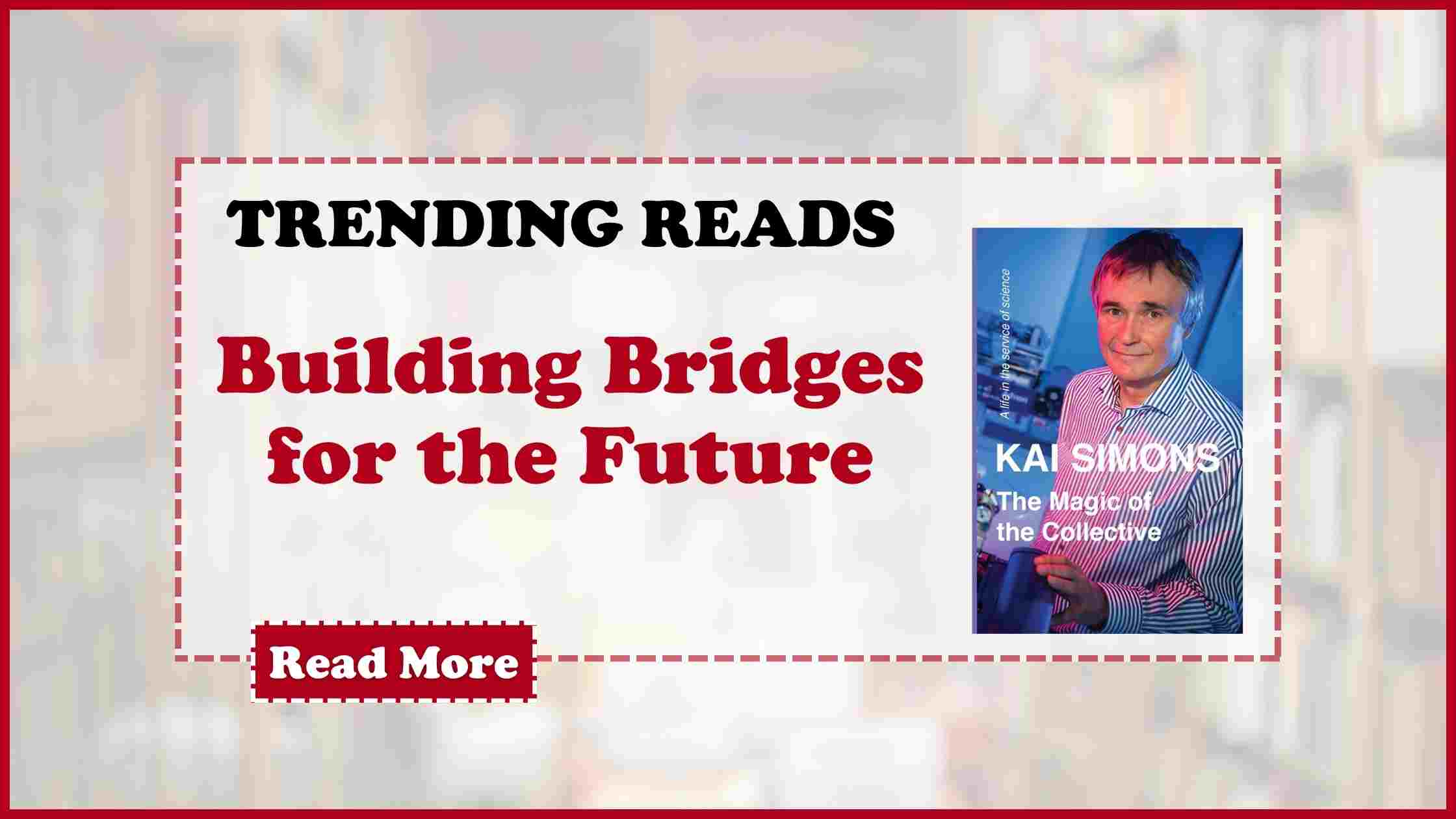
Science and art may seem like two distant worlds. One deals with experiments, data, and measurable facts, while the other is driven by creativity, imagination, and emotion. Yet, as Kai Simons reflects in The Magic of the Collective, these worlds are not as separate as they appear. Both explore the unknown. Both challenge the way we see reality. And when they meet, they can open new ways of understanding ourselves and our society.
Simons noticed that modern biology was moving away from reductionism, the practice of simplifying life into smaller parts for study. This progress raised new questions: could science move even further by joining forces with art? Could collaboration between scientists and artists not only generate deeper insights into the natural world but also create a moral and cultural dialogue that our fragmented society urgently needs? These were not just idle dreams but ideas that began to take shape in Simons’ work in Dresden.
At the Max Planck Institute of Molecular Cell Biology and Genetics, Simons and his colleagues sought to make this vision real. The architecture of the institute itself reflected openness, with space designed to encourage collaboration. Swiss artist George Steinmann contributed art that depicted lichens, symbiotic organisms that thrive through cooperation. This symbolism resonated with the institute’s mission: to create a culture where working together added more value than working alone.
To push the dialogue further, the institute launched an annual art award. Students from the Dresden Art School were invited to spend months working alongside scientists, producing artworks inspired by research. The goal was simple but powerful: to give artists insight into the scientific process while giving scientists a chance to view their work through a new lens. This exchange brought fresh perspectives into the lab and helped make science more accessible to the public.
Some of the creations were remarkable. One artist crafted a tiny slipper for a single-cell organism, a Paramecium, which could only be seen under magnification. Another designed a wax head of Max Planck, placed in a cube with fruit flies that slowly ate it until it disappeared. These works stirred conversation, provoked laughter, and sometimes even controversy. But above all, they highlighted that both art and science thrive when they challenge assumptions and spark dialogue.
The need for such bridges is clear. As Simons notes, scientists often fail to communicate their work to the public, leaving room for mistrust and even opposition. During the debate in Switzerland over banning DNA research, artists and ordinary citizens strongly supported the ban because they did not understand the benefits of such science. Yet today, the vaccines that saved millions of lives during the COVID-19 pandemic are direct products of DNA technology. Better communication, sometimes made possible through art, could have prevented such misunderstandings.
The message is that art is not just decoration or entertainment. It can help make science visible and relatable. It can show the beauty hidden in microscopic worlds and the ethical questions behind technology. In turn, science can inspire new forms of art that prepare our minds for change. As Simons wrote, “Our future is in the invisible.” By helping us see the invisible, both scientists and artists prepare us for the challenges ahead.
Art and science are sisters in exploration. Both require imagination, courage, and the willingness to look beyond the surface. By bringing them together, we enrich knowledge and strengthen the values and visions that guide society. For Simons, the bridges between art and science are necessities, especially in a world dominated by individualism and commercial pressure. These bridges give us room to breathe, reflect, and imagine a shared future.
Read Kai Simons’ book now. Head to Amazon to purchase your copy: https://www.amazon.com/dp/1917007027.