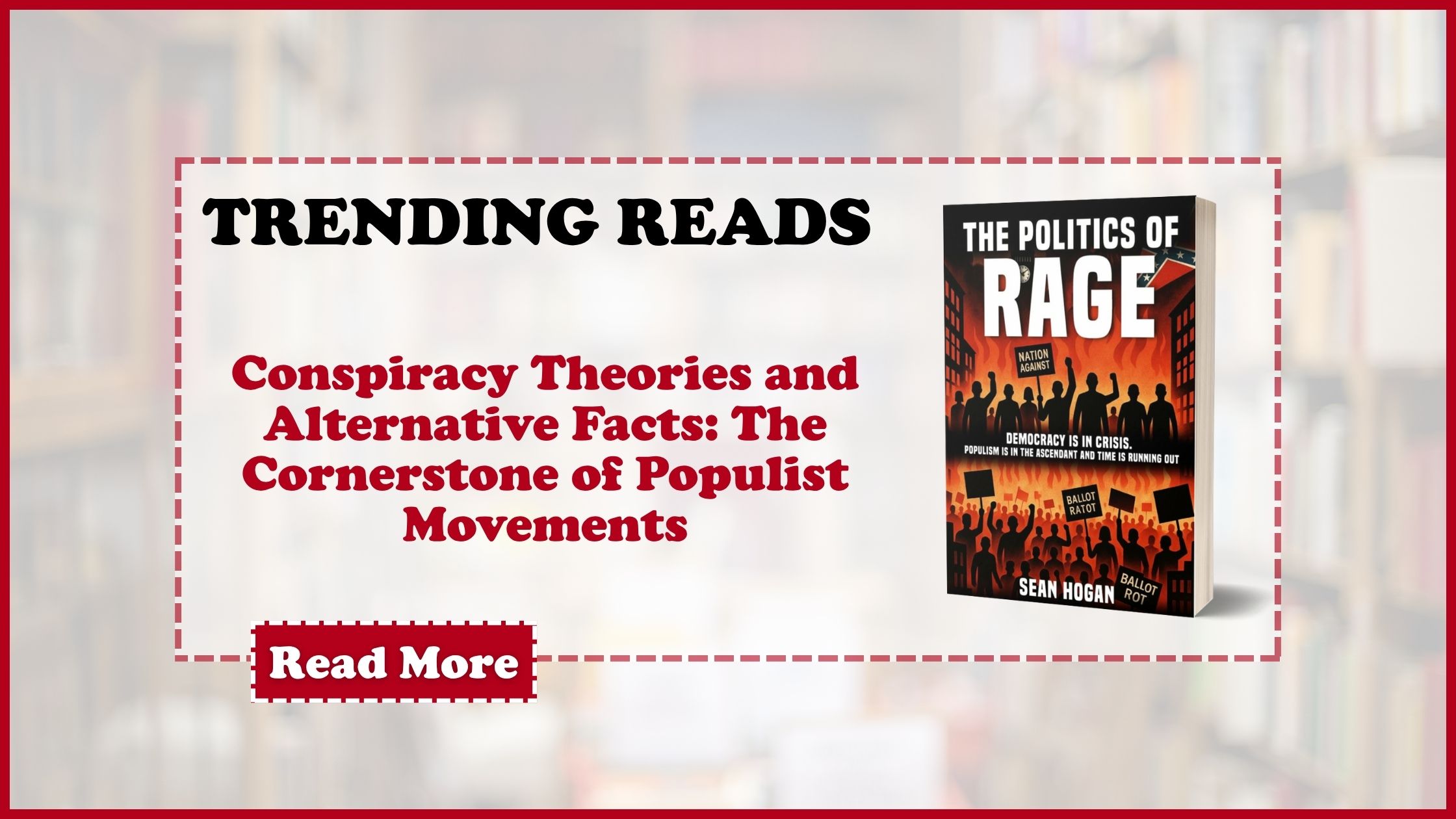
Conspiracy theories and alternative facts have become central tools in the playbook of modern populist movements, shaping political discourse in ways that challenge the foundations of democratic debate and public trust. These narratives offer simple explanations for complex social and political problems, portraying powerful groups as secretive adversaries responsible for economic hardship, cultural change, or political corruption. In The Politics of Rage, the author examines how conspiracy theories and alternative truths are deployed strategically by populist leaders to mobilize support, discredit opponents, and create a compelling, though often misleading, narrative of political struggle.
One reason conspiracy theories resonate so strongly in populist politics is that they provide easily digestible explanations for uncertainty and insecurity. When people feel economic anxiety, cultural displacement, or distrust toward institutions, conspiracy narratives can offer a sense of clarity and meaning. These narratives often cast established elites, experts, or global institutions as villains actively working against the interests of ordinary people. This framing reinforces the core populist claim that a corrupt, out-of-touch elite is undermining the will of the people, and that only a populist leader can expose and defeat these hidden enemies.
Research indicates that conspiracy theories are not just fringe beliefs but are systematically woven into populist rhetoric. Leaders use conspiratorial narratives to construct external threats, vilify domestic elites, and legitimize their authority as defenders of the “pure people” against supposed conspirators. These narratives are often tailored to current socio-political crises economic uncertainty, migration, or public health emergencies allowing populists to adapt them to different contexts and audiences.
The appeal of these narratives is amplified by a growing rejection of traditional sources of authoritative information. As individuals lose trust in mainstream media and established institutions, they become more receptive to alternative facts claims presented as truth despite lacking credible evidence. This shift undermines the ability of democratic societies to maintain a shared factual basis for public debate, making it easier for populist leaders to claim that factual information itself is a tool of elite manipulation.
Conspiracy theories also play a psychological role in meeting the emotional needs of supporters. Belief in conspiratorial narratives can provide a sense of control or empowerment in a world perceived as chaotic and unfair. By framing events as orchestrated by identifiable villains, conspiracy theories satisfy a desire for certainty and direction. This psychological appeal is one reason conspiracy theories gain traction among citizens already predisposed to populist attitudes.
The rise of social media and alternative news ecosystems has further accelerated the spread of conspiracy theories. These platforms enable rapid dissemination of unverified claims and allow communities of believers to form around shared narratives, reinforcing beliefs through repetition and mutual affirmation. The result is often an echo chamber effect in which misinformation flourishes and becomes normalized within certain political circles. Examples of populist conspiracy narratives include claims that elections are rigged by hidden elites, that global crises are orchestrated for political control, or that cultural change is part of a deliberate plot against the “real” people. Some of these narratives have crossed into real-world action, as seen in episodes where conspiratorial beliefs motivated violence or attempts to disrupt democratic institutions.
The Politics of Rage offers a comprehensive analysis of how conspiracy theories and alternative facts have become integral to populist movements around the world. By exploring the strategic use of these narratives, the book reveals the mechanisms through which populist leaders distort information to mobilize support and weaken democratic norms. This examination is essential for understanding the broader impact of populism on political discourse and democratic institutions in an era where truth itself has become contested.
For readers seeking to understand why populist movements are able to capture public imagination despite lacking substantive policy solutions, The Politics of Rage provides a compelling and necessary exploration of the power of conspiratorial thinking in shaping contemporary politics.
Find out in this essential read, available on Amazon https://www.amazon.com/dp/B0FHBDWJD4/