The United States is facing an economic challenge that most voters, consumers, and even policymakers still fail to fully recognize. For more than two decades, America has been sending hundreds of billions of dollars to China through an imbalanced trade relationship. This is not just about imports and exports. It is about funding the rise of a country that uses that money to gain leverage over global trade, politics, and technology.
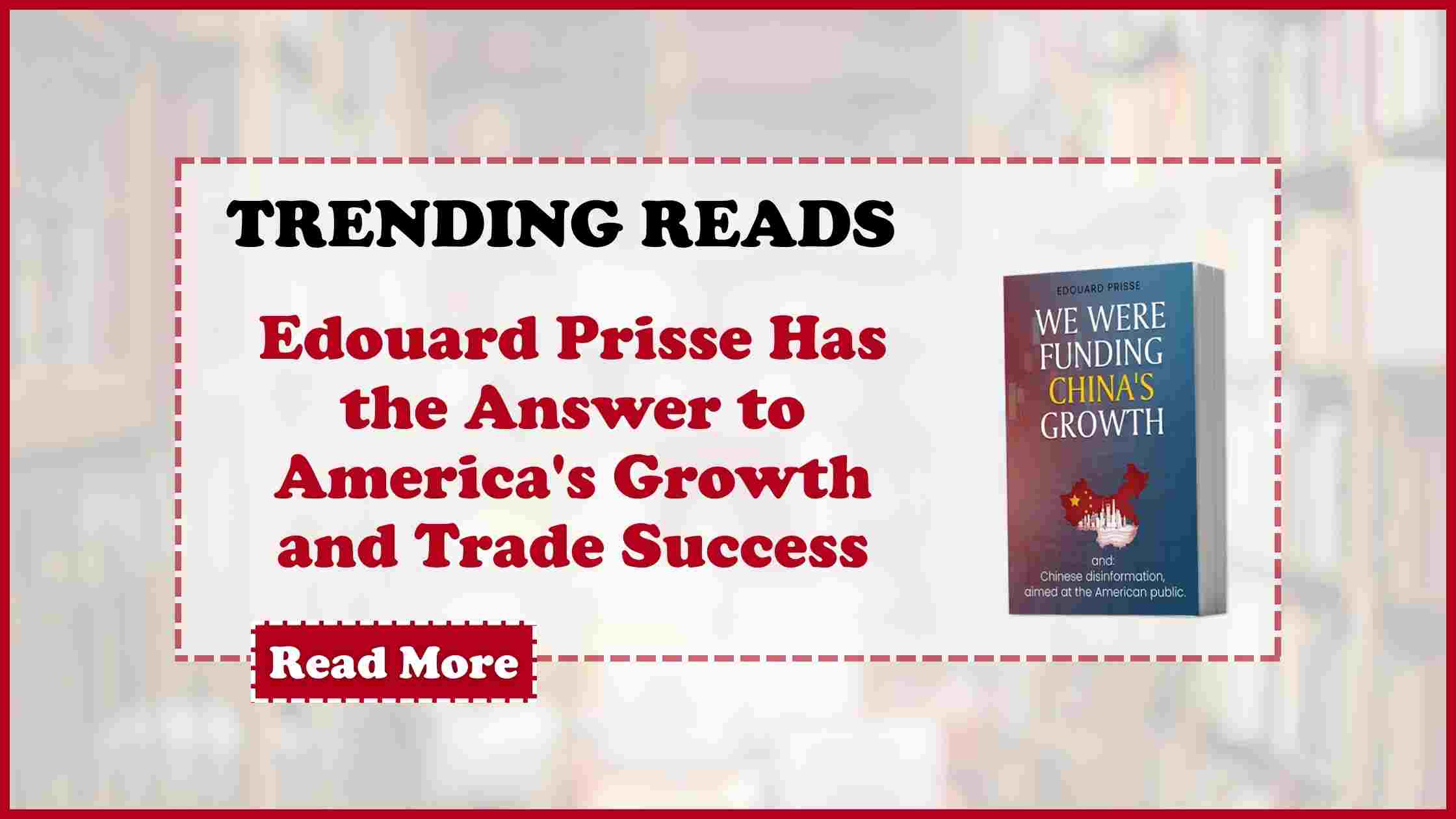
This is precisely the concern expressed by Edouard Prisse in his critical book We Are Funding China’s Growth, Which Must Stop!. Prisse’s insight is particularly valuable because he does not issue vague warnings or make general observations. He explains precisely how and why the current trade policy is harming America’s long-term interests. More importantly, he proposes a clear and achievable solution that can alter the course of US economic policy without causing undue disruption.
The core of the problem is the U.S.-China trade imbalance. Every year, the United States imports far more from China than it exports. That trade deficit feeds directly into China’s economy. And what does China do with the money? It builds foreign currency reserves that now exceed three trillion dollars. It uses those reserves to fund global infrastructure projects, gain influence in foreign governments, support state-owned industries, and invest in strategic technologies.
This is not theory. It is a pattern backed by decades of data. As Prisse clearly explains, these trade surpluses have turned into the foundation for China’s expanding role in Africa, Latin America, Europe, and the Indo-Pacific. They are building ports, highways, factories, and communications networks—not just for commerce, but to build long-term control over logistics and supply routes. The money that supports this global expansion comes in large part from American consumers and corporations.
The mistake was not in trading with China. It was in assuming that open trade, with no limits, would eventually lead to balanced relationships or democratic reforms. That has not happened. China has grown stronger without becoming more open. And it has used the profits of trade to reduce its dependence on the West while increasing the West’s dependence on it.
Prisse offers a solution called Equal Trade. Under this system, the United States would allow imports from China only up to the value of what it exports in return. That means a balanced, one-for-one trade relationship. It would not require isolation. It would not require huge tariffs. But it would prevent the massive surpluses that currently empower Beijing and weaken American industries.
This approach would also support U.S. manufacturing. When trade is more balanced, domestic production has room to grow. Companies would find it easier to invest at home without being undercut by artificially low costs from abroad. Over time, this would rebuild parts of the economy that have been hollowed out by decades of outsourcing.
The plan also addresses the political reality. Many American businesses benefit from the current system in the short term. They rely on cheap production to maintain profits. But as Prisse points out, this focus on quarterly results overlooks the long-term damage to national strength and economic resilience.
The truth is that the United States still has the ability to act. It’s not too late. However, continued inaction means that the imbalance will become permanent. Once this occurs, it will be much more difficult to rebuild the tools required for independence, growth, and strategic leadership.
This is not just a book for economists or policy analysts. It is for anyone who is concerned about the direction America is taking. Prisse does not instill fear. He presents facts. He doesn’t suggest panic. He recommends planning. And he doesn’t ask readers to assign blame; instead, he asks them to understand what is at stake.
If you care about national stability, about fair trade, and about long-term success, now is the time to listen. Read We Are Funding China’s Growth That Must Stop! and understand the choice we still have to either keep funding a future we cannot control or to start building one we can.
Here is a link to purchase: www.amazon.com/dp/1967963053.