Life for women in nineteenth-century Ireland was defined by responsibility, limitation, and an unspoken resilience that held families and communities together. Survival required more than physical endurance. It demanded adaptability, emotional steadiness, and the ability to manage households under relentless pressure. In many ways, women were the invisible architecture of Irish society — essential, overworked, and rarely acknowledged.
From a young age, girls were expected to contribute to the running of the home. Domestic skills such as cooking, cleaning, tending animals, and caring for younger siblings were not optional accomplishments but vital labor. A family’s survival often depended on a woman’s ability to stretch food supplies, manage scarce resources, and maintain order in the face of illness, poverty, or loss. A single misjudgment could have serious consequences.
Marriage, too, was shaped by necessity rather than romance. Economic security was closely tied to having a husband, yet marriage carried its own risks. Women had limited legal rights and little control over property or income. If a husband drank heavily, fell ill, or abandoned the family — all common occurrences — the responsibility for survival fell entirely on the woman. Widowhood could be a harsh life, forcing women to support children without sufficient resources and with little social protection.
Despite these constraints, women were active contributors to household income. Their labor, though undervalued, was indispensable. Many took in laundry or sewing, worked as domestic servants, sold small goods, or helped run family businesses. In times of crisis, women became resource managers, deciding which bills could wait, when to sell possessions, and how to ration food. These decisions were made under considerable emotional strain, yet they were central to a family’s endurance.
Motherhood added another layer of responsibility. Women were expected to bear and raise children while maintaining the household, often with minimal support. Pregnancy and childbirth were dangerous, especially when nutrition was poor. Caring for sick children or elderly relatives was part of daily life. Grief was common, yet women were expected to continue working even after loss.
Religion and social expectations shaped women’s behaviour as strongly as economic necessity. Obedience, modesty, and endurance were prized virtues. Questioning authority — whether clerical, familial, or social — was discouraged. Yet many women found quiet ways to assert control over their lives: through education, careful planning, or subtle acts of resistance. Strength did not always appear as defiance. More often, it was expressed through persistence.
Female survival also depended on relationships. Sisters, mothers, neighbors, and friends formed informal support networks that were often more reliable than formal systems. Sharing food, childcare, labor, or information could mean the difference between coping and collapse. These bonds were essential in a society where hardship was common, and safety nets were limited.
Understanding the realities of women’s lives in nineteenth-century Ireland challenges the idea that history is shaped only by public figures and political events. Women — through their labour, judgment, and endurance — were central to the survival of families and communities. Their contributions were quiet but profound.
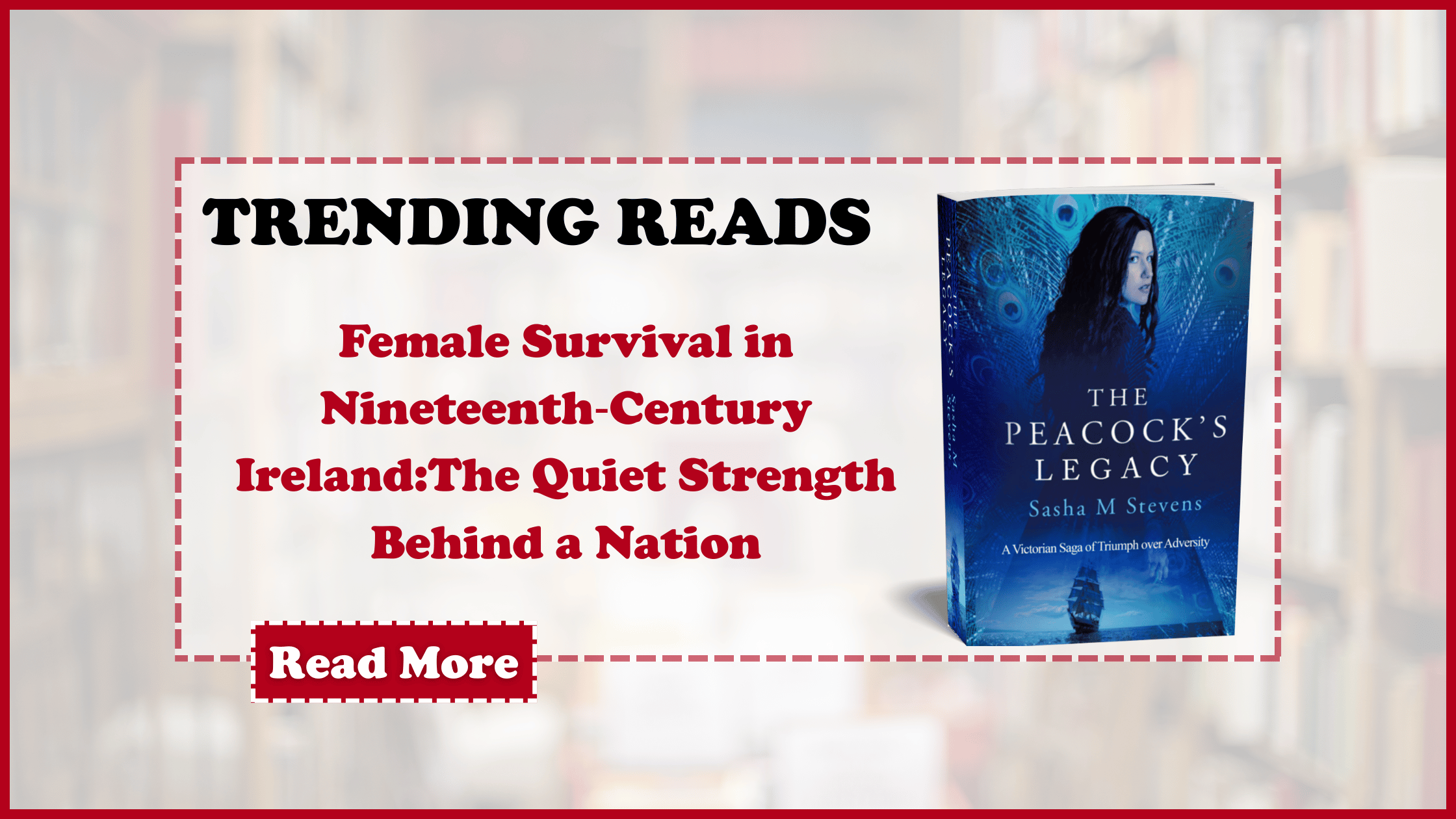
For readers interested in exploring these themes through a personal, historically grounded narrative, The Peacock’s Legacy by Sasha M. Stevens offers a compelling window into the era. The novel follows Brigid Power from childhood into early adulthood as she navigates poverty, family responsibilities, religious pressure, and loss. As famine tightens its grip on her community, Brigid is compelled to mature quickly, assuming roles that test her strength and judgment.
Through rich historical detail and intimate storytelling, the novel offers a close look at daily life during one of Ireland’s most difficult periods. It highlights survival, moral choice, and the quiet resilience required to endure hardship. Through Brigid’s experiences, readers gain a deeper understanding of how ordinary families lived through extraordinary circumstances — and how women, in particular, bore the weight of that survival.
Head to Amazon to purchase your copy of this highly acclaimed novel: https://www.amazon.com/dp/B0DNQ176ZS.