A woman does not wake up one day and simply decide she is not enough. That belief is usually planted quietly, long before she has the words to explain it. It grows through repeated moments, through the tone of a parent’s voice, the weight of correction, the absence of steady praise, or the feeling that love is safest when she behaves, performs, and keeps everyone pleased.
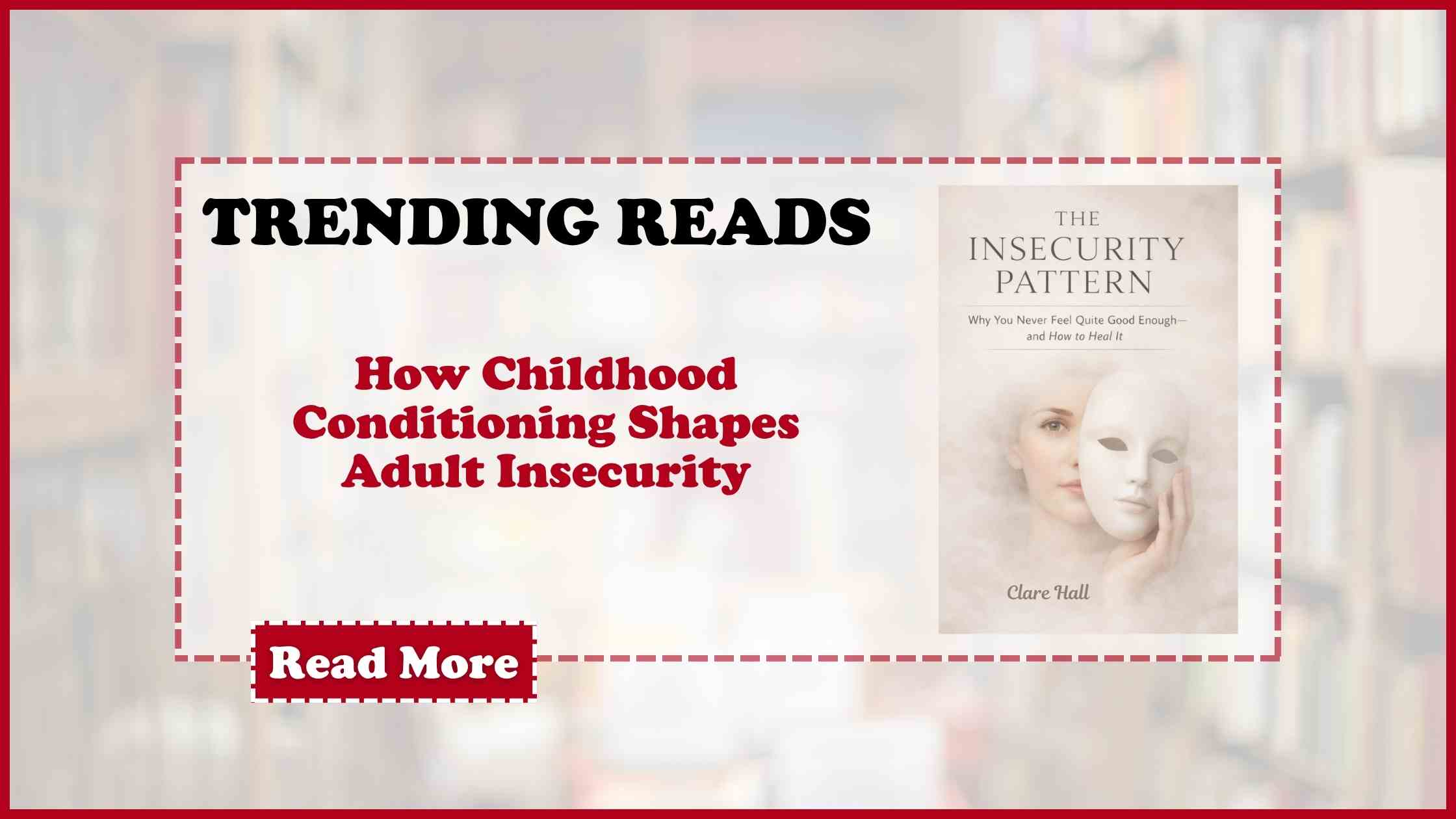
The Insecurity Pattern: Why You Never Feel Quite Good Enough and How to Heal It by Claire Hall explores this hidden root with rare tenderness. The book shows that adult insecurity is often not a flaw in personality, but the result of childhood conditioning. A child learns what keeps connection safe. If approval feels uncertain, she may become careful. If mistakes bring disappointment, she may become perfectionistic. If emotions are treated as too much, she may learn to shrink them.
These lessons do not always come from cruelty. Sometimes they come from loving homes where expectations were high, feelings were uncomfortable, or praise arrived only after achievement. A child may not think, “I must earn my worth.” Instead, her body learns it. She begins to watch faces, read moods, soften her needs, and avoid anything that might cause disapproval.
Years later, those early patterns can follow her into adulthood. She may replay conversations after everyone else has moved on. She may feel anxious after receiving feedback. She may struggle to believe praise, even when it is sincere. She may become successful and still feel as though she is only one mistake away from being exposed.
Claire Hall gives readers a compassionate way to understand these reactions. In The Insecurity Pattern, insecurity is not presented as weakness. It is shown as adaptation. The woman who overthinks may once have been a child trying to stay emotionally safe. The woman who over prepares may once have learned that getting things right protected her from disappointment. The woman who fears being too much may once have felt that her needs made others uncomfortable.
This is what makes the book so meaningful. It does not shame the reader for carrying insecurity. It helps her recognise where it began, why it stayed, and how it can begin to soften. The message is clear and deeply reassuring: what was learned in childhood does not have to define the whole of adulthood.
The Insecurity Pattern speaks to every woman who has spent years trying to be good enough, calm enough, useful enough, agreeable enough, or perfect enough. It offers understanding where there has been self-blame, and gentleness where there has been inner criticism.
Claire Hall reminds readers that insecurity is not proof of inadequacy. It is often the echo of old conditioning. Once that echo is recognised, it can lose some of its power. Healing begins when a woman stops asking, “What is wrong with me?” and begins to ask, “What did I learn to survive?”
Get Your Copy On Amazon https://www.amazon.com/dp/B0GQGPP5HX