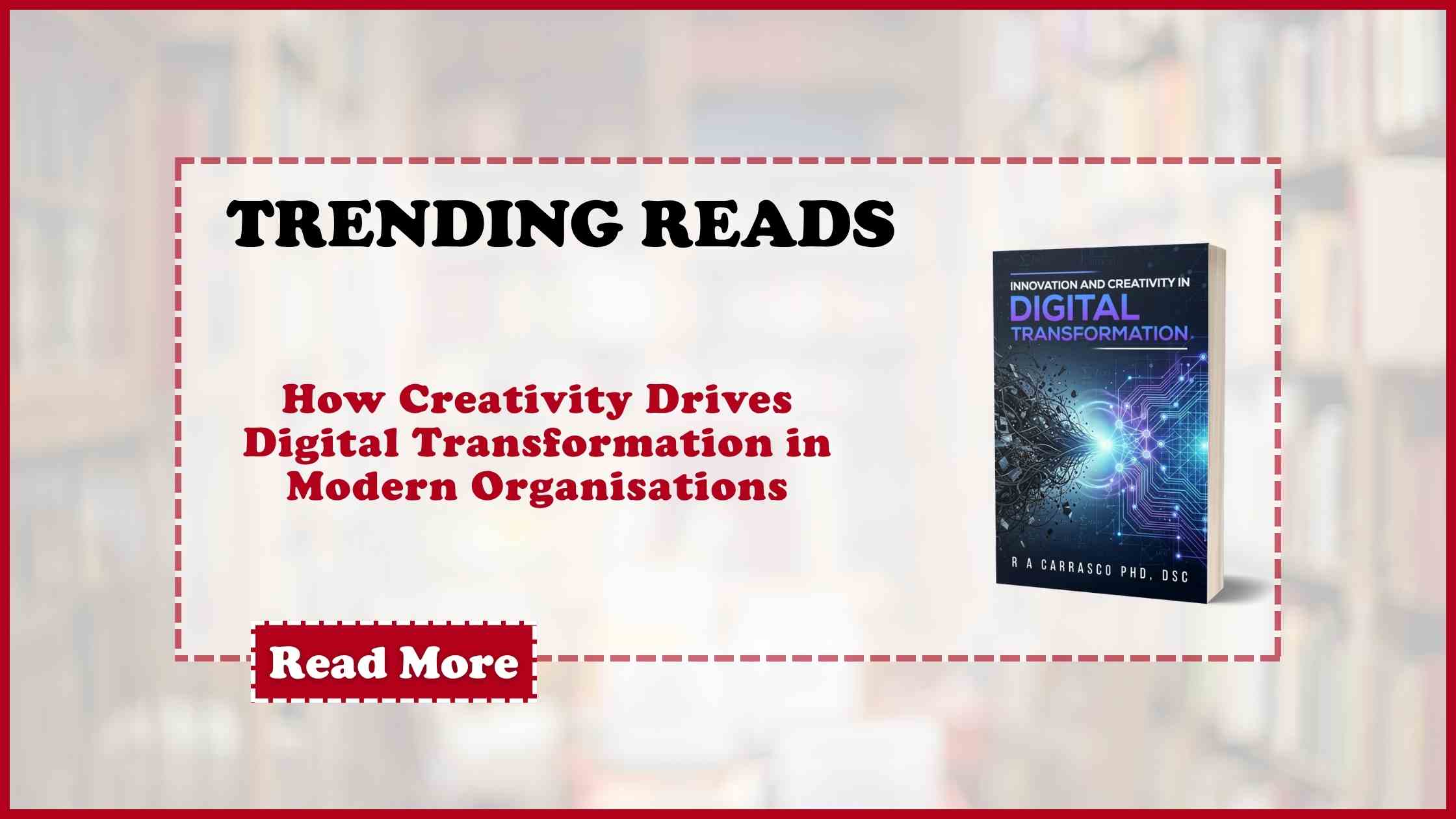
Digital transformation is often seen as a matter of machines, software, automation, and data. Yet real progress begins before any system is installed. It begins with creativity. In Innovation and Creativity in Digital Transformation, R. A. Carrasco presents digital transformation as more than a technical shift. It is a change in thinking, learning, problem solving, and organisational behaviour.
Modern organisations face constant pressure to improve services, increase efficiency, reduce waste, and respond to new demands. Technology can support these goals, but it cannot replace the human ability to ask better questions, recognise hidden problems, and imagine new ways of working. Creativity allows organisations to look beyond old routines and consider how digital tools can create real value.
Carrasco shows that creativity is closely linked to innovation. It is not limited to art or design. It belongs equally in engineering, education, health services, agriculture, business, and industry. In a digital age, creativity helps people connect ideas from different fields and apply them to practical challenges. A company that simply digitises paper records is not truly transformed. It has only changed the format of its information. A creative organisation looks further. It asks how data can be analysed, how tasks can be automated, how decisions can be improved, and how services can become more effective.
This is why education and freedom of thought matter so strongly in digital transformation. Organisations need people who can think critically, test new ideas, and question familiar methods. Carrasco explains that many systems fail when they rely only on repetition and fixed thinking. Innovation requires an environment where new ideas can be explored without being dismissed too quickly.
Automation, robotics, artificial intelligence, machine learning, and big data all play major roles in the modern economy. However, these tools need human direction. Creativity helps leaders decide where technology should be applied and why. It also helps workers adapt as roles change. When machines take over repetitive tasks, people are not made irrelevant. Instead, they need new skills, stronger judgment, and the ability to manage more complex responsibilities.
The book also reminds readers that digital transformation affects society as a whole. It changes employment, education, healthcare, farming, forestry, fisheries, and business. These changes bring opportunity, but also ethical and practical questions. How should robots be used? How should data be managed? How can organisations balance efficiency with human responsibility? Creative thinking is essential for answering these questions wisely.
Innovation and Creativity in Digital Transformation is a valuable read for students, researchers, executives, managers, and professionals who want to understand the deeper meaning of technological change. Carrasco connects theory with real world application, showing that the future will not be shaped by technology alone. It will be shaped by the creativity of those who know how to use it.