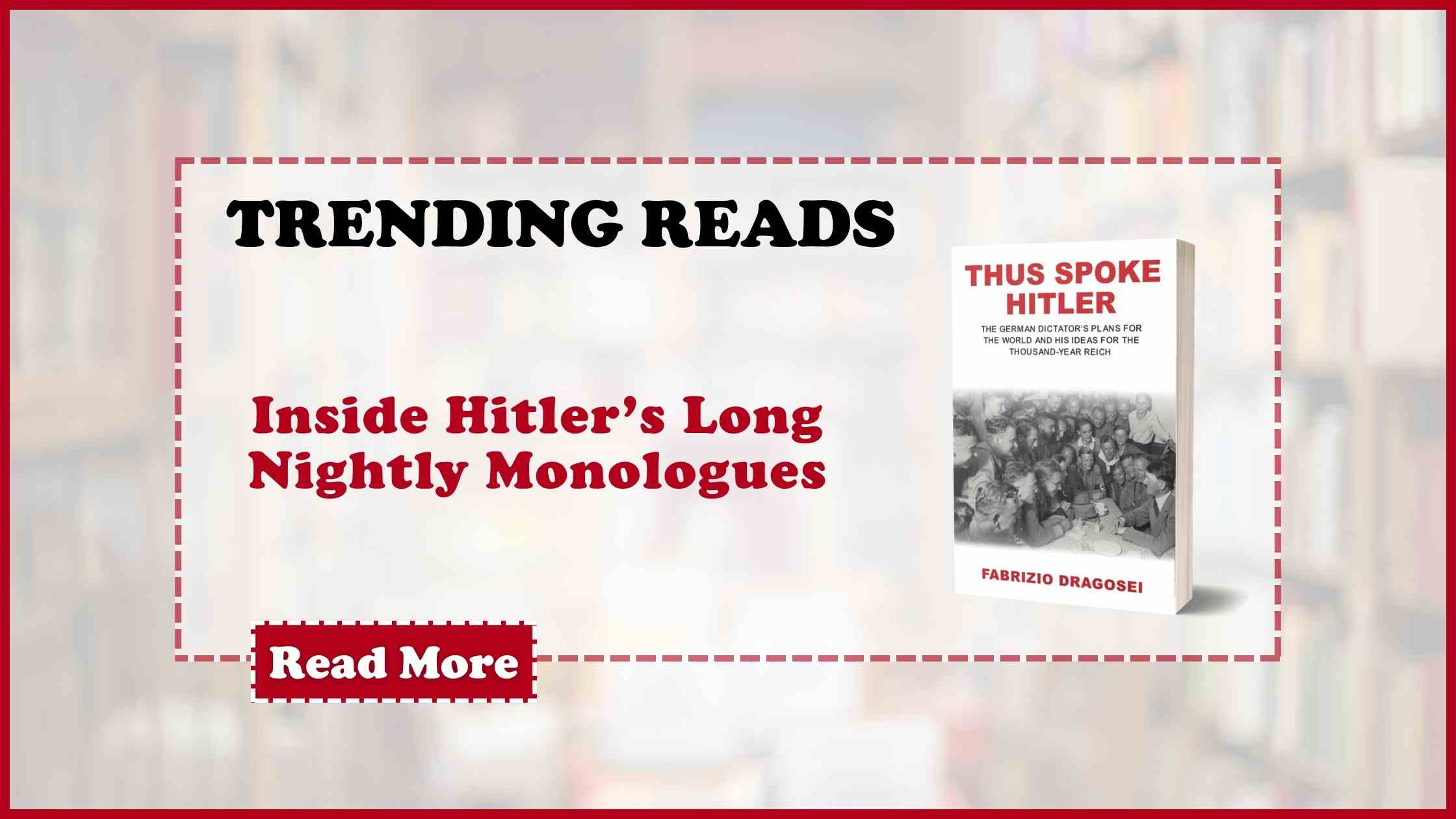
Adolf Hitler often turned private evenings into hours of uninterrupted speech. After dinner, he would remain surrounded by secretaries, aides, military officers, doctors, and invited guests while he delivered long monologues that sometimes continued until dawn.
These gatherings were not ordinary conversations. Hitler rarely encouraged discussion or welcomed disagreement. He preferred to dominate the room, moving from politics and warfare to architecture, religion, medicine, history, and culture. His listeners were expected to remain attentive, even when his arguments became repetitive or wandered from one subject to another.
The monologues reveal how strongly Hitler believed in his own knowledge. Although he lacked a formal advanced education, he considered himself an authority on nearly every topic. He spoke with certainty, often dismissing specialists, military commanders, and political leaders whose opinions differed from his own.
His private remarks also exposed the beliefs behind Nazi policy. Hitler discussed the removal of populations, the colonisation of Eastern Europe, the supposed superiority of Germans, and his plans for a vast empire. These were not passing comments. They reflected ideas that shaped military campaigns, occupation policies, and the treatment of millions of people.
The setting of these speeches added to their disturbing nature. In comfortable residences, surrounded by loyal followers, Hitler spoke casually about conquest, displacement, and destruction. He could move from discussing mountain scenery or architecture to describing entire populations as obstacles to German expansion.
His nightly speeches also reveal his growing isolation. As the war continued and Germany’s position weakened, Hitler increasingly surrounded himself with people who rarely challenged him. Repetition replaced genuine debate, while personal conviction often took priority over military reality.
Stenographers and secretaries recorded parts of these conversations, leaving historians with valuable evidence of Hitler’s private thinking. The records show the connection between the public dictator and the man who spoke freely among trusted associates.
Thus Spoke Hitler by Fabrizio Dragosei draws on these private conversations, military conferences, speeches, and historical documents to examine the rise and fall of Nazism through Hitler’s own words.
By placing the monologues within their historical setting, the book offers readers a closer view of the arrogance, prejudice, ambition, and delusion that influenced some of the most destructive decisions of the twentieth century.
Read the book and discover history through authentic sources. https://www.amazon.com/dp/B0FT68K2C2/