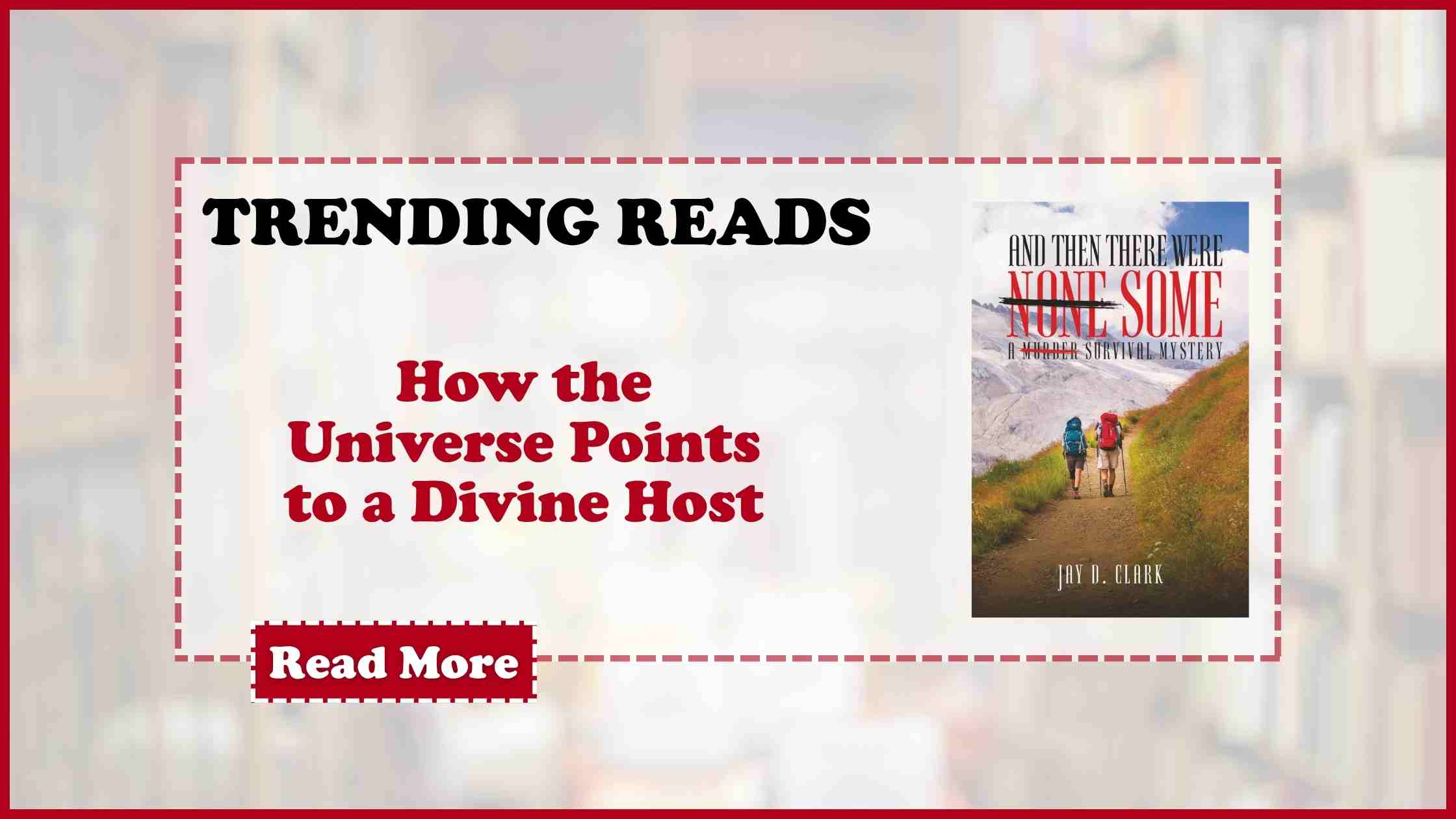
What if the universe isn’t just a vast expanse of matter and energy? What if it is a carefully crafted scene filled with clues waiting to be examined? In And Then There Were Some: A Survival Mystery, Jay D. Clark invites us to approach the cosmos not as passive observers but as detectives. Like characters trapped on an island in Agatha Christie’s famous novel, we too have been “invited” into a setting we did not create, surrounded by mysteries we cannot ignore. The greatest of these is the question of who, or what, is behind it all.
The book uses the metaphor of a survival mystery to reframe big theological and philosophical questions. Clark doesn’t simply preach faith—he builds a rational case for it, drawing on science, logic, and abductive reasoning. One of the most compelling arguments he presents is the sheer improbability that the universe came into existence by chance.
Consider Olbers’ paradox, an old astronomical riddle: Why is the night sky dark if the universe were infinite and eternal? The answer lies in discovering that the universe is not eternal. Instead, it had a beginning. And that beginning, far from being random, shows signs of intentionality. Redshift observations, for instance, reveal that galaxies are moving away from us in all directions. This discovery, tied to Hubble’s Law, points to an expanding universe that originated from a single point—a beginning moment.
Clark also references Nobel Prize-winning physicist Arno Penzias, who remarked that today’s data aligns closely with what one would expect if the Bible were the foundation for scientific predictions. Such statements suggest that scientific observation and scriptural testimony are not in opposition but in harmony. The cosmic background radiation, the fine-tuning of physical constants, and the improbably low entropy of the early universe—all are breadcrumbs in a grand mystery.
In Clark’s narrative, these clues serve a purpose. They point us to a Host. In the same way Christie’s characters searched for their unseen host, Clark encourages us to seek the One behind the cosmos. The book’s strength lies in connecting complex scientific data with deeply human questions about purpose and design.
Ultimately, And Then There Were Some doesn’t demand blind faith. Rather, it asks us to weigh the evidence. Like any good detective story, the truth doesn’t shout; it whispers. And when we follow the trail of clues left in the stars, atoms, and laws of nature, we begin to see that the universe may very well be the product of an intelligent, purposeful Creator. The question is not about the clues that are there. It is whether we’re willing to investigate them and lead ourselves to the wisdom and presence of God.
Exploring the compatibility of science and faith, particularly Christianity, through an evidence-based approach and drawing from science, history, philosophy, and scripture, “And Then There Were Some” challenges the notion that faith and reason are incompatible. It offers us a thoughtful exploration of the relationship between science and religion, empowering us to defend our faith with rational, evidence-based arguments while providing reassurance that belief in God aligns with modern scientific understanding.
Get your copy on Amazon: https://www.amazon.com/dp/1917505191/.