Introducing intelligent systems into the workplace is not just a technical decision. It is a human one. While organizations often focus on efficiency, cost savings, and performance gains, employees experience these changes in a very different way. For them, it raises questions about job security, fairness, and control. If these concerns are not addressed early, trust can damage quickly.
The foundation of a successful changes begin with transparency. Employees need to understand why the system is being introduced, what problems it is solving, and how it will affect their daily work. When changes appear sudden or unclear, people naturally assume the worst. Open communication removes uncertainty and replaces it with honesty. Leaders should explain not only the benefits to the organization, but also the direct impact on employees.
Equally important is involvement. Trust grows when employees feel included in the process rather than being subjected to it. Instead of rolling out systems from the top down, organizations should invite feedback during the planning and testing stages. Employees who interact with these tools daily often have insights that leadership may overlook. Their input can improve system design while also creating a sense of ownership and acceptance.
Another important factor is maintaining human oversight. Systems should support decision-making, not replace it entirely. When employees feel that their judgment is being sidelined, confidence declines. Clear boundaries must be established so that people remain in control of critical decisions. This reassures employees that their expertise still matters and that they are not being reduced to passive operators.
Training also plays a central role. Many concerns stem from uncertainty and lack of familiarity. Providing structured learning opportunities helps employees understand how the system works and how to use it effectively. More importantly, it reduces fear. When people feel capable, they are more likely to engage with new tools rather than resist them.
Organizations must also be careful with monitoring practices. While performance tracking can improve efficiency, excessive or unclear monitoring can damage trust. Employees should know what is being tracked, why it is necessary, and how the data will be used. Transparency in this area is essential. Without it, monitoring can feel intrusive and create a culture of suspicion rather than accountability.
Consistency in leadership behavior is another key element. If leaders promote innovation but ignore employee concerns, the message becomes contradictory. Trust is built when actions align with communication. Leaders should actively listen, respond to feedback, and demonstrate that employee well-being is a priority throughout the transition.
It is also important to address the emotional aspect of change. Introducing new systems can create anxiety, even when the intention is positive. Acknowledging these concerns openly helps normalize them. Employees are more likely to trust an organization that recognizes their perspective rather than dismissing it.
Finally, organizations should focus on long-term alignment rather than short-term gains. Trust is not built in a single announcement or training session. It develops over time through consistent, transparent, and fair practices. Systems should be continuously evaluated, not only for performance but also for their impact on people.
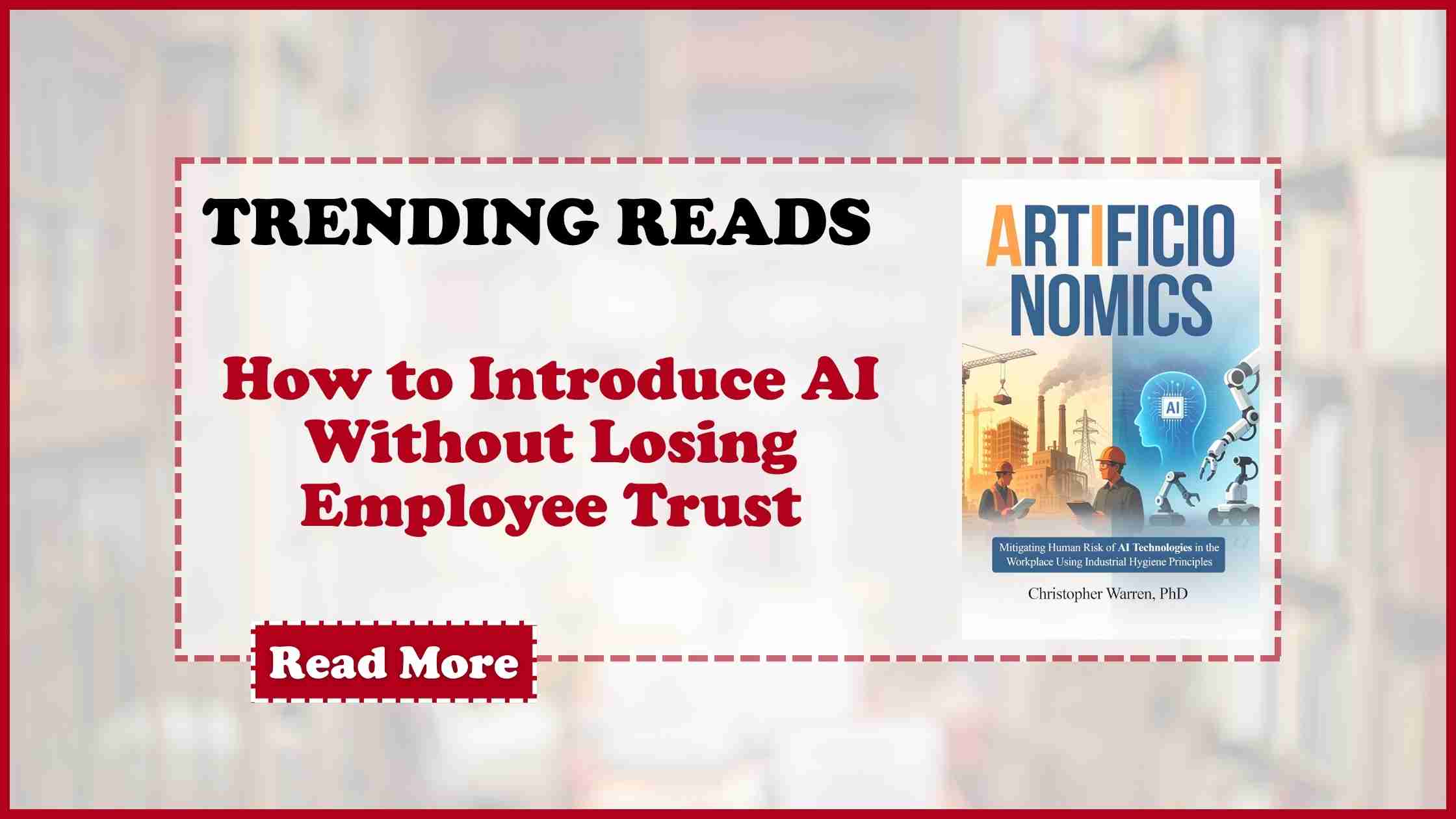
This balanced approach is at the core of Artificionomics: Mitigating Human Risk of AI Technologies in the Workplace by Christopher Warren, PhD. The book provides a structured framework for introducing intelligent systems while protecting human well-being. It emphasizes that successful adoption is not just about technology, but about how it is experienced by the workforce.
When organizations prioritize clarity, involvement, and respect for human judgment, they create an environment where innovation and trust can coexist.
Get your Copy Now on Amazon: https://www.amazon.com/dp/B0GFY4RL6B