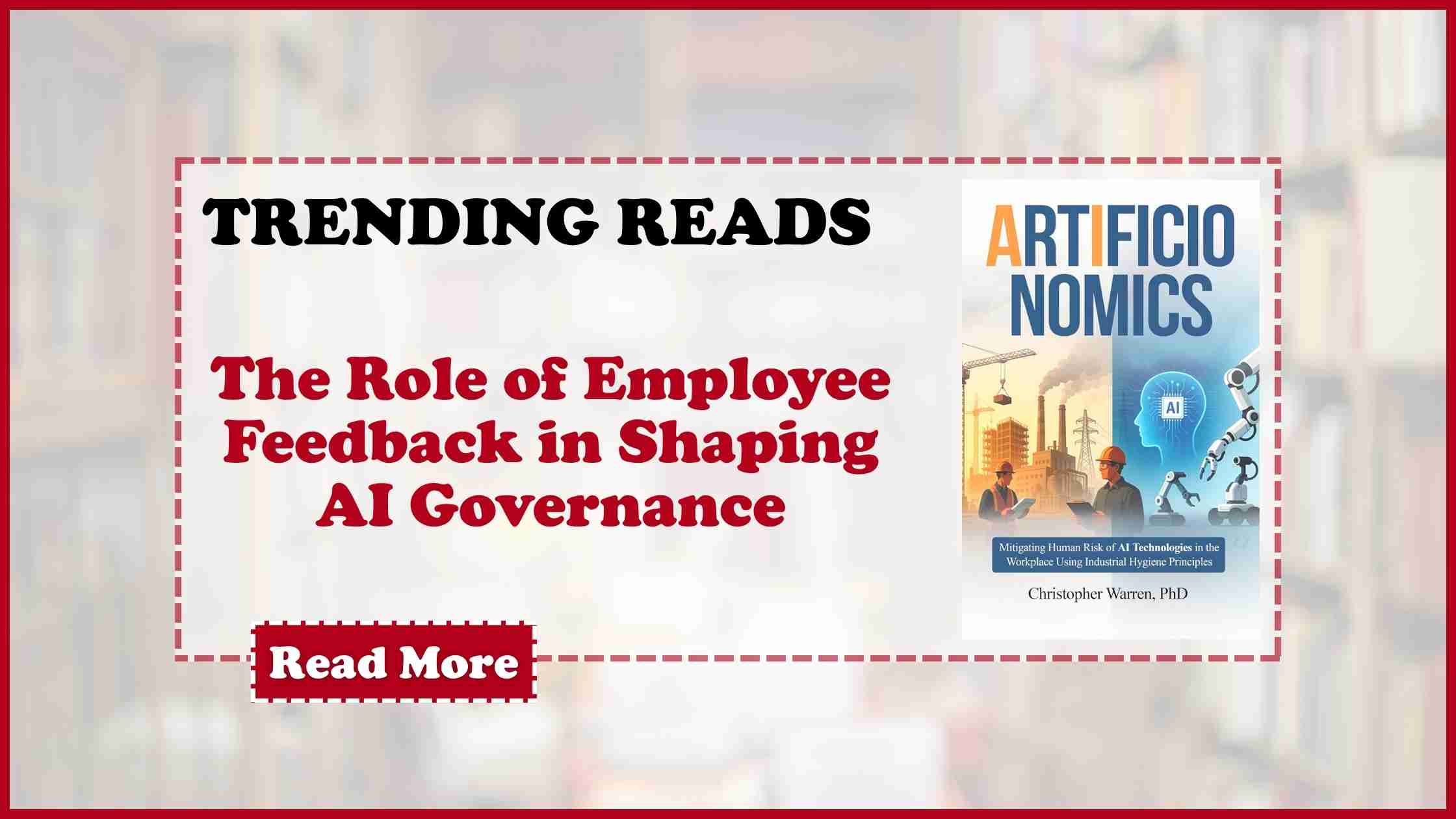
As artificial intelligence becomes an increasingly prominent part of workplace operations, its integration into various business practices raises complex questions around fairness, transparency, and accountability. In Artificionomics, the importance of employee feedback in shaping AI governance is explored, highlighting how workers’ insights and concerns can help ensure that AI systems are used ethically and effectively. The role of employees goes beyond merely being subjects of AI decisions they are vital stakeholders who can provide the necessary perspective to guide the responsible development and deployment of these technologies.
AI systems, from predictive analytics to automated decision-making processes, have the potential to impact almost every aspect of work, from performance evaluations to hiring decisions. However, without proper governance, these systems could inadvertently perpetuate bias, lead to unfair practices, or erode trust within the workplace. For example, an AI system used to evaluate employee performance might not account for all factors that contribute to a worker’s success, potentially undermining the fairness of assessments. This is where employee feedback becomes crucial.
Incorporating feedback from employees helps ensure that AI systems reflect diverse viewpoints and experiences. Employees who interact with these systems daily can offer valuable insights into how these technologies are working in practice. Whether it’s identifying biases in AI-driven decisions or pointing out practical challenges that arise from using AI tools, employee feedback provides a direct line of communication between the technology and those who are impacted by it. By considering this feedback, organizations can fine-tune AI systems to avoid unintended consequences and make adjustments that improve fairness and effectiveness.
Moreover, employee feedback fosters a sense of involvement and ownership in the development and implementation of AI. When employees are invited to share their thoughts and concerns about AI systems, it not only builds trust but also creates a more inclusive environment. Employees are more likely to accept and use AI systems when they feel their opinions are valued and considered in the decision-making process. This transparency can also alleviate fears and resistance, which are often associated with the unknown aspects of AI technologies. By engaging employees in the governance process, businesses can promote a culture of openness and collaboration around AI.
Additionally, employee feedback can help ensure that AI systems align with the values and ethics of the organization. Many AI technologies are designed to automate decisions, and as such, they must be aligned with the core values of the company, including fairness, respect, and transparency. Employees, as the heart of the organization, are often best positioned to provide insights into whether AI systems are upholding these values in real-world applications. For instance, if an AI system inadvertently overlooks a critical factor in decision-making, employees who understand the nuances of their roles can flag this discrepancy. Their feedback is essential in developing AI governance frameworks that are ethical and aligned with the organization’s objectives.
In Artificionomics , the importance of ongoing feedback is emphasized, especially as AI technologies continue to evolve. AI governance isn’t a one-time process; it requires continuous monitoring and adaptation. By creating channels for regular employee feedback, businesses can keep AI systems aligned with changing workplace needs, regulatory standards, and societal expectations. Employee input should be woven into the lifecycle of AI systems, from design and implementation to ongoing evaluation and refinement.
In conclusion, employee feedback plays a pivotal role in shaping AI governance by ensuring that these systems are ethical, effective, and fair. By actively engaging employees in the process, businesses can develop AI systems that align with both organizational values and human interests, leading to greater trust and productivity in the workplace. As AI continues to shape the future of work, it is clear that the involvement of employees is essential to creating responsible and sustainable AI governance.
Get your Copy Now on Amazon: https://www.amazon.com/dp/B0GFY4RL6B