On a sunny day at Canberra Glassworks, Econ Mum and Econ Kid marveled at the artistry of glassmakers skillfully crafting intricate designs. The dazzling displays of light reflecting through colorful glass creations were captivating. Amidst the beauty, Econ Mum shared a story to illustrate the relationship between technology and economic growth: The Sorcerer’s Apprentice.
In a magical land, an eager apprentice named Will worked under a skilled magician. One day, while the magician was away, Will used a spell to bring a broom to life and assigned it the task of fetching water. Initially, Will was delighted as the enchanted broom performed the chore efficiently.
However, when he couldn’t stop the spell, chaos ensued. The room flooded, and no amount of effort could halt the disaster. The magician returned just in time to reverse the spell, restoring order. Will learned a valuable lesson about understanding and controlling powerful tools before using them.
How does this story connect to economics?
Econ Mum explained that the story parallels economic growth, particularly the Solow Growth Model, which identifies capital, labor, and technology as key drivers of productivity.
Capital (Broom): The broom symbolizes tools and machinery used in production. Capital accumulation, like having more brooms, initially increases output. However, without innovation or proper usage, the benefits diminish over time.
Labor (Magician and Apprentice): The magician’s expertise and the apprentice’s efforts represent labor. Productivity improves with skilled labor, but merely adding more workers without upgrading tools or techniques can lead to inefficiencies.
Technology (Magic Spells): Magic spells, like technology, are a crucial factor for long-term growth. While the broom (capital) and apprentice (labor) contributed to progress, it was the magic spell (technology) that transformed tasks and increased efficiency.
Econ Mum also emphasized the idea of diminishing returns, which states that productivity increases initially but eventually plateaus in the absence of technological advancement as more capital or labor is added. “For example,” she said, “adding more glassmakers to a workshop without upgrading tools or processes won’t lead to significant improvements. Similarly, Will’s reliance on the broom alone led to diminishing returns—it fetched water, but the flooding disrupted productivity.”
This Solow Growth Model emphasizes that sustained economic growth requires continuous technological innovation. In the story, the magician’s mastery of spells symbolizes controlled and purposeful technological progress, and Will’s failure to understand the spell illustrates the risks of misusing technology without proper knowledge.
“Technology is like magic,” Econ Mum explained. “When used wisely, it can solve problems and increase efficiency. However, if mismanaged, it can lead to negative consequences, like flooding or economic downturns.”
Key Lessons:
Technology Drives Long-Term Growth: The Solow Growth Model shows that while capital and labor are essential, technological progress is the primary driver of sustained economic growth. Innovation increases productivity and helps economies overcome stagnation.
Control and Responsibility: As seen in The Sorcerer’s Apprentice, progress must be managed responsibly. Understanding and regulating technology is crucial to avoid negative impacts, such as environmental damage or job displacement.
Adaptation Is Key: The apprentice’s mistake underscores the importance of continuous learning and adapting to technological advancements.
“So, Mum, if the glassmakers at Canberra Glassworks learn new techniques, they can make better designs faster, right?”
“Exactly!” Econ Mum said. “Like the magician, they need to master their tools and adapt to new methods. That’s how progress is achieved in any field.”
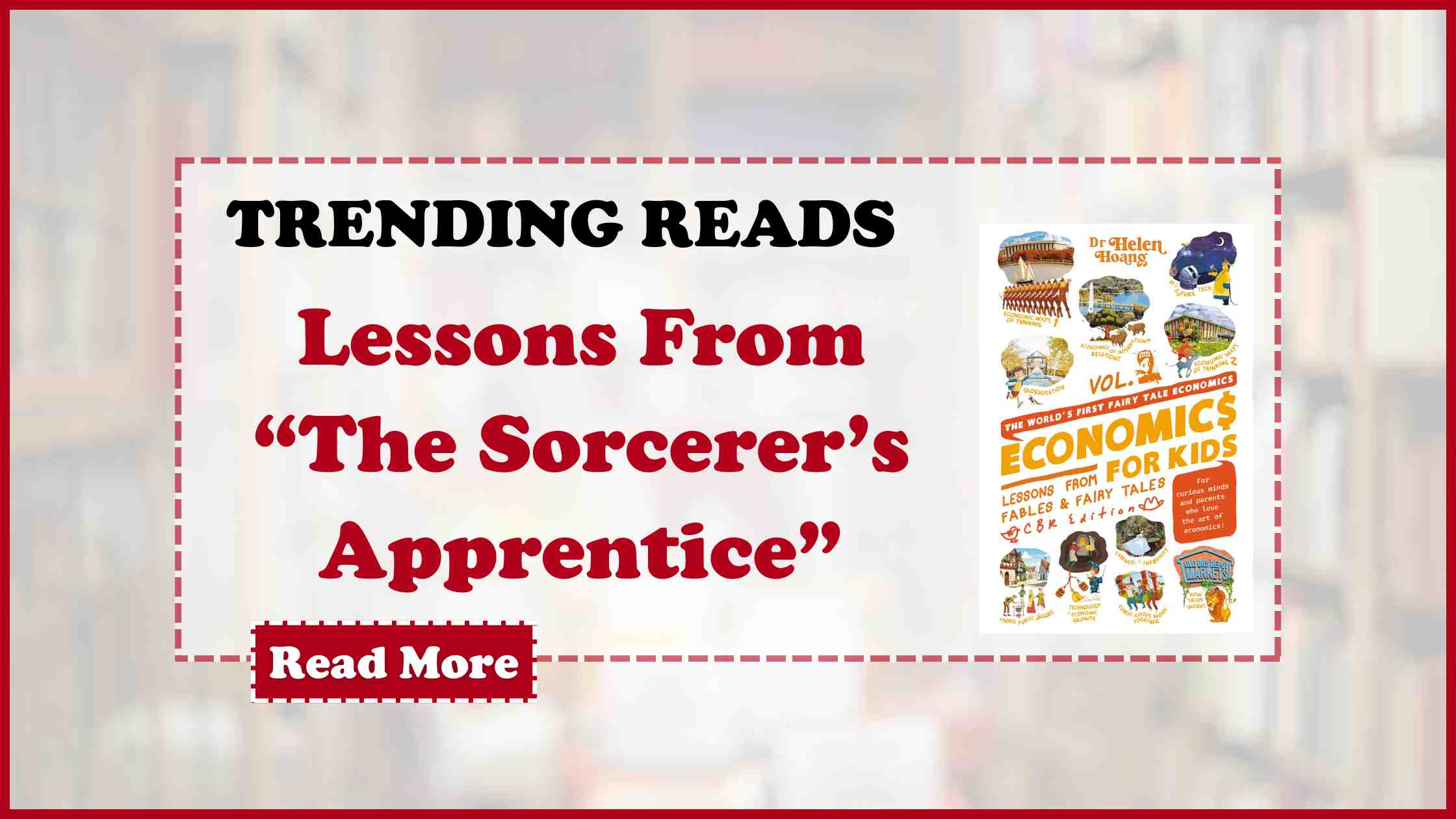
When read along with the first, “ECONOMICS FOR KIDS: LESSONS FROM FABLES & FAIRY TALES,” this second volume becomes a treasure trove of lessons for parents, educators, and curious children. It nurtures critical thinking, ethical responsibility, and an appreciation for our world’s interconnectedness.
Economics for Kids: Lessons from Aesop’s Fables and Fairy Tales (Volume II) explore the world of economics, tailored for young minds. Building on the foundation of the first volume, this book explores advanced topics like globalization, trade, and international relations through the lens of timeless fables and fairy tales. This includes Rumpelstiltskin, Stone Soup, The Oak and The Reed, and many more—to introduce economic principles like supply and demand, the cost of production, and the importance of collaboration—that will help children learn how economics influences their everyday lives and the world around them.
Get your copy on Amazon: https://www.amazon.com/dp/1966840608