Election denial represents one of the most serious challenges facing modern democracies. When political leaders or movements assert, without credible evidence, that an election was stolen, manipulated, or fundamentally illegitimate, the damage extends beyond a single contest. It strikes at the core principle that underpins democratic governance: peaceful acceptance of electoral outcomes.
The phrase often associated with this phenomenon, “the Big Lie,” refers to the deliberate repetition of a false claim on such a scale and with such persistence that it begins to reshape public perception. In the context of elections, the claim is simple and powerful: the system is rigged. When repeated across media platforms, rallies, and political speeches, the assertion can erode trust even among those who lack direct evidence of wrongdoing.
Democratic systems depend not only on procedures, but on norms. Procedures include ballot counting, certification processes, and judicial review. Norms include restraint, concession, and mutual recognition of legitimacy. Election denial weakens these norms. When losing candidates refuse to concede or imply that only victory can be legitimate, they redefine political competition as existential conflict rather than civic process.
The erosion begins subtly. Repeated allegations create suspicion. Suspicion fosters polarization. Citizens who distrust electoral institutions may become less willing to accept outcomes that contradict their preferences. Over time, belief in the fairness of elections declines, even when audits and courts uphold results.
This dynamic alters political incentives. Leaders who challenge results may gain short term loyalty from supporters who view the claim as proof of fighting corruption. However, the long term consequence is institutional instability. If every election can be framed as fraudulent when inconvenient, the peaceful transfer of power becomes contingent rather than automatic.
Election denial also strains the judiciary and administrative systems. Courts are asked to adjudicate claims that often lack evidentiary support. Election officials, many of whom serve in nonpartisan roles, face harassment and pressure. Administrative processes designed to function quietly and efficiently become politicized battlegrounds.
The psychological impact is equally significant. Democracy relies on collective agreement about rules. When that agreement fractures, political opponents cease to be competitors within a shared system and instead become perceived threats to the system itself. This perception increases hostility and reduces space for compromise.
Digital media amplifies the effect. Claims of fraud can spread rapidly, detached from verification. Algorithms reward engagement, and outrage travels quickly. Even after allegations are debunked, the initial claim can persist within partisan communities, reinforcing echo chambers and deepening mistrust.
Importantly, election denial does not always require proof to be effective. Its power lies in repetition and emotional appeal. By invoking fear of disenfranchisement or conspiracy, leaders can mobilize supporters around a narrative of victimhood. The more the narrative circulates, the more it reshapes identity and loyalty.
The erosion of democratic norms is gradual. It does not require formal abolition of elections. It requires weakening confidence in their integrity. When citizens begin to believe that outcomes are predetermined or manipulated, participation may decline, or worse, acceptance of lawful outcomes may disappear.
Reinforcing democratic norms requires transparency, accountability, and civic education. Clear communication about how elections are conducted and verified can strengthen resilience. Political leaders bear responsibility as well. Public affirmation of legitimate outcomes, even when disappointing, reinforces institutional stability.
The durability of democracy depends less on perfection and more on trust. Election denial undermines that trust. When the legitimacy of elections becomes negotiable, the foundation of democratic governance begins to crack. Preserving democratic norms therefore requires vigilance not only in procedure, but in rhetoric and responsibility.
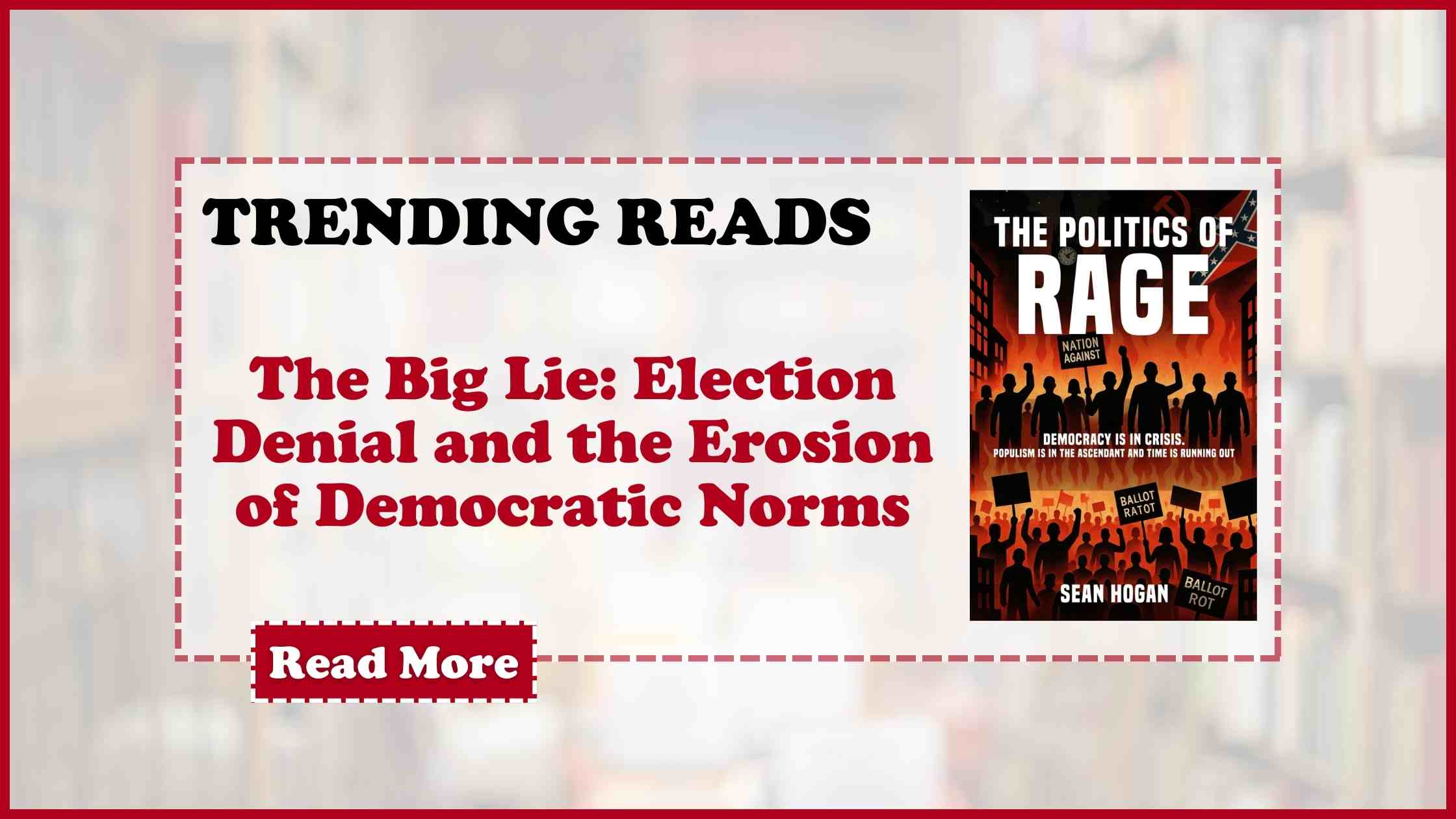
Find out in this essential read, available on Amazon https://www.amazon.com/dp/B0FHBDWJD4/.