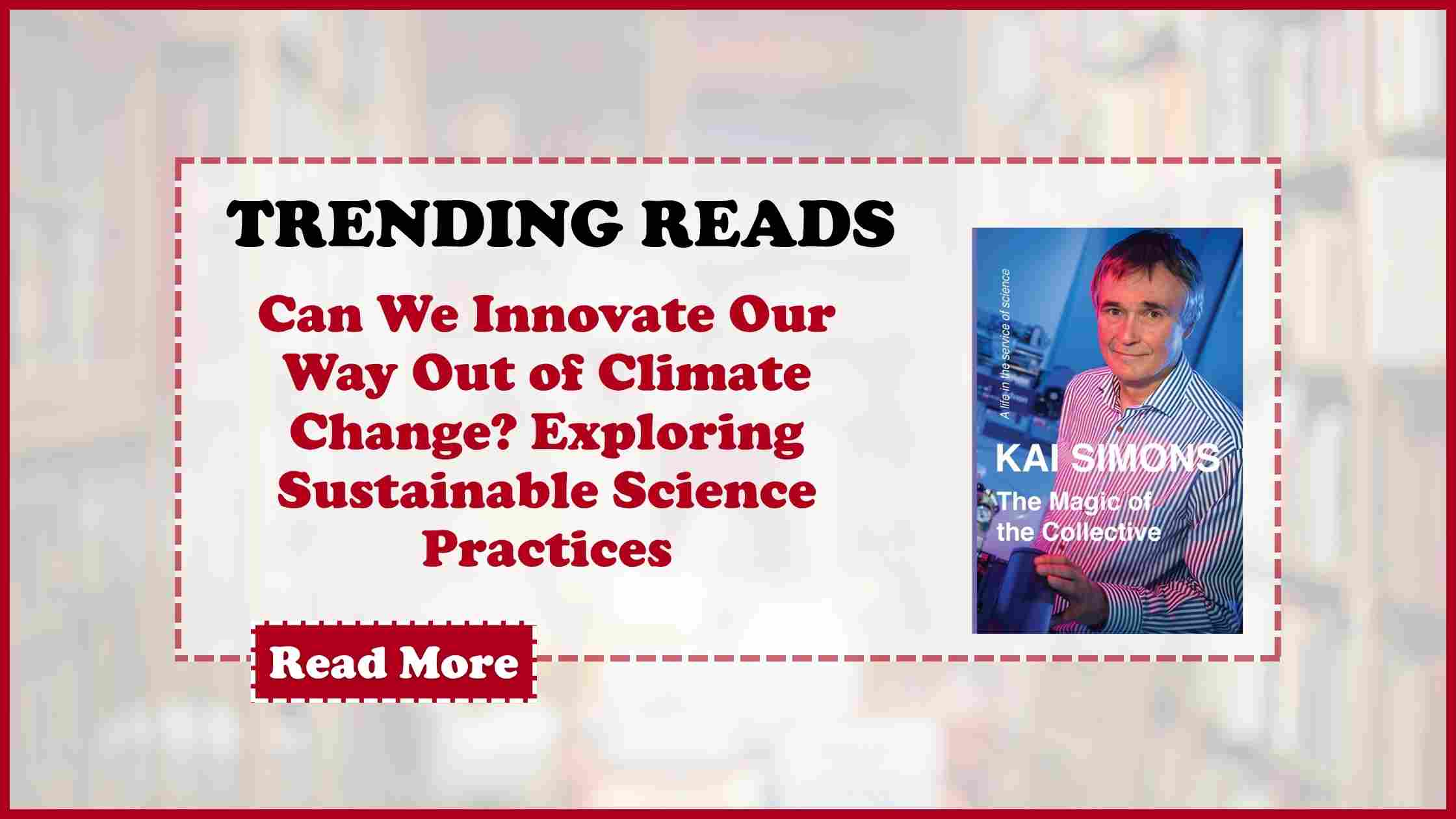
In The Magic of the Collective, Kai Simons highlights the double-edged nature of scientific progress. While science has improved human life, it has also contributed to unintended global problems, such as climate change. Now, scientists must face a critical question: Can we innovate our way out of the crisis we helped create?
1. The Role of Science in Creating Climate Change
Simons acknowledges that scientific advancements have unintended consequences. Industrial progress, medical breakthroughs, and transportation revolutions—while improving quality of life—have led to increased CO₂ emissions, resource depletion, and ecosystem destruction.
- Example: The development of fossil fuel-based energy powered the Industrial Revolution, but it also created the climate crisis we face today.
- Lesson: Every new innovation must consider long-term sustainability to avoid repeating this cycle.
2. Science as the Solution: The Need for Sustainable Innovation
Simons argues that innovation can be a force for positive change, but only if guided by collective responsibility and interdisciplinary collaboration. Scientists, engineers, and policymakers must work together to develop solutions that don’t just fix today’s problems but also prevent future damage.
Key Sustainable Science Practices:
a) Green Technology Development
Innovations in renewable energy, carbon capture, and sustainable materials can mitigate the effects of climate change.
- Example: Advances in solar panels, wind energy, and battery storage are reducing dependence on fossil fuels.
- Lesson: Investing in scalable, clean energy solutions is essential for long-term impact.
b) Circular Economy & Waste Reduction
Scientists must rethink how materials are produced, used, and recycled to minimize waste.
- Example: Biodegradable plastics and lab-grown meat are emerging as sustainable alternatives.
- Lesson: A shift towards closed-loop production systems can prevent further resource depletion.
c) Cross-Disciplinary Collaboration
Simons emphasizes the need for collaboration across different fields to tackle complex challenges.
- Example: Climate solutions require biologists (ecosystem impact), engineers (green tech), economists (sustainable policies), and social scientists (public engagement) working together.
- Lesson: Scientists must engage beyond their immediate fields to create holistic, effective solutions.
3. Overcoming Barriers to Sustainable Innovation
a) The Resistance to Change
Simons notes that many scientists cling to old paradigms, delaying the adoption of sustainable alternatives.
- Solution: Encouraging young researchers to challenge outdated models and integrating climate-conscious thinking into all scientific disciplines.
b) Funding and Corporate Interests
Many industries still prioritize short-term profits over long-term sustainability.
- Solution: Governments and private sectors must invest in sustainable R&D and incentivize businesses to adopt green technologies.
4. The Urgency of Action: No Time to Waste
Simons warns that scientists cannot afford to be passive. Innovation must be proactive, not reactive. Waiting until a crisis reaches a breaking point—like with the COVID-19 pandemic—is not an option.
Yes, we can innovate our way out of climate change, but only if we learn from past mistakes and prioritize collaboration, sustainability, and ethical responsibility in every new breakthrough.
Get Your Copy On Amazon: www.amazon.com/dp/1917007027